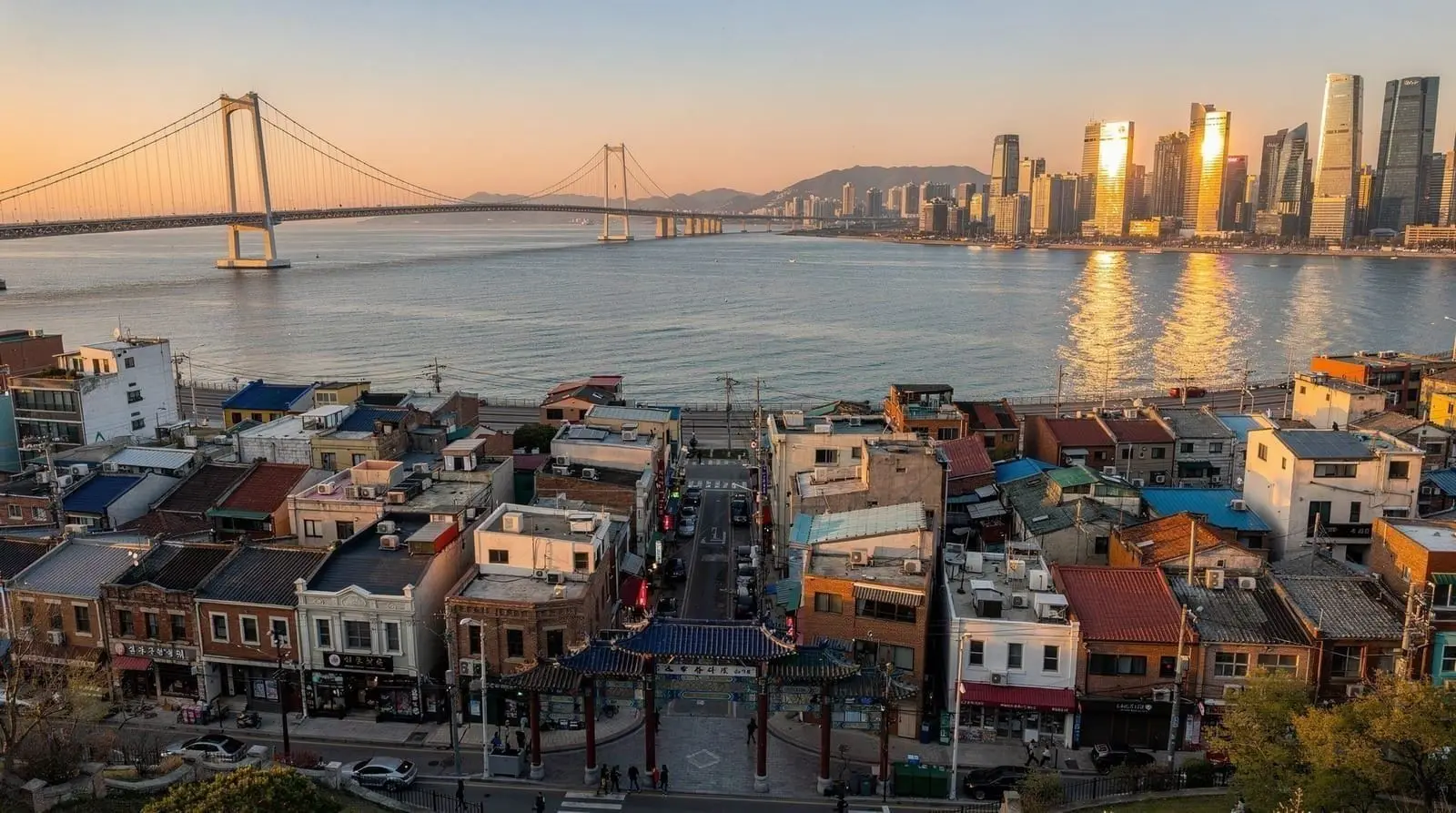
Top 15 things to do in Incheon — the ultimate activity list
Why Incheon deserves more than a quick stopover
Most visitors treat Incheon as a transit point — the airport you land at before catching a train to Seoul. That is understandable and also a mistake. Incheon is South Korea’s third-largest city, a port that has been trading with the outside world since 1883, and a place with a genuinely distinct identity that Seoul does not replicate. From a 19th-century Chinatown with Korea’s best jjajangmyeon to a futuristic smart city district and an archipelago of ferry-accessible islands, the range of things to do here is substantial.
This list covers the 15 activities and places that consistently deliver — whether you have six hours between flights, a full day, or several days to explore properly. Times and transport details are included throughout.
| Where | Chinatown, Open Port, Songdo, Wolmido, and the islands |
| Cost | Mostly free entry; ₩8,000–15,000 for food, rides priced separately |
| Time needed | 1 day for the highlights, 2 days to cover most of this list |
| Getting there | Metro line 1 (Chinatown/Open Port) or line 2 (Songdo) |
| Best time | Weekday mornings, avoid Korean holiday weekends |
1. Eat jjajangmyeon in Incheon Chinatown
Incheon Chinatown is the only officially designated Chinatown in South Korea and the place where jjajangmyeon — black bean sauce noodles — entered the Korean culinary mainstream in the late 19th century. The dish arrived with Chinese workers who came to build the Gyeongin railway and adapted their zhajiangmian recipe to local ingredients. Today every town in Korea has a jjajangmyeon delivery restaurant, but eating it here, a 3-minute walk from Incheon Station, is a direct connection to that history.
The main restaurant street runs through the heart of the district. Restaurants are densely concentrated, menus are clearly priced, and a large bowl typically costs ₩8,000–12,000. The gateway and mural streets surrounding the restaurants make this a full 2-hour walking experience rather than just a meal stop. Full route details are in the Incheon Chinatown walking tour guide.
2. Explore the Open Port heritage district
Directly adjacent to Chinatown, the Open Port district preserves the administrative and commercial buildings built by foreign powers after Korea signed its first modern trade treaties in 1883. Japanese, Chinese, and American consulates, customs houses, and commercial banks occupied this hillside, and a surprising number of their buildings still stand — some preserved, some adaptively reused as cafes and galleries.
The Japanese Customs House, the Japanese-era 18th Bank building, and the former Nakamura residence are the highlights. Interpretive signage is in Korean and English. Combine this with Chinatown for a half-day of dense history without needing to travel far. The Open Port heritage guide covers each building in detail.
3. Walk Songwol-dong Fairytale Village
Songwol-dong Fairytale Village is a hillside neighbourhood just uphill from Chinatown that has been repainted and decorated with fairy-tale murals, Hansel-and-Gretel style architecture, and European-themed gingerbread house facades. It sounds kitschy, and it is somewhat kitschy, but the setting — narrow lanes climbing a hill, painted walls, rooftop views over the port — works well as a photography destination and a pleasant 30-minute detour from the Chinatown route.
The village developed organically over several years as residents painted murals to attract visitors, and the density of decoration is now genuinely impressive. Visit in the morning when light falls on the east-facing painted walls and before afternoon crowds arrive. The Songwol-dong Fairytale Village guide has the full walking loop.
4. Visit Songdo Central Park
Songdo is a purpose-built smart city district on reclaimed land, about 25 minutes from Incheon Station by metro. Its centrepiece is Songdo Central Park — a 100-acre green space built around a seawater canal system that draws water directly from the Yellow Sea. Walking or cycling the canal path gives clear views across to Incheon Airport on the horizon and has the slightly surreal quality of being in a city that was designed entirely from scratch.
Songdo Central Park is genuinely pleasant and almost entirely free. Pedal boats are available for rent on the canal in warmer months. The surrounding Songdo district has good cafes and a clean, walkable streetscape that feels completely different from Chinatown or old Incheon. The Songdo Central Park guide covers the best routes through the park.
5. Ride the elevator to G Tower
G Tower is a 33-floor building at the edge of Songdo Central Park with a free public observation deck on the 33rd floor that most visitors walk straight past. The views cover the park, the Yellow Sea, Incheon Bridge, and on clear days the airport islands. There is a Global Fair and Festival Museum on the upper floors worth a quick look.
Free entry, 5-minute walk from Songdo metro station, and genuinely good views make G Tower one of the better value stops in the whole city. Visit in the late afternoon when the light is warm on the water. Full details in the G Tower observation deck guide.
6. Take the Wolmi Sea Train
The Wolmi Sea Train is a narrow-gauge monorail that runs a 6.1-kilometre loop around the Wolmido coastline in approximately 42 minutes. The carriages are small and painted in seaside colours, the track runs along the waterfront, and the views out over the Yellow Sea are unobstructed for most of the route. It is one of the more unusual transport experiences in the Incheon area and costs around ₩11,000 per adult on weekdays and ₩14,000 at weekends.
Wolmido itself is a small island connected to the mainland by a causeway, with an amusement park, seafood restaurants, and walking paths. The Sea Train is the main reason most visitors come, but staying for grilled seafood on the waterfront makes it a half-day stop. See the Wolmi Sea Train guide and Wolmido island guide for timing and ticketing.
7. Try the amusement rides on Wolmido
The Wolmido amusement park occupies a compact seafront area near the Sea Train station and runs a standard lineup of fairground rides — a Ferris wheel, drop towers, bump cars, and a Viking ship. It is not a large-scale theme park, but the sea backdrop makes even ordinary rides feel more interesting, and pricing is per-ride rather than a full-day ticket, which works well if you want to try two or three things without committing to a full visit.
The Ferris wheel offers the best photo opportunity on Wolmido — clear views along the causeway, across the water, and back toward the Incheon skyline. It operates until late evening and looks photogenic lit up at night.
Incheon: Squid Game Tour with Hotel Pickup from Seoul8. Walk Incheon Grand Park in cherry blossom season
Incheon Grand Park is a 727-acre municipal park in the Namdong district with over 2,000 cherry trees that peak in early April. During cherry blossom season, the park becomes one of the most visually spectacular places in the greater Seoul-Incheon area — wide paths lined with arching blossom canopies, petals drifting into the lake, and crowds of Korean families picnicking on blankets spread under the trees.
The park also contains a zoo, a botanical garden, and a lake with pedal boats. Outside blossom season it remains a good half-day destination for families with young children. The cherry blossom timing and best routes are covered in the Incheon Grand Park cherry blossoms guide, and the overall Incheon cherry blossom spring itinerary puts it in context.
9. Cross to Muuido Island
Muuido is a small island off the coast of Yeongjongdo that takes 10–15 minutes to reach by ferry from Jamjinpo Port and feels genuinely remote despite being 30 minutes from the airport. Hanagae Beach on the island’s south coast is wide, sandy, and backed by forest — one of the better swimming beaches in the Incheon area. At low tide, the mudflats exposed around the island support mudflat walking (galmaegi), which is a traditional Korean activity with real ecology behind it.
The ferry operates roughly every 30 minutes during daylight, costs ₩1,000–2,000 per person, and accommodation is available on the island for those who want to stay overnight. The Muuido Island day trip guide covers the ferry schedule, the beaches, and what to expect at low tide.
Incheon: Coastal Rail Bike, Sorae Park and Fairytale Village10. Cycle the Yeongjongdo seaside rail bike
Yeongjongdo is the airport island, and most visitors pass through without stopping. The seaside rail bike runs along a short stretch of disused railway track with sea views on one side and gives a relaxed 20–30 minute pedal experience suitable for families. Combined with a stop at Eurwangni Beach on the same island, it makes for a pleasant half-day that most visitors completely miss.
The rail bike typically operates on a fixed route with departure slots; book in advance during weekends and public holidays as spots sell out. Full logistics are in the Yeongjongdo seaside rail bike guide.
11. Climb Jayu Park for Korean War history
Jayu Park sits on a hill above the Open Port district and holds one of Korea’s most historically weighted monuments: the statue of General Douglas MacArthur, commemorating the 1950 Incheon Landing that turned the Korean War. The park has wide views over the port and the Yellow Sea, and on clear days you can trace the coastline that UN forces crossed during the amphibious operation.
The park is free to enter and takes about 20 minutes to walk from Chinatown. It is a meaningful stop for anyone interested in 20th-century Korean history and a good physical vantage point for understanding the city’s relationship with its port and the sea. The Jayu Park guide covers the history in detail.
12. Dig into Bupyeong Underground Market
Bupyeong Underground Market is consistently described as one of the largest underground markets in Asia — 1,400-plus shops spread across an underground shopping complex beneath Bupyeong Station on metro line 1. The market sells clothing, accessories, cosmetics, fabric, street food, and household goods at prices well below what you would pay on the main shopping streets of Seoul.
The atmosphere is dense and slightly chaotic in the best sense — narrow corridors of stalls lit by overhead tubes, vendors calling out deals, the smell of tteokbokki from the food stalls in the basement food court. Plan to spend at least an hour, and leave room in your bag. Full context is in the Bupyeong Underground Market guide.
13. Graze Sinpo International Market
Sinpo International Market is one of Incheon’s oldest traditional markets and the place to eat the city’s distinctive Chinese-Korean street food. The market is particularly known for chicken gangjeong — crispy fried chicken pieces in a sweet-spicy sauce served in paper cones — which locals claim originated here. It is cheaper and more concentrated than the tourist-facing Chinatown restaurants.
The market occupies a compact indoor-outdoor area near Dongincheon Station and is best visited late morning or lunchtime when vendors are fully stocked. The Sinpo International Market guide covers what to eat and how to navigate the stalls.
14. Birdwatch at Sorae Ecology Park
Sorae Ecology Park is an unexpected find on the southern Incheon coast — a former salt farm that has been restored into tidal mudflats and reed beds managed as a migratory bird sanctuary. During spring and autumn migration, shorebirds and wading species stop here in large numbers. The park has a small observation tower, marked walking trails, and information boards in Korean and English.
This is a genuinely quiet and off-tourist-circuit spot that rewards early morning visits when birds are active and crowds are absent. The Sorae Ecology Park guide covers the best seasons and the cycling approach from the Ara Waterway.
15. Explore the Ara Waterway by bike
The Ara Waterway is a 18-kilometre canal connecting the Han River to the Yellow Sea, built partly to manage tidal flooding and partly as an infrastructure showcase. A dedicated cycling path runs the full length of both banks, and rental bikes are available at the main waterway terminals. A return trip takes about two hours of easy cycling with flat terrain throughout.
This is Incheon’s best active outdoor option outside of the islands, and the path passes through a landscape that shifts from urban to wetland as you move toward the coast. The Ara Waterway bike tour guide has rental locations and trail conditions.
How to fit these into your trip
Not all 15 activities require separate days. Chinatown, the Open Port district, Songwol-dong Fairytale Village, and Jayu Park can be combined into a single half-day with good pacing. Songdo Central Park and G Tower pair naturally. Wolmido and its amusement area are a natural morning-plus-lunch combination.
If you are working from the airport, the 6-hour layover itinerary covers which of these you can realistically fit into a transit stop. For a full single day in the city, the Incheon in one day itinerary prioritises the highest-impact stops. The Incheon island hopping itinerary covers Muuido and the surrounding islands in depth.
Incheon Stopover: City Highlights Tour for K-culture FansMatching activities to how much time you have
| Time available | What to prioritise |
|---|---|
| 4–6 hours (layover) | Chinatown, Open Port, Songwol-dong |
| Full day | Above plus Wolmido or Songdo/G Tower |
| 2 days | Add one island (Muuido) and one market (Bupyeong or Sinpo) |
| 3+ days | Add Sorae Ecology Park, Ara Waterway, and a seasonal highlight (cherry blossoms, ski trip) |
Frequently asked questions about things to do in Incheon
How many days do you need to see Incheon properly?
Two full days cover the main attractions comfortably — one day for Chinatown, the Open Port, and Wolmido; a second for Songdo, an island, and one market. A single day is achievable if you prioritise. A layover of 4–6 hours from the airport is enough to reach Chinatown and back.
Is Incheon worth visiting as a day trip from Seoul?
Yes, and it is one of the easier day trips from Seoul. The AREX Express runs from Seoul Station to Incheon Airport in 43 minutes from Terminal 1, and metro line 1 reaches Chinatown and Bupyeong. Most of the main attractions cost nothing to enter, which makes it a low-cost day out.
What is the best area to base yourself in Incheon?
For first-timers, the area around Chinatown and the Open Port is the most interesting and central. Songdo has modern hotels at moderate prices and good transport links but is less walkable to the historic sites. The where to stay in Incheon guide covers all the main options.
Do you need to book Incheon activities in advance?
Most attractions — Chinatown, Songdo, the parks, markets — require no advance booking. The Wolmi Sea Train and Yeongjongdo rail bike benefit from advance booking on weekends and during cherry blossom season. Guided tours through GetYourGuide can be booked 24–48 hours ahead in most cases.
What is the currency in Incheon and how much cash do I need?
The currency is the Korean won (KRW). 1 USD is approximately ₩1,200–1,300. Most restaurants, convenience stores, and larger shops accept card. Markets and small street food stalls often prefer cash. Having ₩30,000–50,000 in cash is sufficient for a half-day of eating and small purchases.
Is Incheon safe for solo travellers?
Incheon is very safe for solo travellers including solo women. Petty crime is rare, streets are well-lit, and the metro is clean and frequent. The Incheon safety and language tips guide covers practical details including how to navigate language barriers.
What is the single best thing to do in Incheon if I only have time for one?
Incheon Chinatown, including a jjajangmyeon lunch and the walk up to Songwol-dong Fairytale Village. It is the most historically distinct experience in the city, entirely walkable, and works whether you have 2 hours or a full afternoon.
Can I combine several of these activities into one itinerary?
Yes — the Incheon in one day itinerary sequences the highest-impact stops (Chinatown, Open Port, Wolmido) into a realistic single day, and the 2–3 day Incheon and Seoul itinerary extends this into a longer trip that also covers Seoul.
Incheon city experiences on GetYourGuide
Top-rated tours and activities


