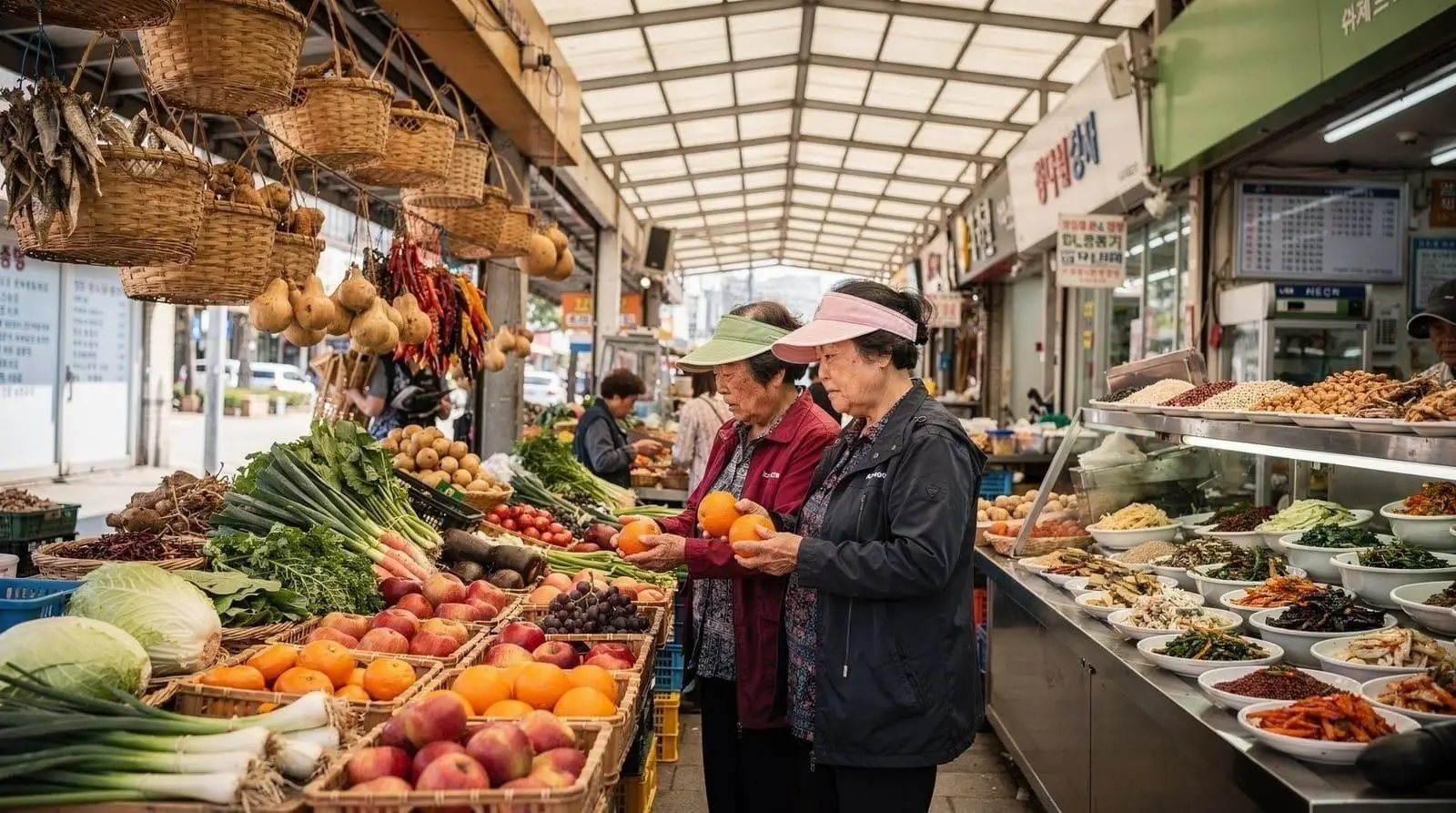
Sinpo International Market: Incheon's best street food market
What is Sinpo International Market famous for?
Sinpo International Market is Incheon's most beloved traditional market and the birthplace of dakgangjeong — a sweet-spicy Korean fried chicken dish that originated here in the 1970s. The market also serves tteokbokki, sundae, hotteok, and dozens of Korean street food staples at some of the best prices in the city.
| Where | Dongincheon Station, 10 min north of Incheon Chinatown |
| Cost | Around ₩15,000–20,000 for a full tasting session |
| Time needed | 1–2 hours |
| Getting there | Metro line 1 to Dongincheon, then 10 min walk |
| Best time | Weekday late morning (10–11:30am) for quiet browsing |
Why Sinpo matters: more than just a food market
Sinpo International Market (신포국제시장) dates to the early 20th century, making it one of the oldest traditional markets in Incheon. It takes its “international” designation from the era when Incheon’s open port (1883 onwards) brought Chinese, Japanese, and Western traders to the city, and the market that grew near the treaty port zone served an unusually diverse population for a Korean city of that era.
The international character has faded — this is now primarily a Korean market serving a local Korean clientele — but the name persists, and the market’s historically diverse food culture has left traces. You can still find mandu (dumplings) influenced by Chinese cooking, alongside standard Korean street food, and a food culture that is subtly different in inflection from Seoul’s markets.
What makes Sinpo worth your time is a combination of historical texture, excellent food, and the contrast it offers to Incheon’s more modern tourist attractions. After a morning at Songdo’s glass towers, an afternoon at Sinpo eating dakgangjeong from a paper bag feels like a different country.
Incheon: Walk and Eat with Local Walking BuddyDakgangjeong: Sinpo’s signature dish
Dakgangjeong (닭강정) is a Korean fried chicken preparation — bite-sized pieces of chicken that are double-fried for maximum crunch, then coated in a glossy sauce that combines ganjang (soy), gochujang (chili paste), garlic, ginger, and sweetener. The result is simultaneously crispy, sticky, sweet, and spicy, and has become one of the most imitated street foods in Korean culinary culture.
The Sinpo version is considered original. The most famous vendor is the stall at the northeast corner of the market’s central arcade, which has been operating for decades and regularly has a short queue. Order by pointing at the size you want — small (소), medium (중), or large (대) portions. Prices start from approximately ₩5,000 ($3.85) for a small portion.
Eat immediately. Dakgangjeong is best within 10–15 minutes of frying. The coating softens relatively quickly; a fresh batch from a busy stall is in a completely different category from lukewarm chicken that’s been sitting.
Variations: Sinpo market vendors sell multiple versions — original soy-based, spicy gochujang-heavy, sweet honey garlic, and mixed sauce. Start with the original if this is your first encounter.
The full street food circuit
Dakgangjeong is the headline, but Sinpo has a full market food programme:
Sundae (순대)
Korean blood sausage — steamed pork intestine stuffed with glass noodles, pork blood, and vegetables. Typically served with dipping salt and chili paste on the side. This is a deeply traditional Korean food that looks alarming to uninitiated foreign visitors and tastes mild, savoury, and intensely filling. Stalls at Sinpo sell sundae by the plate for ₩5,000–8,000.
Tteokbokki (떡볶이)
Cylindrical rice cakes in a spicy-sweet gochujang sauce, often with fish cakes (eomuk) and boiled eggs added. The foundational Korean street food. At Sinpo, several stalls specialise in different levels of spice; look for the one with the longest local queue. Price: ₩3,500–5,000 per portion.
Hotteok (호떡)
Sweet Korean pancakes made from yeasted dough, filled with a mixture of brown sugar, cinnamon, and chopped nuts, then pressed flat and fried until crispy on the outside and molten inside. Best eaten carefully (the filling is very hot). Price: ₩1,500–2,000 each.
Mandu (만두)
Korean dumplings, either steamed (찐 mandu) or fried (군 mandu). Fillings include pork and vegetables, kimchi, or seafood. Several of the Sinpo mandu vendors have been operating for generations and use recipes that reflect the Incheon port area’s Chinese culinary influence. Price: ₩3,000–5,000 for a plate of 5–6.
Gimbap (김밥)
Seaweed-wrapped rice rolls with fillings of egg, pickled vegetables, fish cake, and various proteins — the Korean equivalent of a fast lunch roll. Made fresh and sold by the roll or half-roll for ₩2,000–4,000. Excellent convenience food if you need something to carry.
Twigim (튀김)
Korean-style tempura — vegetables, seafood, and mandu coated in light batter and fried. Sold by the piece for ₩500–1,000, usually arranged on a flat griddle for easy selection. Very popular as a quick snack alongside tteokbokki.
The indoor market section
Beyond the street food stalls, Sinpo has a covered indoor market with permanent vendor stalls selling fresh produce, dried goods, Korean pickles (kimchi, kkakdugi, various seasoned vegetables), salted fish, and household supplies. This is the section that most closely resembles what a traditional Korean market looked like before the convenience store era — vendors seated behind pyramids of produce, calling to passers-by, with the smell of fermented foods and grilled meats mixing in the air.
This indoor section is primarily of interest to visitors who want to understand Korean food culture and market life rather than visitors primarily shopping for souvenirs. It is not oriented toward foreign visitors and English is sparse. Navigation by appetite and pointing works well here.
Getting to Sinpo International Market
By metro: Take metro line 1 to Donginjeon station (동인천역). Sinpo market is approximately a 10-minute walk north. Alternatively, Incheon Station is a 15-minute walk south from the market, making it easily combinable with a Chinatown visit.
On foot from Chinatown: Walking from the Incheon Chinatown gate north through the commercial area takes approximately 15–20 minutes and passes through the Open Port heritage district — a natural route that connects the city’s two most interesting historical areas.
From Bupyeong: Metro line 1 south 3 stops to Dongincheon station, approximately 10 minutes. The Bupyeong Underground Market and Sinpo make a natural paired market day.
Opening hours and best visiting time
Sinpo operates daily from approximately 9am to 8pm, with most food stalls busiest from noon to 7pm. Weekends in the afternoon are the most energetic visits — the market is active and the food queues tell you exactly where to go.
Weekday late mornings (10–11:30am) are quieter and easier for browsing. Some of the best dakgangjeong is made in fresh batches starting around 11am.
The market does not close for rain — the indoor sections and covered arcades remain active. It is one of the better rainy-day Incheon activities.
Combining Sinpo with other attractions
Chinatown walking tour: Incheon Chinatown is a 15-minute walk south. An obvious combination: Chinatown for jjajangmyeon and history in the morning, Sinpo for street food and market atmosphere in the afternoon.
Jayu Park: Jayu Park is a 15-minute walk southeast of Sinpo. The park’s hilltop views over the port complement the market visit.
Gaehang Market: Gaehang Market is the port-adjacent market for seafood and wholesale goods, a 10-minute walk west of Sinpo. The two markets have different characters and complement each other.
Budget for a Sinpo street food session
A thorough walk-through eating session at Sinpo, trying dakgangjeong, tteokbokki, hotteok, and mandu, costs approximately ₩15,000–20,000 ($11.50–15.40) total. This is a generous street food lunch for one person. Add a coffee from a nearby cafe for another ₩3,000–4,000. One of the best-value food experiences in the Seoul metropolitan area.
Ordering etiquette and practical tips
Sinpo rewards visitors who arrive with a little preparation, since English signage is limited. A few habits make the visit smoother:
Point and gesture confidently. Most stall vendors are used to visitors pointing at what they want rather than reading a Korean-only menu board. Holding up fingers for quantity works everywhere.
Carry small cash. Street stalls rarely take cards, and vendors do not always have change for large notes. Withdraw ₩30,000–50,000 before you arrive; there is a bank ATM near the market’s south entrance.
Bring a bag or container if you’re taking food elsewhere. Dakgangjeong is sold in paper bags that do not travel well for more than 15–20 minutes; if you plan to eat later at Jayu Park or on a bench, ask for extra napkins and eat sooner rather than later.
Weekday mornings for photography, weekend afternoons for atmosphere. If you want photos of the arcades without crowds, go before 11am on a weekday. If you want to feel the market at full energy, a Saturday afternoon delivers it.
Staying connected and translating on the go
Because menus are in Korean, a translation app with a working data connection makes ordering far easier. Pointing a phone camera at a menu board takes the guesswork out of unfamiliar dishes. If you are arriving straight from the airport, sorting out a SIM card with a T-money transit card or an eSIM set up before landing means your map and translation tools work from the first station. Our safety and language tips cover a few useful Korean phrases for markets.
If you want a guided market tasting
Sinpo is easy to enjoy on your own, but some visitors prefer a guide who explains what each dish is and where to queue. Guided food walks are mostly run in Seoul rather than at Sinpo itself, so they work as a complement rather than a replacement. If you are also spending time in the capital, a guided market walk with several tastings is a good way to compare Seoul’s market food with what you eat here. For a wider plan that links both cities, see Incheon and Seoul in 2–3 days, or start with Incheon in one day if you only have a single day and want Sinpo on the route.
Seasonal market rhythms
Sinpo’s food offering shifts slightly across the year, and knowing the pattern helps you time a visit:
| Season | What changes | Best for |
|---|---|---|
| Spring (Mar–May) | Fresh seasonal vegetables and pickles appear in the indoor section | Browsing the produce stalls |
| Summer (Jun–Aug) | Cold noodle and ice dessert stalls open; dakgangjeong queues shorten slightly in heat | Cold treats, shorter lines |
| Autumn (Sep–Nov) | Persimmons, chestnuts, and harvest produce dominate the indoor stalls | Seasonal produce shopping |
| Winter (Dec–Feb) | Hot street food (hotteok, fish cake soup) sees the longest queues | Warming up with hot snacks |
Frequently asked questions about Sinpo International Market
Is the dakgangjeong at Sinpo really the original?
Sinpo market vendors claim the dish originated here in the 1970s, popularised by a specific stall that developed the sweet-spicy glaze that distinguishes it from plain fried chicken. The historical record supports Sinpo as a key early location for the dish, though as with most food origins, the exact “original” is contested. What is not contested: the Sinpo version is very good.
Can I find vegetarian food at Sinpo?
Yes, with effort. Hotteok is vegetarian. Many of the tteok (rice cakes) and some twigim items are vegetarian. Gimbap can be ordered vegetarian. However, most tteokbokki sauces contain fish cake stock, and the broader market is heavily meat and seafood oriented. Vegetarians can eat at Sinpo but will have a narrower selection.
Is Sinpo market touristy or local?
Primarily local. While some foreign visitors discover it, the clientele is overwhelmingly Korean residents and local workers. There is limited English, menus are in Korean, and the market is not styled for international tourism. This is an advantage for authenticity and price; it requires slightly more navigation by pointing and app translation.
How does Sinpo compare to Seoul’s Gwangjang market?
Gwangjang in Seoul is larger, more famous internationally, and has been somewhat reshaped by tourist-oriented pricing. Sinpo is smaller, cheaper, and less curated. Gwangjang is excellent for a wider range of foods including live seafood and Korean traditional textiles. Sinpo is better for a neighbourhood-authentic market experience at lower prices.
Is there anywhere to sit and eat near Sinpo?
Small stools and standing counters are available at food stalls throughout the market. For a proper sit-down meal, several small restaurants occupy the alley east of the main market. The indoor section has some seating at food court-style lunch vendors.
Can I bring cash only, or do card payments work?
Card payments are unreliable at street stalls — most vendors expect cash. The indoor section’s fixed-shop vendors are more likely to accept cards, but do not count on it. Carry ₩30,000–50,000 in small notes; a bank ATM sits near the market’s south entrance.
Is Sinpo a good rainy-day option in Incheon?
Yes. The covered arcades and indoor market section stay fully active in rain, unlike outdoor attractions such as Songwol-dong Fairytale Village or Wolmido’s sea trail. Pair a rainy morning at Sinpo with an afternoon at a museum or indoor attraction for a weather-proof Incheon day.
Korean street food tours on GetYourGuide
Top-rated tours and activities


