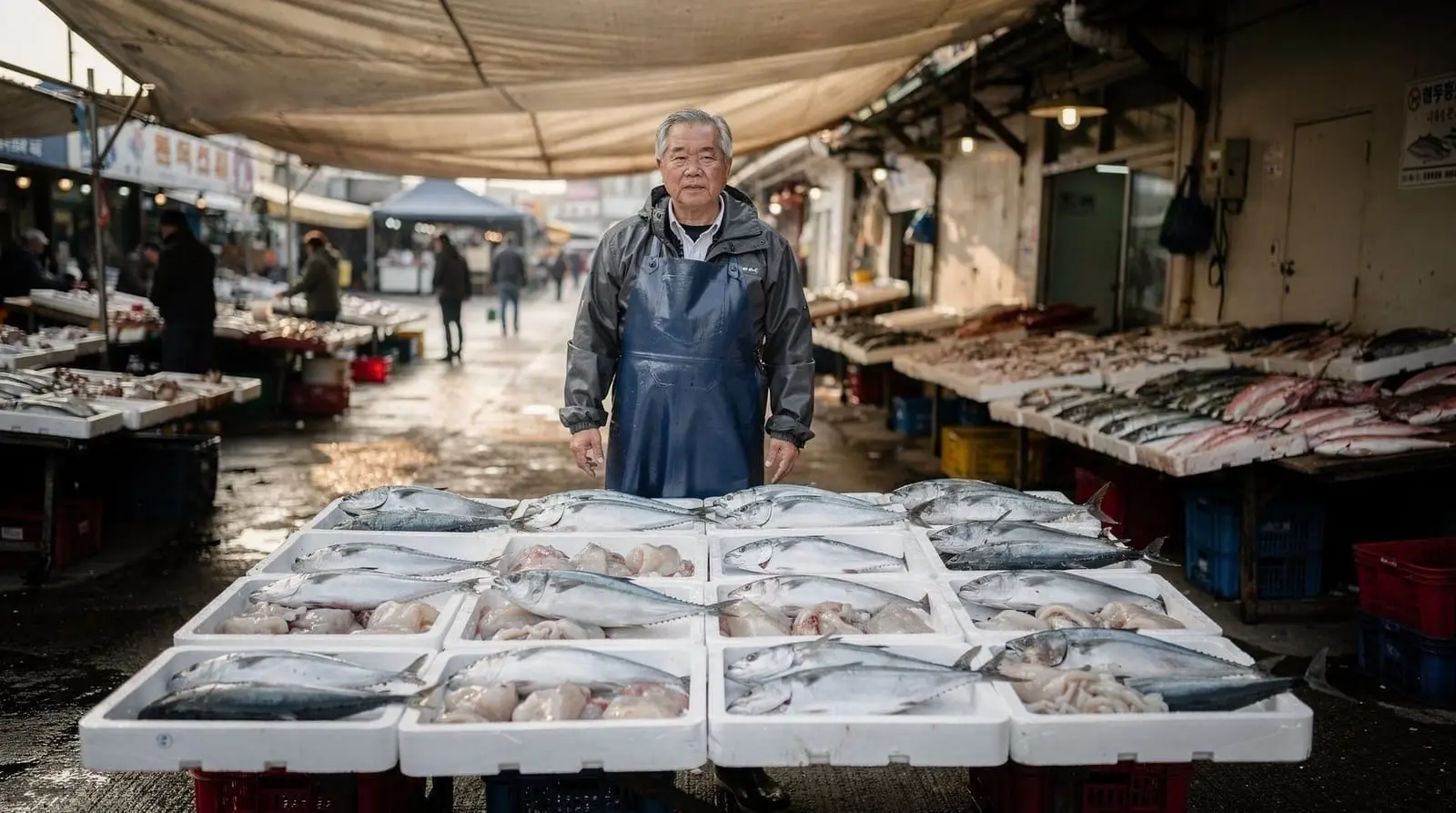
Gaehang Market: Incheon's port market for fresh seafood and local life
What is Gaehang Market in Incheon?
Gaehang Market (개항시장) is a traditional market in Incheon's historic port district, adjacent to the Open Port heritage area. It is primarily a working market for fresh and dried seafood, local produce, and everyday goods — not a tourist market — and offers one of the most authentic views of Incheon's port-town food culture.
| Where | Gaehang district, near Incheon Station |
| Cost | Free to browse; seafood and goods from ₩5,000 |
| Time needed | 45–90 minutes, longer combined with the heritage walk |
| Getting there | Line 1 to Incheon Station, ~10 min walk west |
| Best time | Early morning (7–10am) for fresh seafood and atmosphere |
The port market that predates Incheon’s tourist circuit
Incheon’s Gaehang (개항) district takes its name from the 1883 port opening — “gaehang” literally means “open port.” The market that grew alongside the port facilities has served the city’s waterfront workers, fishing community, and nearby residential areas for well over a century, predating the more tourist-visible attractions by decades.
Where Sinpo International Market has become well-known for its dakgangjeong and street food performance, and Bupyeong Underground Market captures the shopping market visitor, Gaehang Market occupies a different niche: a working market in a working port district, where the visitors are mostly local residents and the merchandise is mostly functional.
This makes it the most authentically unmediated market experience in central Incheon — the one that gives you the clearest window into how the city actually eats and shops when it is not performing for visitors.
It is also, for exactly the same reason, the least visitor-friendly of the three in terms of signage, English, and prepared food for eating on the spot. That trade-off is worth being honest about upfront: come for the atmosphere and the buying, not for an easy tourist experience with clear labels and a menu in English.
What you find at Gaehang Market
Fresh seafood
The market’s strongest category and its reason for existing. Incheon sits on a coast with active commercial fishing, and the Yellow Sea provides a distinctive range of seafood — particularly shellfish (cockles, oysters, clams), yellow corvina (조기, jogi), mackerel (고등어, godeungeo), and various flatfish that are prized in Korean cuisine.
Fresh fish and shellfish are laid out in shallow ice trays at the stall fronts, with vendors calling prices and selections to passers-by. Prices are typically at wholesale or near-wholesale levels — significantly cheaper than seafood markets aimed at tourists. For visitors with access to a kitchen, this is where you buy the raw ingredients of a Korean seafood meal.
Early morning: The freshest selection and most active atmosphere is from around 7am, when vendors are setting up and restaurateurs come to buy. By mid-afternoon, the fresh selection has thinned and the market transitions to its afternoon pace.
Dried and salted seafood
Korean cuisine depends heavily on dried and fermented seafood — dried anchovies (멸치, myeolchi) for stock, dried shrimp (새우젓, saeujeot) for kimchi seasoning, salted fermented seafood (젓갈, jeotgal) in dozens of varieties, and various dried fish used as side dishes or snacks. Gaehang Market has this category in abundance and at genuine wholesale prices.
For visitors looking for authentic Korean food gifts, packaged dried anchovies or small jars of salted seafood are inexpensive, lightweight, and genuinely represent what Korean households cook with. Most vendors package these for retail sale as well as wholesale.
Produce, rice, and dry goods
The market’s non-seafood sections carry seasonal Korean produce, rice in multiple grades, Korean condiments (gochujang, doenjang, soy sauce) from local producers, and various pantry staples. These sections are the least interesting for most visitors but round out the market’s character as a genuine neighbourhood provisioner rather than a tourist experience.
Traditional snacks and small food vendors
Scattered through the market are vendors selling traditional Korean snacks and prepared foods: yakgwa (honey cookies), jeon (Korean pancakes), various tteok varieties, and seasonal preparations. These are made for Korean palates and priced for local buyers.
The Gaehang District context
Gaehang Market sits within walking distance of Incheon’s Open Port heritage district — the cluster of surviving 19th and early 20th century buildings from the treaty port era. The combination of market visit and heritage walk gives you both the physical material history of Incheon’s trade past and its contemporary continuation in the port-district economy.
The Incheon Open Port Museum (인천개항박물관), located in a former Japanese bank building in the Open Port district, provides historical context for the entire area — including how the market economy evolved from the treaty port’s establishment. If you are spending more than a morning in this part of Incheon, combining the museum, the heritage architecture walk, and the market makes a coherent three-part programme.
The Incheon Chinatown walking tour begins a 5-minute walk east of Gaehang Market at Incheon Station — the natural starting point for a full morning in the historic port district.
Getting to Gaehang Market
By metro: Incheon Station (line 1, final stop) is the nearest metro station, approximately 10 minutes on foot westward to the market area. Follow signs for the Open Port area or Gaehang Museum.
Walking from Chinatown: Incheon Chinatown’s main gate is near Incheon Station. Walk west from the Chinatown gate toward the port, crossing the main road, and you enter the Gaehang district within about 10 minutes. The market stalls begin to appear as you approach the waterfront area.
From Sinpo International Market: Walking south from Sinpo Market takes approximately 15–20 minutes to reach Gaehang Market, passing through the Open Port heritage zone. This is a natural route that connects all three of Incheon’s historic market areas in one walk.
When to visit
Early morning (7–10am): The best time for fresh seafood selection and the most active market atmosphere. Vendors are setting up and the genuine working market energy is clearest.
Mid-morning (10am–noon): A good balance between having arrived at a civilised hour and still finding good fresh selection. Less chaotic than early morning.
Afternoon (noon–6pm): Fresh seafood selection diminishes but the dry goods, packaged items, and prepared food vendors remain active. The market is calmer and easier to browse at a relaxed pace.
Evening: Many stalls begin closing from 5–6pm. Not the best visit window unless you are specifically looking for reduced-price remaining seafood.
A morning market walk: suggested route
A 90-minute morning circuit through the Gaehang area:
Start: Incheon Station exit 1. Walk west along the main road toward the port.
First stop: The Open Port heritage street — 1880s and 1890s buildings from the treaty port era, now housing small cafes, galleries, and the Open Port Museum. A 20-minute walk and photography stop.
Second stop: Gaehang Market seafood section — walk through the main stalls, observe the vendors and selection, consider buying dried goods for gifts or snacks from prepared food stalls.
Third stop: The waterfront view from the port road — Incheon’s working port backdrop provides context for the market’s entire existence.
Return: Walk east back to Incheon Station for metro connections, or continue north 15 minutes to Sinpo International Market for street food lunch.
Incheon: Walk and Eat with Local Walking BuddyShopping at Gaehang Market: practical tips
Cash preferred: The market runs primarily on cash transactions. While some larger stalls accept cards, small vendors use cash exclusively. Bring ₩20,000–30,000 in small denominations for comfortable browsing.
Buying seafood: If you want to buy fresh seafood to cook, point at what interests you and the vendor will weigh and price it. Prices per kilogram are typically shown. If you need it cleaned, gesturing toward the fish and making a cleaning motion usually communicates the request — vendors are experienced with this.
Dried goods for gifts: Small packages of dried anchovies (from ₩5,000), mixed dried seafood snack packs (₩8,000–15,000), and packaged salted shrimp (₩6,000–10,000 for small jars) are excellent lightweight food gifts. Most are packaged in sealed bags or jars suitable for travel.
Language: Minimal English is spoken in the market. Price negotiation happens through calculator displays and gestures. The 1330 Korea Tourism Helpline can provide phone translation if needed.
What you should not try to bring home: Fresh raw seafood and meat products are subject to import restrictions in most countries. Commercially packaged and sealed dried goods (anchovies, dried seaweed, rice cakes, instant noodles) are generally fine. Check your home country’s customs rules before purchasing large quantities of food.
Rough budget for a browsing visit: Even without buying anything intended to travel home, a typical Gaehang morning costs little. A small bag of dried anchovies or salted shrimp runs ₩5,000–10,000, a snack from one of the prepared-food stalls is ₩2,000–4,000, and transport from central Incheon is under ₩2,000 each way. A relaxed morning with a couple of small purchases rarely exceeds ₩15,000–20,000 (~$12–15) per person, making it one of the cheapest genuine cultural experiences in the city.
Turning market ingredients into a meal
If you have no kitchen, the market still teaches you a lot about what Korean home cooking is built on. The dried anchovies, salted shrimp and jeotgal on the stalls are the seasoning backbone of stocks, kimchi and side dishes, and seeing them in bulk explains flavours you will meet later in restaurants. Travellers who want to go further can join a hands-on cooking class that begins at a neighbourhood market, where the shopping and the cooking come together. On a tight budget, the Incheon on a budget guide shows how a market morning like this keeps costs low.
For a first-time visitor, the sensible approach is to treat Gaehang as a place to look, ask and taste rather than to stock up. Walk the whole market once before buying anything, compare a couple of stalls, and only then choose.
If you are arriving straight from the airport, the Incheon airport layover itinerary and the 6-hour layover plan show how an early market visit can fit around a flight, though a long morning here suits a proper stay better than a rushed stopover. Staying close helps too: see where to stay in Incheon for neighbourhoods that put you near Incheon Station.
Since signage is mostly in Korean, having mobile data makes the visit easier for translation and maps. Many visitors pick up an eSIM for South Korea before they leave the airport, so a translation app is ready as soon as they reach the stalls. Our safety and language tips cover more on getting by without Korean.
Comparing Incheon’s three historic markets
| Market | Focus | Best time | Vibe |
|---|---|---|---|
| Gaehang Market | Fresh/dried seafood, groceries | 7–10am | Working, local, least touristy |
| Sinpo International Market | Street food (dakgangjeong, tteokbokki) | Lunchtime | Busy, food-performance oriented |
| Bupyeong Underground Market | Fashion, K-beauty, everyday goods | Weekday mornings | Vast, shopping-focused |
Visiting all three in one trip is realistic if you have a full day: Gaehang in the early morning, a walk through the Open Port heritage district, lunch at Sinpo, and Bupyeong Underground in the afternoon if you’re up for more walking. For a lower-key day, pairing just Gaehang with the heritage walk and a Chinatown lunch — see where to eat in Incheon Chinatown — is a complete and satisfying half-day without overloading on markets.
If getting between these spots by metro or bus is unfamiliar, the getting around Incheon guide covers ticketing and transit basics that apply across the whole city, not just this district.
Gaehang Market and neighbourhood gentrification
Like many traditional markets in Korean port and working-class districts, Gaehang faces ongoing pressure from redevelopment and the changing eating habits of younger Korean consumers who increasingly shop at supermarkets. The market has seen an influx of creative businesses — a handful of small cafes and boutiques have opened in renovated spaces alongside the traditional stalls, particularly in the Open Port district immediately adjacent.
This blend of traditional market commerce and emerging creative economy is characteristic of several Korean historic districts undergoing gradual transformation. For visitors, it means the area is increasingly navigable and interesting while still largely authentic — a window available now that may look different in five to ten years.
Frequently asked questions about Gaehang Market
How is Gaehang Market different from Sinpo International Market?
Sinpo is primarily a street food market — famous for dakgangjeong and tteokbokki, busy at lunch, oriented around prepared foods for eating on the spot. Gaehang is a working port market — primarily fresh and dried seafood for buying and cooking at home, busiest in the early morning, less oriented toward street eating. The two complement each other: visit Gaehang in the morning for the market atmosphere and fresh goods, Sinpo at lunch for street food.
Can I eat cooked food at Gaehang Market?
Yes, but the selection is narrower than at Sinpo. Some vendors sell prepared snacks and small hot foods. The adjacent Gaehang area has a growing cluster of cafes and small restaurants in the heritage district buildings. For a full street food experience, Sinpo is the better choice.
Is Gaehang Market suitable for vegetarians?
The market is heavily seafood-oriented. Produce stalls and rice vendors are vegetarian-friendly for ingredient buying. The prepared food options are limited for vegetarians. The cafe culture emerging in the heritage district adjacent to the market has more vegetarian-accessible options.
What are the market’s opening hours?
Most stalls are active from approximately 7am to 6pm, with the morning (7am–noon) being the busiest and most stocked period. Some dried goods vendors keep later hours. The market is open daily; individual stalls may close on specific days.
Is the Gaehang area safe to visit early in the morning?
Yes. Early morning at the market is active and busy with vendors and buyers. Korean markets at dawn are safe environments. The port-adjacent streets are industrial in character but not unsafe for visitors.
Can I combine Gaehang Market with a Chinatown visit in one morning?
Yes, easily. The walk from Gaehang Market east to Incheon Chinatown takes approximately 15 minutes via the Open Port heritage district. Start at Gaehang (7–9am), walk through the heritage buildings, arrive at Chinatown for its 10am opening, eat jjajangmyeon for late breakfast or early lunch. Total morning programme: 3–4 hours covering the historic core of Incheon.
Korean street food tours on GetYourGuide
Top-rated tours and activities


