Muuido Island day trip from Incheon: beaches, mudflats, and hiking
How do you get to Muuido Island from Incheon Airport?
Take bus 222 from Airport Terminal 1 to Jamjindo Ferry Terminal (15 min, ₩1,200), then a 5-minute ferry to Muuido (₩900 one-way). Total journey is under 30 minutes.
Muuido Island sits a five-minute ferry ride from the coast of Yeongjongdo, the same island that holds Incheon International Airport. That proximity is the whole point: in well under an hour from the airport departures hall, you can be standing on a two-kilometre sandy beach with tidal mudflats stretching to the horizon and a forested peak behind you. For a day trip or a long layover stretch, the distance-to-reward ratio here is hard to beat anywhere near a major international airport.
The island is small — you can walk its main trail and reach the beach by midday. But it manages to pack in a genuine mix of experiences: clamming in the mudflats at low tide, a ridge hike with Yellow Sea views, a tidal crossing to a smaller adjacent island at the right moment, and a lunch of grilled shellfish at one of the beach restaurants. This guide covers all of it, including the timing details and logistics that matter most.
| Where | Muuido Island, via Jamjindo ferry, off Yeongjongdo |
| Cost | Around ₩28,000–46,000/person ($21–35) for a full beach and mudflat day |
| Time needed | Full day recommended; feasible on an 8-hour+ layover |
| Getting there | Bus 222 from Airport T1 (~15 min) + 5-min ferry from Jamjindo |
| Best time | June–September for beach/mudflats; April–May or October for hiking |
Getting to Muuido from Incheon Airport
The journey from Airport Terminal 1 to the Muuido ferry terminal takes about 30 minutes door to door. Here is the step-by-step sequence.
From Terminal 1, go to the ground floor bus stop area outside the arrivals hall. Bus 222 runs between Terminal 1 and Jamjindo Ferry Terminal (잠진도 선착장), which is the departure point for the Muuido ferry. The bus ride takes approximately 15 minutes. Fare is around ₩1,200 with a T-money card. Bus 222 does not run around the clock — check the first and last departure times before you go, particularly if you are planning an early arrival or a late return.
Taxis from Terminal 1 to Jamjindo are an alternative. The trip costs ₩8,000–12,000 and takes 15 minutes, making it a reasonable option if you are travelling with luggage or in a small group where the fare splits well.
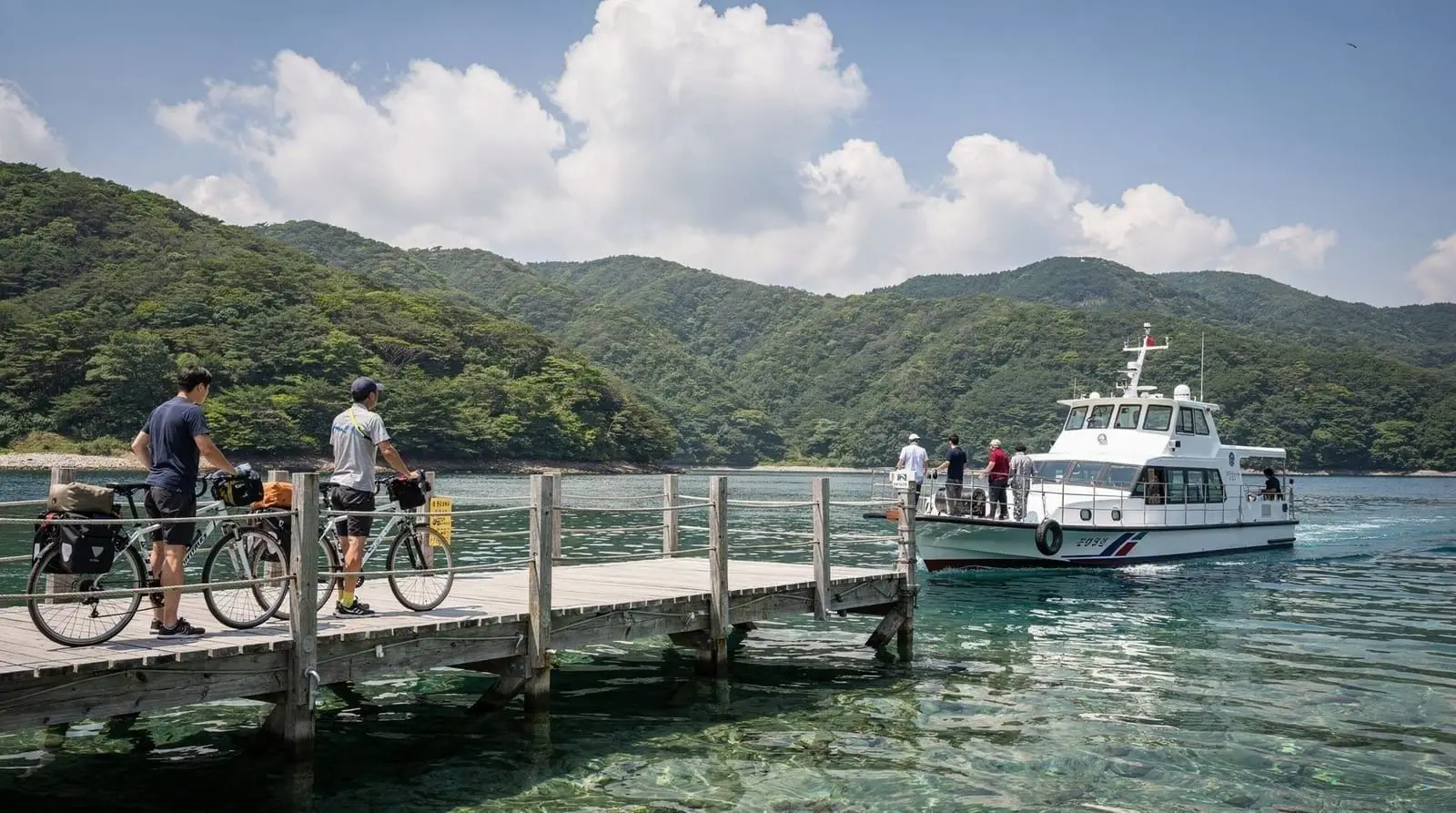
At Jamjindo Ferry Terminal, the ferry to Muuido runs approximately every 30 minutes from 6am to the last sailing at 9pm. The crossing is 5 minutes. Adult fare is ₩900 one-way, ₩1,800 return. Bicycles cost an additional ₩600. Buy your ticket at the terminal booth; no advance booking is needed or available.
From the Muuido ferry terminal on the island, Hanagae Beach on the west coast is about 20 minutes on foot or a short taxi ride costing ₩4,000. The road between them is flat and mostly navigable on foot if you have time, though in summer the exposed walk is hot. Local taxis wait near the terminal during peak season.
If you are coming from central Incheon rather than the airport, take metro line 1 toward Incheon Station and transfer to bus 222 from the Unbuktu (운북도) stop near the Yeongjongdo terminal area, or arrange a taxi directly from Incheon City to Jamjindo.
If you are travelling from Terminal 2 rather than Terminal 1, allow an extra 15–20 minutes: Terminal 2 does not have a direct bus 222 stop, so most visitors take the free inter-terminal shuttle to Terminal 1 first, then follow the same route from there. Building this buffer into your timing matters most if you are working a layover against a hard connection deadline rather than a standalone day trip.
Hanagae Beach: what to expect
Hanagae Beach (하나개해수욕장) is Muuido’s main beach, a 2-kilometre arc of sand on the island’s west coast. It is a genuine working beach rather than a polished resort — facilities are seasonal and basic, the sand is medium-grain and the brownish-grey typical of the Yellow Sea coast, and the water is calm but not the transparent turquoise of tropical Pacific beaches. Adjusting expectations on that last point is worth doing before you arrive: Yellow Sea beaches have a different aesthetic, shaped by significant tidal variations and the alluvial character of the seabed. What they deliver instead is a particular stillness, especially at low tide when the water retreats far and the mudflats take on an almost lunar quality in evening light.
Swimming at Hanagae is officially permitted and staffed with lifeguards from July 1 through August 31. Outside those dates, you can wade in but there are no safety staff on duty and the shower and changing facilities may be closed or reduced. The peak season in July and August does bring crowds — the beach fills on weekends and Korean public holidays. Visiting on a weekday in late June or early September gives you a noticeably quieter experience with most infrastructure still operational.
Facilities during peak season include changing rooms, showers, and rental umbrellas. Several restaurants operate directly behind the beach, ranging from basic haejangguk (해장국, a hearty soup traditionally eaten as a hangover cure, ₩8,000–12,000) to full seafood spreads.
Incheon: Coastal Rail Bike, Sorae Park and Fairytale VillageMudflat digging: timing and how it works
The tidal mudflats are one of Muuido’s most distinctive features. At low tide, the flats stretch hundreds of metres from the shore, exposing a dense ecosystem of clams, cockles, crabs, and worms. Mudflat digging (갯벌 체험) is an organised activity during the summer season, typically running from June through August, with the activity window determined entirely by the tide schedule rather than a fixed daily timetable.
This is the single most important thing to understand about planning a mudflat visit: you cannot simply show up and dig. The mudflats are only accessible — and only productive — during a specific window around low tide. If you arrive at high tide, there are no mudflats visible at all, and no amount of waiting a short time will change that.
Before your visit, check a Korean tide table (물때표). Apps like Tide Now or Naver Map’s tide feature will give you local tide times. Plan to be at the beach during the two hours either side of low tide. Equipment for clamming — small rakes, buckets, waterproof boots — can be rented near the beach for ₩3,000–5,000 per person. Most visitors wear the provided boots rather than their own shoes, as the mud is deep in places and genuinely sticky.
The clams and small crabs you gather are typically taken to one of the beach restaurants, which will cook them for a small preparation fee, or you return them and eat from the restaurant menu instead. It is a hands-on activity that works well with children and is worth scheduling your day around if the tides cooperate.
Guksabong Peak: the ridge hike
Guksabong (국사봉, 236 metres) is Muuido’s main hiking peak, reached by a trail that starts near the ferry terminal area and climbs through dense forest to a forested ridgeline with periodic sea views. The full loop takes about 2.5 hours at a comfortable pace and qualifies as moderate hiking — the ascent includes some steep sections, and the trail surface is uneven in places with exposed roots and rocks. Proper hiking shoes or trail runners are the right footwear; sandals are a poor choice.
The trail is free and requires no registration. There are no staffed facilities on the mountain — bring water, especially in summer when the forest canopy traps heat. The ridge sections are the payoff: when the trees open, you get views over the Yellow Sea and, on clear days, the distant Incheon skyline and the outlines of other islands in the archipelago.
The best seasons for this hike are April and May, when azaleas bloom along the ridgeline and the temperature is comfortable, and October, when the forest turns amber and the light is low and sharp. Hiking in July and August is possible but hot and humid; start early (before 9am) if you go in midsummer.
Incheon: Luge & Railbike & Purple Azalea FestivalThe Guksabong trail connects to the wider trail network on the island, and some sections lead down toward Hanagae Beach, making it possible to combine the hike with time at the beach on the same visit. Download the trail map offline from Naver or Kakao Map before you arrive, as mobile signal can be patchy in the forest.
Sopoodo: the tidal island crossing
Sopoodo (소풀이도) is a tiny satellite island adjacent to Muuido’s south coast, accessible on foot at low tide via a natural causeway that the sea periodically uncovers. At high tide, the causeway is completely submerged and Sopoodo is unreachable. At low tide, the crossing takes about 10 minutes on foot across exposed rock and flat.
The crossing window is narrow — typically one to two hours around low tide — and varies significantly with the lunar calendar. Check tide tables carefully, and cross with a clear idea of when the tide will turn. Being caught on Sopoodo at a rising tide is not catastrophic — the island has high ground and you would eventually be retrieved — but it is inconvenient and potentially expensive if rescue assistance is needed.
There is not a great deal on Sopoodo itself: it is a small wooded island with dramatic coastal views back toward Muuido and Yeongjongdo. The value is the crossing experience and the remoteness of standing on an island that was unreachable an hour earlier and will be unreachable again an hour later. If you are combining a mudflat visit with Sopoodo, coordinate both around the same low-tide window.
Eating on Muuido
The island’s food scene is small but functional. The main cluster of restaurants is along the road behind Hanagae Beach, operating seasonally from roughly May through September. Most specialise in seafood because that is what the island supplies and what visitors expect.
Grilled shellfish (조개구이) is the default beach meal on Muuido: a variety of clams, oysters, mussels, and other bivalves arrive raw on a charcoal grill set into the centre of your table, and you cook them yourself while eating. A portion for two people costs ₩20,000–35,000 depending on the shellfish type and season. It is the right meal for this setting and genuinely good when the shellfish are fresh.
Sashimi (회) is available at most restaurants, typically served as a whole fish plate with banchan and ganjang gejang (raw crab marinated in soy). A plate for two runs ₩25,000–45,000. The fish is locally sourced and fresh in season, but this is not destination-level sashimi — it is solid seaside sashimi at appropriate seaside prices.
For something lighter or cheaper, the basic eateries near the ferry terminal serve haejangguk, bibimbap, and doenjang jjigae (fermented soybean paste stew) for ₩8,000–12,000 per person. There is a small convenience store near the ferry terminal for snacks, drinks, and instant noodles. There is no ATM on the island, so bring enough cash for the day before you leave the mainland.
If you are visiting outside the main season (October through May), call ahead — several of the beach restaurants close entirely in winter and run reduced hours in shoulder season.
Muuido vs Eurwangni vs Yeongjongdo Rail Bike: which fits your time
| Muuido | Eurwangni Beach | Yeongjongdo Rail Bike | |
|---|---|---|---|
| Time needed | Full day (6–8 hrs realistic) | 2–3 hours | 1.5–2 hours |
| Getting there | Bus + ferry, ~30 min | Direct bus/taxi from airport | Direct bus/taxi from airport |
| Best for | Hiking, mudflats, a genuine island feel | Quick beach fix near the airport | A structured, time-boxed activity |
| Minimum layover | 8 hours | 4–5 hours | 4 hours |
| Crowd level | Moderate even in peak season | Busier, more developed | Low, activity-limited by capacity |
If your layover is under six hours, Muuido is a stretch — Eurwangni Beach or the Yeongjongdo Rail Bike fit the time better. Muuido rewards a full day, ideally with an overnight layover or a proper day trip rather than a squeezed-in stop.
Full day budget
A basic Muuido day trip from the airport involves these costs:
- Bus 222 from Airport T1 to Jamjindo: ₩1,200
- Ferry return (₩900 each way): ₩1,800
- Local taxi on the island if needed: ₩4,000–8,000
- Mudflat equipment rental (if applicable): ₩3,000–5,000
- Beach lunch (mid-range): ₩20,000–30,000
Total for a beach and mudflat day without hiking: approximately ₩28,000–46,000 per person ($21–35). Add ₩4,000 if you take taxis rather than walking between ferry terminal and beach. The hike is free.
For a fuller version of how to structure this alongside other nearby islands, the Incheon island hopping itinerary covers Muuido as part of a multi-island sequence, and the Sindo and Modo Islands guide covers what lies further offshore if you want to extend the archipelago experience.
Combining Muuido with the airport layover
Muuido is one of the few genuinely outdoor experiences that work with a long airport layover. If your layover is 8 hours or more — accounting for time through immigration, travel, a few hours on the island, travel back, and getting back through security — this works comfortably. A 6-hour layover is tight but feasible if you move efficiently and do not linger over lunch.
The Incheon Airport layover guide covers the logistics in detail, including luggage storage options at Terminal 1 (basement B1, ₩3,000–8,000 per bag). Do not attempt this with carry-on luggage you cannot store, and confirm your airline’s re-entry requirements before leaving the terminal.
The Yeongjongdo Seaside Rail Bike guide covers another option on the same island as the airport — shorter in time commitment and easier to fit into a tighter schedule, though less physically varied than Muuido.
Best seasons to visit
June–September is the core season for beach and mudflat activities. July and August are the busiest, hottest, and most humid months. June and September offer a better balance of warmth and manageable crowds.
April–May and October are the best hiking months — temperatures are mild, azaleas bloom in spring, and the autumn foliage in October is worth the trip for the hike alone. No beach swimming, no mudflat activities in this period.
November–March: cold, mostly quiet, several restaurants closed. Not a useful visit unless you specifically want to walk the ridgeline in winter solitude, which is a legitimate option if you appreciate that kind of thing.
The best time to visit Incheon guide covers seasonal patterns across the whole Incheon area, which applies broadly to the island’s weather and crowds.
Practical notes
Muuido is small and quiet by Korean standards. There are no luxury hotels, no spa facilities, and no large organised tours. If you are looking for a well-developed resort beach experience, this is not that. What it offers instead is a relatively undiscovered coast within reach of one of Asia’s busiest airports, a serious hike, a genuine tidal ecosystem, and food that comes off local boats. That is a specific kind of value, and it is worth recognising what you are choosing.
The Eurwangni Beach guide covers the closest beach to the airport on Yeongjongdo itself — easier to reach, more developed, and better suited to a short layover. Muuido makes sense when you have a full day and want something wilder.
Frequently asked questions about Muuido Island
What is the last ferry back from Muuido to Jamjindo?
The last ferry from Muuido to Jamjindo departs at 9pm. Miss this ferry and you are spending the night on the island — there is no alternative crossing, no bridge, and no water taxi service after the regular schedule ends. If you are making a day trip, plan to leave the beach by 8pm at the latest to walk or taxi to the ferry terminal with a comfortable margin.
Do I need to book the Muuido ferry in advance?
No advance booking is available or needed. The ferry runs approximately every 30 minutes and has enough capacity for day-trip visitor volumes on most days. During Korean public holidays and summer weekend afternoons, there can be a wait for the next sailing, but the turnaround is fast enough that the maximum wait is rarely more than 30 minutes.
Is Muuido Island suitable for children?
Yes, particularly in summer. Mudflat digging is an activity that children typically enjoy more than adults, and Hanagae Beach is shallow and calm enough for non-swimmers to wade safely. The Sopoodo tidal crossing adds an adventure element. The Guksabong hike is suitable for older children (10+) with moderate fitness; it is too steep and long for very young children. Bring sunscreen, hats, and sufficient water for any summer visit with children.
Are there any accommodation options on Muuido?
Yes, though limited. A small number of guesthouses and pension-style rooms operate on the island, primarily near Hanagae Beach. Booking these requires using Korean platforms (Naver or Yanolja) as most do not appear on international booking sites. Staying overnight allows you to catch sunrise over the beach and hike early before day-trippers arrive — a meaningful upgrade over the rushed day-trip version.
What is the difference between Muuido and Sopoodo?
Muuido is the main island with the beach, restaurants, hiking trail, and ferry service. Sopoodo is a tiny uninhabited island adjacent to Muuido’s south coast, accessible on foot at low tide via a natural sand and rock causeway. Sopoodo has no facilities and no permanent inhabitants. The two are often visited together as part of the same low-tide window.
Can I bring my bicycle on the Muuido ferry?
Yes. The ferry takes bicycles for an additional ₩600. The island roads are quiet with minimal traffic, making cycling a good way to move between the ferry terminal, the beach, and trail access points. There is no bicycle rental on the island itself, so you would need to bring your own.
Is there mobile phone signal on Muuido?
Signal varies. Near the beach and ferry terminal, Korean mobile networks (SKT, KT, LG U+) generally work. On the Guksabong hiking trail in the forested sections, signal can drop entirely. Download offline maps of the trail and tide table data before you leave Jamjindo. International roaming works on Korean networks if your phone is unlocked, but confirm with your carrier.
Is Muuido worth it compared to just staying at Eurwangni Beach near the airport?
It depends on your time and what you want. Eurwangni is more convenient and better suited to a short window, but Muuido offers a genuinely different day — mudflats, a real hike, and a quieter, less developed coastline. If you have more than half a day and want an actual outdoor adventure rather than a beach stop, Muuido is the better choice.
Can I visit Muuido without an itinerary and just wing the tides?
You can, but you’ll likely miss the mudflats and the Sopoodo crossing if the tide isn’t cooperating when you happen to arrive. The beach and the Guksabong hike are available regardless of tide, so a spontaneous visit still has plenty to offer — just check a tide app the morning of your visit if the tidal activities matter to you.
Incheon islands on GetYourGuide
Top-rated tours and activities


