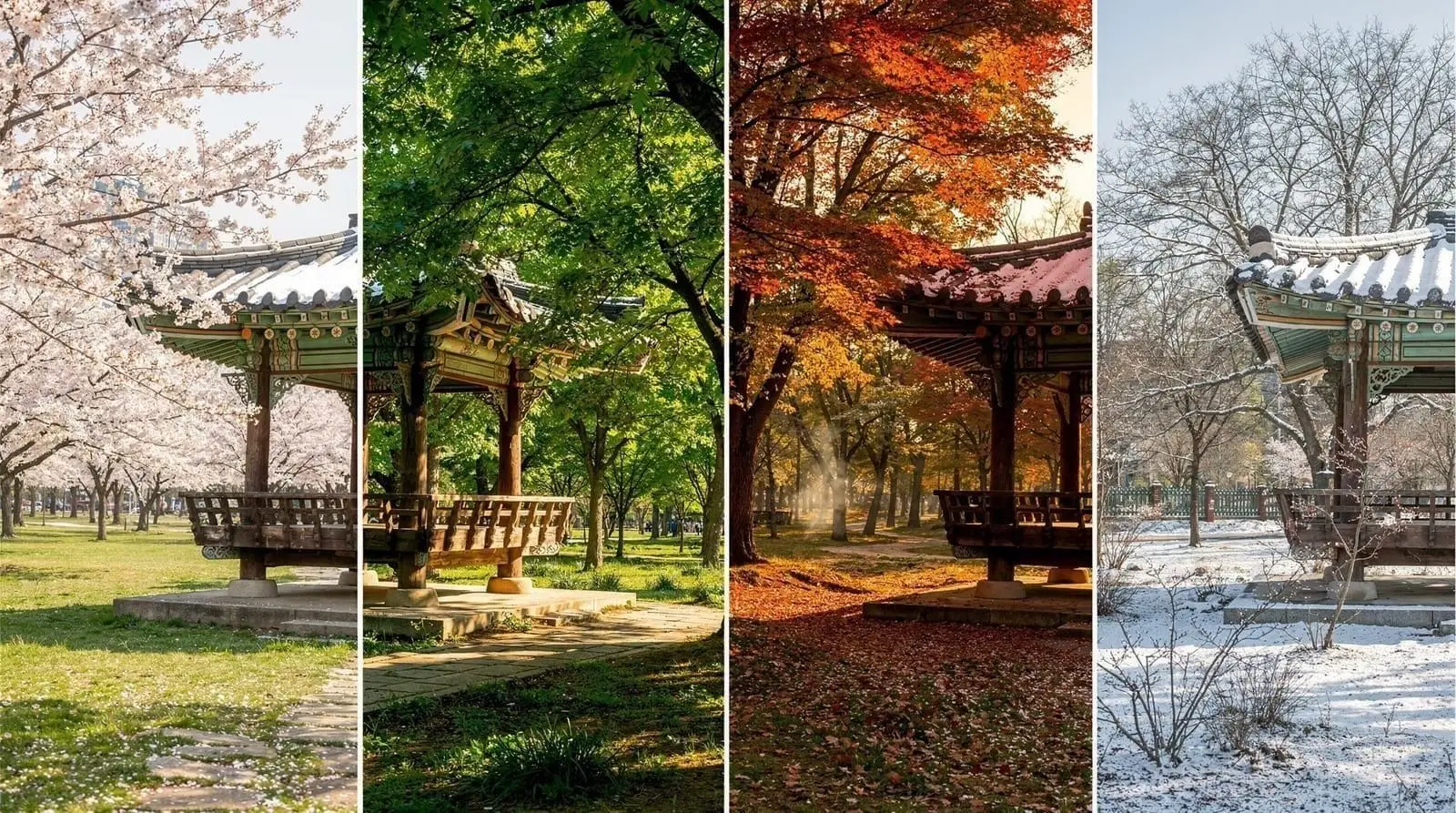
Best time to visit Incheon: seasons, weather, and when to book
What is the best time to visit Incheon?
April and October are the peak months for weather, scenery, and activities — April for cherry blossoms at Incheon Grand Park (peaking around April 5–10) and October for autumn foliage, clear skies, and comfortable hiking temperatures. Both months are busy; book accommodation 2–3 months ahead for those periods.
| Best overall | April or October (cherry blossoms / autumn foliage) |
| Best value | September (near-October weather, lower prices) |
| Cheapest | January and July |
| Book ahead by | 4–8 weeks for April/October weekends |
| Avoid if possible | Late July hard rain days, mid-August peak heat |
Why Incheon’s seasons matter more than most cities
Incheon sits on the Yellow Sea coast at 37°N latitude — the same latitude as Athens and Washington DC — but with a continental climate that creates dramatically different experiences across the four seasons. Summer is hot and genuinely humid. Winter is cold, sunny, and dry. Spring and autumn are brief but spectacular. Understanding the seasonal rhythm before you book changes which attractions make sense, how much you pay for a bed, and whether you spend your trip in raincoats or sunscreen.
This guide takes each season in detail, including the practical booking implications and how to make each window work for your specific interests.
One more factor worth weighing before you fix your dates: Incheon’s seasonal swings affect price nearly as much as comfort. The gap between a January hotel rate and an April weekend rate for the same room can exceed 40%, which means the “best” time to visit genuinely depends on whether you’re optimising for scenery, cost, or a balance of both. There is no single correct answer — only a set of trade-offs worth making deliberately rather than by accident.
Incheon: One Day Guided City Tour with Hotel PickupSpring (March to May): the premium season
Spring is the most popular period to visit Incheon and the greater Seoul area, and for good reason. The air is clear, temperatures are comfortable, and the city undergoes a dramatic visual transformation — from bare winter grey to cherry blossom pink in the space of about a week.
March: warming and waiting
March averages 0–10°C and is often cold, particularly in the first half. Cherry blossom forecasts start appearing in late February, but actual blooms rarely appear before late March and sometimes hold until early April. March is a reasonable time to visit if you want to avoid the crowds that come with the blossoms, but you are trading scenery for quiet.
Accommodation prices in March are moderate — roughly 20–30% below the April peak. If you want to experience spring Incheon without paying peak rates, arriving in the last week of March and catching the first hints of blossom before the crowds arrive is a good strategy.
April: peak cherry blossom season
Cherry blossom peak at Incheon Grand Park typically falls in the first or second week of April. The 2,000-plus trees along the main promenade create the most visited display in the city, and the park draws large crowds on weekends during peak bloom. The broader region — Seoul’s Yeouido, Jinhae in Gyeongsang Province — peaks at roughly the same time, meaning accommodation prices across Incheon and Seoul spike for this two-to-three week window.
Book early. Popular accommodation in Incheon (particularly near Chinatown and Songdo) sells out 4–6 weeks ahead for April weekends. Mid-week visits in April are significantly quieter than weekends while still being scenic.
The complete guide to timing your visit to catch peak bloom is in the Incheon Grand Park cherry blossoms guide.
Activities: Incheon Grand Park, Ara Waterway cycling, Chinatown walking tour, all of Wolmido Island.
May: the sweet spot for outdoor activities
May is consistently the best overall month in Incheon. Average temperatures of 15–22°C, relatively low humidity, and the transition from cherry blossoms to late-spring greenery. Azalea festivals in late April and early May coincide with hiking season on the island trails. Crowds are slightly lower than April. Accommodation prices remain elevated from peak season but begin to ease after the first week.
Muuido Island hiking, Ganghwado island exploration, and Sorae Ecology Park birdwatching are all at their best in May.
Summer (June to August): heat, humidity, and the monsoon
June: the last comfortable window
Early June — roughly the first three weeks — is warm (20–25°C) and not yet monsoon. If you arrive in late May and extend into June, you get excellent weather for beaches and island trips before the humidity peaks. Muuido and Yeongjongdo beaches are swimmable and quiet in June compared to the August crowds.
Mid-June is when the humidity begins to rise and the monsoon front approaches from the south.
July: monsoon month
Korea’s rainy season (장마철, jangmacheol) typically arrives in late June or early July and can deliver persistent heavy rain for 3–4 weeks. July averages 24–28°C but the combination of heat and humidity makes walking tours genuinely uncomfortable. Outdoor attractions like the fortress walk in Suwon or the cycling route along the Ara Waterway are best avoided in the worst of monsoon rainfall.
On the positive side: July is the cheapest accommodation period of the year in Incheon. Prices for the same rooms drop 25–40% compared to April or October. For visitors who are flexible on itinerary (prioritising indoor experiences like museums, shopping, and food) and budget-conscious, a July visit can be very cost-effective.
Bupyeong Underground Market and Sinpo International Market are excellent July destinations — covered, food-rich, and unaffected by rain.
August: hot, beach-focused
Monsoon typically ends by mid-August, and the second half of August is the peak beach season — hot (24–28°C), humid but without the persistent rain. Korean families take August holidays en masse, making Muuido and Eurwangni beaches crowded on weekends. Accommodation near beaches peaks in price.
For a beach-focused trip with family, August works well if you book accommodation several weeks ahead and visit beaches on weekdays. For history and cultural sites, the heat makes sustained walking uncomfortable by midday — do outdoor activities in the morning and early evening.
Autumn (September to November): the second peak
September: the transition
Early September sees the monsoon tail off and temperatures begin to cool from their August peak. By mid-September, conditions are comfortable (18–25°C) and improving. This is an underrated month — humidity has dropped, the sea is still warm enough for swimming into early September, and autumn colours begin on higher elevation trees by late month.
Crowds are smaller than October, accommodation prices have dropped from summer highs but haven’t hit the October spike, and the weather is reliably pleasant. September is arguably the insider pick for the best overall time to visit Incheon.
October: autumn foliage peak
October in Incheon and the greater Seoul area rivals April for natural beauty, and for many travellers it surpasses it. The combination of warm days (10–18°C), cool evenings, clear blue skies, and forested hillsides turning yellow, orange, and red creates an atmosphere that is genuinely difficult to match elsewhere.
Incheon Grand Park in October has autumn foliage along the lakeside circuit that rivals its cherry blossom season in visual quality. The zoo and botanical gardens are also at their most colourful.
Nami Island is the most famous destination for autumn foliage in the area — the ginkgo corridor turns brilliant yellow in mid-to-late October and is consistently spectacular. The Nami Island day trip guide covers timing in detail. Book ITX train tickets to Gapyeong well in advance for October — trains fill up weeks ahead.
Ganghwado Island offers hiking through forested ridgelines with coastal views and autumn colour in a quieter setting than the mainstream tourist sites.
Again: book accommodation 6–8 weeks ahead for October weekends. This period rivals April for demand.
November: post-peak quiet
Foliage peaks by early November and trails off through the month. Late November is cool (5–12°C) and often clear, with hotel rates beginning to drop from the October peak. A late-November visit catches the end of autumn atmosphere at lower prices and with smaller crowds.
Winter (December to February): cold, clear, and cheap
Incheon winters are cold but sunny. Average temperatures of -5 to 5°C, very low humidity, and frequent clear days with sharp winter light. Snowfall in Incheon city is less common than in inland areas — the Yellow Sea moderates temperatures — but it does occur, typically once or twice in January–February.
Advantages of winter visits
Price: Accommodation rates in December (outside the New Year holiday) and January–February drop to their yearly lows — typically 30–50% below spring and autumn peak rates. This is the time to access mid-range hotels at budget prices.
Crowds: The main tourist sites (Chinatown, Songdo, Wolmido) are quiet. Restaurants don’t require waits. Transport is easy.
Skiing: One of Incheon’s underplayed advantages is proximity to Korean ski resorts. Jisan Forest Resort (1.5 hours southeast) and Yongpyong (2.5 hours east) are accessible by bus or train from Seoul/Incheon and offer excellent slopes. A winter trip combining Incheon’s urban attractions with a ski day is an increasingly popular format.
Indoor cultural attractions: Museums, palaces, markets, and restaurants are all fully operational in winter and often more enjoyable without summer crowds and heat.
Winter disadvantages
Cold: Walking tours in Chinatown or along the Wolmido seawall in 0°C with a Yellow Sea wind is genuinely cold. Dress in serious layers. Down jacket, thermal base layer, and wind-resistant outer shell are standard winter gear for the Incheon coast.
Shorter days: Sunset is around 5:30pm in mid-winter, shortening the effective sightseeing window. Start early.
Beaches: Closed (no lifeguards) and not suitable for swimming. Island day trips are possible but the ferry services may be reduced in severe weather.
Incheon Stopover: City Highlights Tour for K-culture FansMonth-by-month quick summary
| Month | Temp (°C) | Crowds | Price | Best For |
|---|---|---|---|---|
| Jan | -5 to 0 | Very low | Cheapest | Budget, indoor, skiing |
| Feb | -5 to 5 | Low | Low | Budget, winter atmosphere |
| Mar | 0 to 10 | Low-moderate | Moderate | Pre-blossom, quiet |
| Apr | 10 to 18 | High (peak) | Highest | Cherry blossoms |
| May | 15 to 22 | Moderate | High | Best all-round month |
| Jun | 20 to 25 | Moderate | Moderate | Beaches, pre-monsoon |
| Jul | 24 to 28 | Low (rain) | Lowest | Budget, indoor markets |
| Aug | 23 to 28 | Moderate-high | Moderate | Beaches, family trips |
| Sep | 18 to 25 | Low | Moderate | Best insider month |
| Oct | 10 to 18 | High (peak) | Highest | Autumn foliage, hiking |
| Nov | 5 to 12 | Low | Moderate | Post-foliage quiet |
| Dec | 0 to 5 | Low | Low-moderate | Budget, winter, New Year |
Best season by type of trip
Different priorities point to different windows. Use this alongside the month-by-month table above rather than instead of it.
| Trip type | Best months | Why |
|---|---|---|
| Photography / scenery | April, late October | Cherry blossoms then autumn foliage give the highest visual payoff |
| Budget | January, July | Lowest accommodation rates of the year, in exchange for cold or rain |
| Beach | Late June, August | Warm sea, swimmable water; August is more crowded |
| Hiking (Ganghwado, Muuido) | May, September–October | Comfortable temperatures, low humidity, clear trail views |
| Family with young kids | May, September | Mild weather without extreme heat, cold, or rain |
| Skiing near Incheon | December–February | Jisan and Yongpyong resorts open, combine with city sightseeing |
| First-time short layover | Any month except peak monsoon (mid-Jul) | Indoor markets and Chinatown work year-round; see the layover itinerary |
If your trip centres on one specific destination rather than the city broadly, check that destination’s own seasonal notes too — Nami Island and Ganghwado each have narrower sweet spots than Incheon overall, and the Suwon Hwaseong Fortress day trip is genuinely unpleasant in peak summer heat given the amount of outdoor walking involved.
It also helps to think in terms of a rainy-day backup rather than committing every day of a trip to outdoor plans, even in the shoulder seasons. Korea’s weather can shift quickly outside the true monsoon window too, and having an indoor option in reserve — a market, a museum, a shopping centre — means a single overcast or rainy day doesn’t derail the whole itinerary. This matters most in June and September, both transitional months where a settled forecast can still include a wet afternoon.
When to book ahead
- April weekends: Book accommodation 4–6 weeks ahead minimum; 8 weeks for popular choices near Chinatown or Songdo.
- October weekends: Same as April. Book early or choose mid-week.
- Nami Island ITX train in October: Book on Korail website 2–3 weeks ahead.
- DMZ tours with JSA: These operate with limited numbers; book at least 2 weeks ahead and confirm availability.
Frequently asked questions about the best time to visit Incheon
Is Incheon worth visiting in winter?
Yes, particularly if budget is a priority. Prices are at their yearly lowest, crowds are small, and indoor attractions — markets, museums, restaurants — are fully operational. The downside is cold weather that limits comfort on long outdoor walks. Dress warmly and plan for shorter days.
When do the cherry blossoms peak at Incheon Grand Park?
Typically the first week of April, often between April 3 and April 10. The exact date varies by 1–2 weeks across years depending on winter temperatures. Check the Korea Meteorological Administration’s blossom forecast starting late February.
When is it cheapest to visit Incheon?
January and July have the lowest accommodation rates. January is dry and cold with thin crowds; July is hot and rainy. Of the two, January offers more comfortable sightseeing. September is the best value-to-quality ratio month — comfortable weather at lower prices than October.
Can I visit Muuido Island beach in autumn?
The beach at Muuido is accessible and the hiking is excellent in September–October, but water temperatures for swimming drop below comfortable levels by early October. For beach swimming, June and August are better. For scenic coastal hiking, September and early October are superior.
Is spring 2026 or 2027 affected by any policy changes?
The main policy change relevant to visitors is the K-ETA requirement shifting from a temporary exemption (limited to 25 listed countries/regions, including the US, Canada, the UK and most major European countries but not, for example, Portugal or Ireland) to mandatory requirement on January 1, 2027. If you are planning a 2027 spring visit (April 2027), you will need to obtain a K-ETA in advance. See the K-ETA and visa guide for up-to-date details.
What is the typhoon risk in Incheon?
Incheon sits in the northwestern part of Korea’s peninsula, which historically receives fewer direct typhoon strikes than the southern coast (Busan, Jeju). However, late summer typhoons (typically August–September) can bring strong winds and heavy rain even to Incheon. The probability of a trip-disrupting typhoon in any given August or September is low but non-zero. Travel insurance covering weather disruption is advisable for summer trips.
Are museums and cultural sites open in winter?
Yes. Major cultural sites including the Open Port heritage district, Chinatown, Songdo Central Park, and Incheon Grand Park are all accessible year-round. Some outdoor cafes and seasonal facilities close. Check specific opening hours for the Ganghwado Island ferry schedule in winter, as services may be reduced.
Incheon city experiences on GetYourGuide
Top-rated tours and activities


