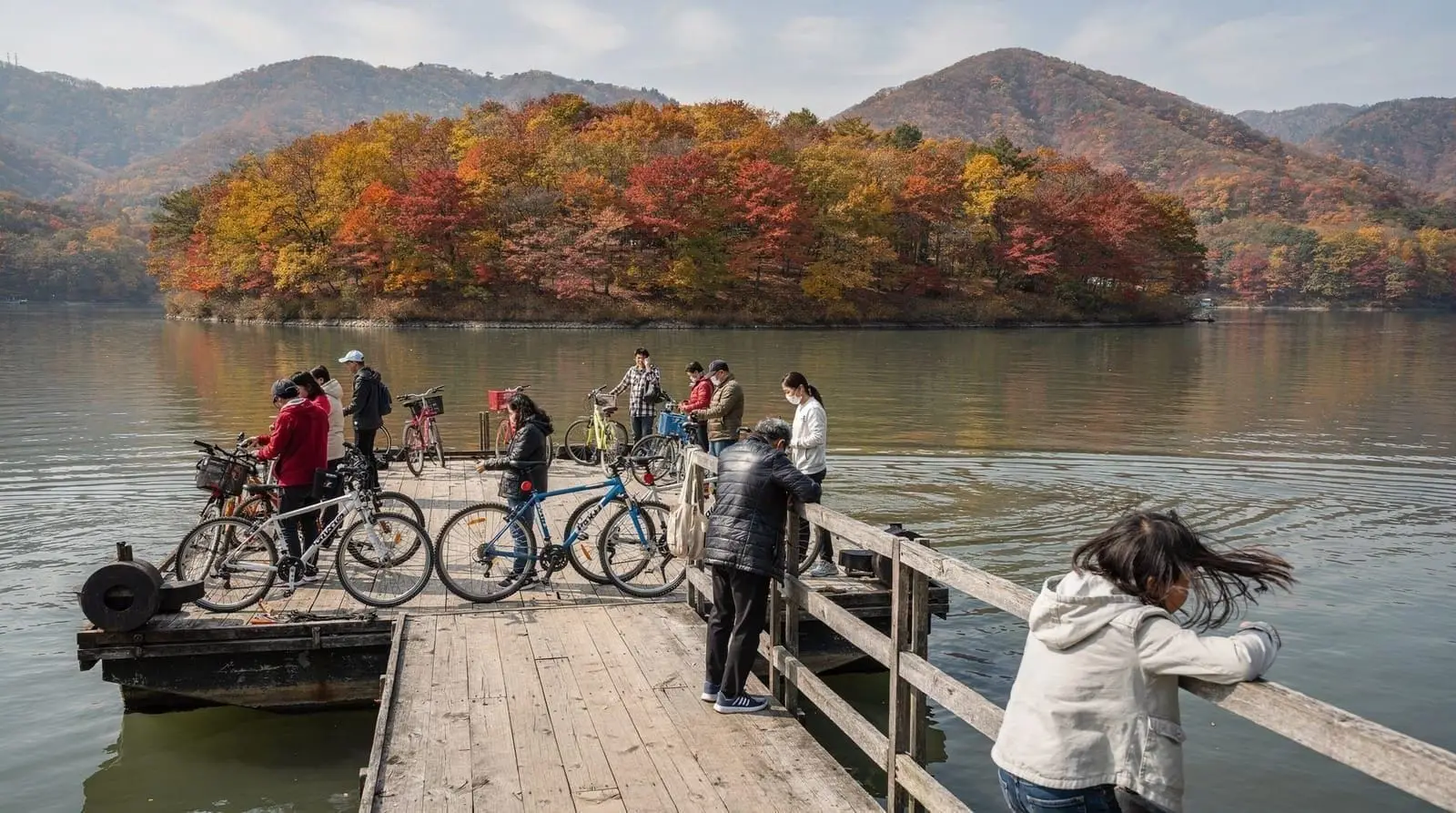
Nami Island day trip from Incheon and Seoul: the complete guide
How do you get to Nami Island from Incheon or Seoul?
Take the ITX-Cheongchun train from Cheongnyangni station (Seoul) to Gapyeong station — about 75 minutes. From Gapyeong, a local taxi or the Gapyeong Shuttle runs to Naminara Ferry Dock (10–15 minutes), where a 5-minute river ferry crosses to Nami Island. From Incheon Station, allow about 2 hours total, transferring in Seoul.
Why Nami Island earns its reputation
Nami Island (나미섬, also called Naminara Republic) is a small crescent-shaped river island in Gapyeong County, Gangwon Province — about 75 km northeast of central Seoul. It became internationally famous after featuring as a location in the 2002 Korean drama Winter Sonata, and has since developed into one of the most visited natural attractions in the country.
The fame is deserved. Four lanes of towering Italian poplar and ginkgo trees run the length of the island, creating cathedral-like corridors in autumn (when the ginkgos turn brilliant yellow) and in spring (when sunlight filters through new green canopies). In winter, bare tree silhouettes against frost create a stark, structural beauty that photographs as dramatically as any season. The island is small enough — about 13 km perimeter — that you can walk the full outer path in 90 minutes, but large enough to spend a relaxed full day without retracing steps.
From Incheon, the distance is substantial — this is a day trip that requires 2+ hours of travel each way — but the route is well-served by public transport and the island is genuinely worth the journey, particularly in autumn and spring.
| Where | Nami Island, Gapyeong County, ~85km northeast of Incheon |
| Cost | Admission ₩15,000; full day budget ₩50,000–60,000 ($39–47) |
| Time needed | Full day, including 2–2.5 hrs travel each way from Incheon |
| Getting there | Metro to Cheongnyangni, ITX-Cheongchun to Gapyeong, shuttle + ferry |
| Best time | Mid-to-late October for ginkgo season; May for quieter spring green |
Before you commit a whole day to this trip, it helps to see where it sits in a wider plan. Nami Island pairs well with a stay split between the coast and the capital: the Incheon and Seoul in 2–3 days itinerary shows how to fit a long excursion around the city sights, while the Incheon in one day itinerary is the better pick if you only have a single day and want to stay close to home. If you are still choosing a base, the where to stay in Incheon guide explains which neighbourhoods make early starts easier.
Getting there from Incheon
Option 1: Metro to Cheongnyangni, then ITX train (recommended)
- Take metro line 1 from Incheon Station toward Seoul (approximately 55 minutes to Seoul Station, or transfer at Sindorim/Guro for line 1 continued toward Cheongnyangni)
- From Seoul Station, take line 1 to Cheongnyangni (approximately 20 minutes)
- From Cheongnyangni station, take the ITX-Cheongchun express train to Gapyeong (approximately 75 minutes; trains run hourly — book in advance on the Korail app or website during peak season)
- From Gapyeong station, take the Gapyeong Shuttle Bus or a taxi to Naminara Ferry Dock (10–15 minutes; shuttle costs ₩3,000)
- Take the Nami Island ferry from the dock to the island (5 minutes; ferry is included in island admission)
Total journey time from Incheon Station: Approximately 2–2.5 hours.
Local transport tip: The metro and rail legs of this journey are covered in more detail in the getting around Incheon guide, which is worth a read if you have not yet used a transit card or navigated Korean station signage. The Nami Island destination page gives a broader overview of the area.
Train booking: Reserve ITX seats in advance, especially on weekends and in April (cherry blossoms) and October (autumn foliage). The Korail app (available in English) handles booking. Train fare: approximately ₩5,400–6,200 (around $4–5) one-way to Gapyeong.
Option 2: Join a guided day tour
Several tour operators run Nami Island day trips from Seoul that can also pick up near Seoul Station, making them easily combinable with an Incheon base. These tours handle all transport logistics — particularly useful in peak season when Gapyeong station taxis become scarce. Most tours also visit additional sites like the Garden of Morning Calm, Petite France, or rail bike experiences.
Seoul: Nami Island and Garden of Morning Calm opt RailbikeOption 3: Seoul Metro to Gapyeong (Subway only)
Metro line ITX is the same line but with more stops — takes approximately 2 hours from Cheongnyangni and costs slightly less. Not recommended if you want to maximise time on the island.
Nami Island admission and entry
Admission fee: ₩15,000 per person (approximately $12). This covers the ferry crossing in both directions and entry to the island. There is no separate ferry ticket — the admission covers everything.
Opening hours: 7:30am to 10pm daily. The ferry runs continuously from early morning until the last entry cutoff (around 9pm; check current hours on the island’s official site).
What the admission includes: Ferry round trip, island access, and the right to wander the full park indefinitely. The island has its own currency (Nami Won), usable at restaurants and shops inside — you can convert Korean Won at the island’s “bank.”
What to do on Nami Island
The four main tree corridors
The island’s most famous feature is its four named tree corridors (metasequoia, ginkgo, Italian poplar, and pine), each with a distinct character:
Ginkgo Lane is the most photographed and the most spectacular in autumn (mid-to-late October). The ginkgo trees turn a uniform, vivid yellow simultaneously, carpeting the ground with fallen leaves. During peak colour, this lane is exceptionally crowded; visit on a weekday if possible.
Metasequoia Lane runs parallel to the island’s west bank and features the tallest trees — some over 30 metres. In spring and summer, the dense canopy creates a cool, shaded corridor. In winter, the bare silhouettes against snow or frost are excellent for architectural photography.
Italian Poplar Lane is the main central corridor and the broadest. This is the one that appears in most promotional imagery. In May–June, the canopy is at maximum green density; in autumn, the poplars turn later than the ginkgos.
Pine and Bamboo Path: A secondary path through pine forest and a bamboo grove along the south shore provides a quieter, more meandering alternative to the main lanes.
The outer perimeter walk
The outer walking path follows the island’s edge, with riverside views across to the Gapyeong hills on the north shore and wider valley views to the south. The terrain is gently undulating, and the path is paved throughout. The full perimeter takes 90 minutes at a relaxed pace.
Cycling
Bikes are available to hire on the island (approximately ₩3,000–5,000/hour). The paved internal roads and the perimeter path work well by bike, and cycling allows you to cover more ground and see each tree corridor multiple times without fatigue.
Cultural facilities
The island has several small museums, an open-air sculpture garden, and regular cultural performances. The Nami Island Gallery holds changing exhibitions. An ostrich and alpaca enclosure in the centre of the island is particularly popular with younger visitors.
Dining
The island has a full range of food options, from a traditional Korean restaurant to a bakery and several casual cafes. Prices are moderately inflated compared to mainland options — budget ₩12,000–18,000 ($9–14) for a full lunch. The island’s bakery is well-regarded. Alternatively, bring packed food, which is allowed.
Best times to visit
Autumn (mid-October to early November): The undisputed peak for Nami Island. The ginkgo corridor turns bright yellow, the Italian poplars and metasequoias follow, and the fallen leaf carpets make every path photograph well. This is the most visited window — expect large crowds on weekends.
Spring (late March to early May): Cherry blossoms appear on the island from late March, followed by fresh green canopy from April. May is quieter than autumn and spring flower season but very pleasant.
Seoul: Nami Island & Alpaca World Spring TourFor a wider view of the seasons across the whole region, the best time to visit Incheon guide is a useful companion. If spring blossom is your main draw, you can also compare it with the Incheon Grand Park cherry blossoms guide, which needs far less travel, and the Incheon cherry blossom spring itinerary. For autumn colour closer to home, the Incheon autumn foliage hiking itinerary offers an alternative to the island crowds.
Winter (December to February): Surprisingly popular. The bare trees and occasional snow create a stark, romantic atmosphere that contrasts completely with the lush summer image. Winter admission may be slightly reduced.
Summer (June to August): The corridors are deeply green and cooling. However, summer humidity and the monsoon in July make extended outdoor walks less comfortable.
Combining with other attractions
Garden of Morning Calm (아침고요수목원)
A manicured botanical garden approximately 30 minutes by bus or shuttle from Gapyeong station. Beautiful in spring and autumn with well-tended flower beds and themed garden sections. Entry around ₩11,000 ($8.50). Many Nami Island day tours include this.
Seoul: Namiseom, Petite France, & Garden of Morning CalmPetite France
A themed village built in French country style on a hillside near Gapyeong, famous as a filming location for Korean dramas. More of a photo stop than a destination in its own right, but interesting for K-drama fans and included in many combo tours.
Gapyeong Rail Bike
A scenic rail bike (pedal cart) experience along a disused railway line through Gapyeong’s valley. Popular with families and couples; book in advance on weekends. Takes approximately 1.5–2 hours including waiting time.
Chuncheon
If a full day in the hills is too long, other outings can be a gentler fit: the DMZ day tour from Seoul is another popular full-day excursion, and the Incheon island hopping itinerary keeps you much nearer to the coast. Travellers who like rail-based fun can also compare this with the Yeongjongdo seaside rail bike before booking the Gapyeong version.
Gapyeong is on the railway line toward Chuncheon, the capital of Gangwon Province, known for Dakgalbi (spicy chicken stir-fry) and scenic lake views. A Nami Island and Chuncheon combination makes an excellent 1.5-day trip if you can extend your stay.
Nami Island vs Garden of Morning Calm vs Petite France
If you only have time for one Gapyeong-area stop, or you’re deciding what to combine with Nami Island, this comparison helps.
| Nami Island | Garden of Morning Calm | Petite France | |
|---|---|---|---|
| Time needed | 3–5 hours | 1.5–2 hours | 45–60 minutes |
| Cost | ₩15,000 | ~₩11,000 | Separate small entry fee |
| Best for | Full day out, tree corridors, cycling | Manicured gardens, spring/autumn colour | K-drama photo stops |
| Distance from Gapyeong station | 10–15 min shuttle/taxi | ~30 min bus/shuttle | Near Gapyeong, short ride |
| Standalone or combo | Works alone as a full day | Best combined with Nami Island | Best as a quick add-on, not alone |
Most day tours from Seoul bundle two or three of these together, which is efficient if you want to see the whole Gapyeong cluster in one outing rather than returning separately.
Arriving from Incheon Airport instead of the city
If you’re flying into Incheon and want to head straight to Nami Island rather than into the city first, the AREX train connects the airport to Seoul Station, from which you transfer to line 1 toward Cheongnyangni and pick up the same ITX-Cheongchun route described above. Total journey from Terminal 1 to Gapyeong runs approximately 2.5–3 hours including transfers, which is a significant chunk of a travel day — most visitors are better served doing this as a trip from central Seoul or Incheon after settling in, rather than straight off a long-haul flight.
Budget for the day trip
- ITX train (round trip): ₩10,800–12,400 (~$8.50–9.50)
- Gapyeong shuttle (round trip): ₩6,000 (~$4.70)
- Nami Island admission (includes ferry): ₩15,000 (~$11.70)
- Lunch on island: ₩12,000–18,000 (~$9–14)
- Metro from Incheon to Cheongnyangni (round trip): ₩5,000–6,000 (~$4)
- Total: ₩50,000–60,000 (~$39–47)
This fits comfortably within the Incheon budget travel framework of $30–50/day if you bring your own food and skip optional extras. For safety and language basics before you go, see the Incheon safety and language guide, and if you’d rather compare this against a shorter, closer-to-Incheon option, the Suwon Hwaseong Fortress day trip is a solid alternative with a much shorter travel time.
Frequently asked questions about the Nami Island day trip
How far is Nami Island from Incheon?
By train and ferry, the journey from Incheon Station takes approximately 2–2.5 hours. By distance, Nami Island is roughly 85 km northeast of Incheon city centre.
Can I do Nami Island as a day trip from Incheon Airport during a layover?
Only if you have a very long layover (12 hours or more). The round trip alone takes 5–6 hours, leaving 2–3 hours on the island. For shorter layovers, the Incheon Airport layover guide recommends staying closer to the airport — Chinatown and Songdo are better options.
Is Nami Island worth visiting outside of autumn?
Yes. The island has a different character in each season and is well-maintained year-round. Spring (April–May) offers cherry blossoms and fresh green growth; winter has a stark romantic quality; summer is the quietest. Autumn is the most spectacular but also the most crowded.
Do I need to book Nami Island admission in advance?
Admission does not require advance booking — you pay at the ferry dock. However, ITX train tickets to Gapyeong should be booked in advance, particularly during October (autumn foliage peak) when trains sell out weeks ahead.
What language is used at Nami Island?
Korean is primary, but the island has multilingual signage (English, Chinese, Japanese) and staff who can communicate in English at the main facilities. All menus at restaurants have English and image options.
Is Nami Island suitable for older travellers or limited mobility?
Yes. The main tree corridors are paved and flat, and the island has shuttle golf carts available for visitors who need them (small fee). The ferry crossing is brief and on a flat dock. Most of the island’s key attractions are accessible without significant climbing.
Should I combine Nami Island with Garden of Morning Calm and Petite France, or just do one?
If you have a full day and are already making the 2+ hour journey from Incheon, combining Nami Island with one other stop — usually Garden of Morning Calm — makes the travel time feel more worthwhile. Doing all three in one day is possible but rushed; most visitors are happier picking Nami Island plus one, rather than three quick, compressed stops.
Is Nami Island better than Suwon Hwaseong Fortress for a day trip from Incheon?
They serve different purposes. Nami Island is a nature and photography day out with significant travel time; Suwon Hwaseong Fortress is a UNESCO heritage site much closer to Incheon, doable in half the travel time. If autumn foliage or the tree-corridor scenery specifically appeals to you, Nami Island is worth the extra travel. If you want more content per hour of travel, Suwon is the more efficient choice.
Incheon islands on GetYourGuide
Top-rated tours and activities


