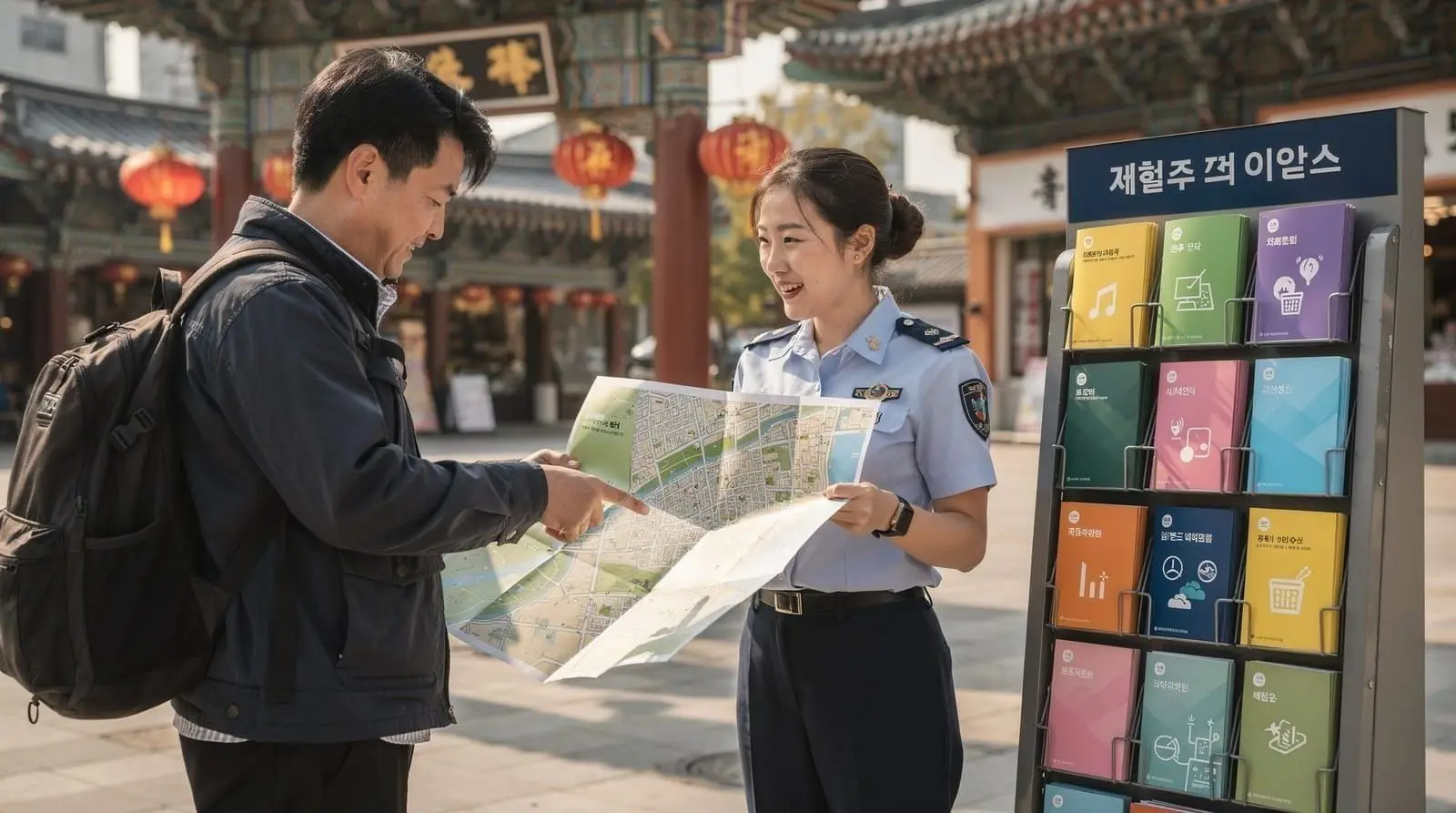
Incheon safety and language tips for first-time visitors
Is Incheon safe for tourists?
Yes. South Korea consistently ranks among the safest countries for international travellers, with very low rates of violent crime and theft. Incheon specifically is a safe city. Common sense precautions are sufficient. The biggest practical challenges for visitors are language barriers at smaller businesses and navigating transit without Korean.
Safety in Incheon: the honest assessment
South Korea is ranked among the ten safest countries for international travel by multiple indices including the Global Peace Index and Numbeo’s safety rankings. For context: Incheon’s violent crime rates are significantly lower than most comparable Western European cities, and pickpocketing — the most common tourist-targeting crime in many Asian cities — is genuinely rare by international standards.
This does not mean nothing can go wrong. Urban risks that exist everywhere (traffic, occasional scams targeting tourists, health issues from food or weather) apply here. But the baseline safety level is high enough that most first-time visitors to Korea are surprised by how comfortable they feel, even late at night, even in unfamiliar areas.
Specific areas and situations to be aware of are noted below. None of them are cause for alarm — they are context for calibrating your expectations.
| Emergency | Police 112, Fire/Ambulance 119, Tourist Helpline 1330 |
| Water | Tap water technically safe; most locals still choose bottled |
| Language app | Papago (Korean-English) plus Naver Map for transit |
| Tipping | Not customary anywhere in Korea |
| Best first move | Grab an airport SIM or eSIM before you leave the terminal |
Crime and personal safety
Theft
Petty theft is low in Korea by international standards. Bag snatching, pickpocketing in tourist crowds, and opportunistic theft from unlocked accommodations are significantly less common than in most European capitals. Many Koreans routinely leave laptops or phones on cafe tables as seat-markers when they queue for food — something that would be risky in many cities. That cultural norm reflects genuine low theft rates.
Standard precautions still apply: Don’t leave valuables visible in a car. Use a cross-body bag in very crowded markets. Keep your passport in a hotel safe rather than on your person after completing check-in at immigration. These are common sense rather than responses to specific elevated risks.
Scams
Tourist-targeting scams in Incheon are less prevalent than in major tourist destinations like Bangkok or Istanbul. The areas to be moderately aware of:
Taxi overcharging: Licensed Korean taxis use meters, and the meter rate is regulated. Insist on the meter being used. Unofficial “taxi touts” at Incheon Airport offering flat-rate deals outside the official taxi rank should be declined — use the official taxi queue or the AREX train.
If you would rather not negotiate anything after a long flight, pre-booking removes the question entirely: a fixed arrangement such as a private car from the airport to your hotel means a driver is waiting and nobody can quote you a surprise fare. For short stopovers, the airport layover itinerary and the 6-hour layover plan show how to keep the first hour simple.
Overpriced restaurant menus in tourist zones: Some restaurants in Incheon Chinatown and Wolmido’s seafood row display prices selectively. Check menu prices before ordering, particularly for set seafood platters where the price for the whole table is sometimes not shown prominently. Pointing at the price on the menu and confirming before the food arrives prevents most situations.
K-ETA scams: Third-party websites charging inflated fees to “assist” with K-ETA applications. The official K-ETA site is www.k-eta.go.kr and the fee (when K-ETA is required, from 2027) is approximately ₩10,000. Any site charging significantly more is a third-party intermediary. See the K-ETA guide for details.
Nighttime safety
Incheon and Korean cities generally are active at night, with convenience stores, restaurants, and transport running until late. Returning to your accommodation at 1 or 2am on foot through Bupyeong or Chinatown area streets is normal and safe. Solo female travellers consistently report Korea as one of the safest destinations in Asia for solo travel.
The area around certain entertainment districts (noraebangs, bars in Bupyeong) can be boisterous late at night but is not dangerous. The standard urban evening caution applies — stay aware of your surroundings, particularly around bus stops or intersections with heavy traffic.
Where you sleep shapes how relaxed your evenings feel. Choosing a base near a metro line and open late-night shops makes the walk back effortless; the where to stay guide compares the main neighbourhoods, and the Bupyeong underground market area is a good example of a lively, well-lit district to explore after dark.
Traffic
The main physical safety risk in Incheon (and Korea generally) for pedestrians is traffic behaviour. Korean drivers and motorcyclists do not always yield to pedestrians, even at marked crossings. Look both ways regardless of signals, particularly for delivery motorcycles that may take irregular routes or run red lights.
Crosswalk signals in Incheon work reliably — but wait for the green pedestrian signal rather than following vehicle signals. Delivery bikes (which often ride on pavements) are the most frequent pedestrian-collision risk.
Medical and health
Hospitals and clinics
Incheon has strong healthcare infrastructure. Incheon St. Mary’s Hospital and Inha University Hospital both have international patient services and English-speaking staff. For non-emergency situations, the Incheon area has numerous clinics (의원, ui-won) that are inexpensive and efficient for minor ailments.
Emergency services: dial 119 for ambulance and fire. Police: 112.
The Korea Tourism Helpline at 1330 provides multilingual medical referrals and can direct you to the nearest hospital with English-language service.
Medical costs: Korea’s health system offers very reasonable pricing for foreigners — an emergency room visit for a minor issue might cost ₩30,000–60,000 ($23–46) without insurance. However, complex treatment, surgery, or hospitalisation is expensive without coverage. Travel insurance is strongly recommended. If you’re budgeting carefully, see Incheon on a budget for how to leave room for an insurance buffer without overspending elsewhere.
Pharmacies: Korean pharmacies (약국, yak-guk) are extremely common and stock a wide range of over-the-counter medication. Pharmacists often speak basic English or can identify medications by showing a picture of the original packaging. For common ailments — headache, upset stomach, allergies — pharmacists are efficient and kind.
Food safety
Korean food is generally safe. Tap water in Incheon is potable but most locals drink bottled or filtered water — follow local preference. Restaurant hygiene standards are regulated and generally good. The main food caution is for severe spice-intolerance: many Korean dishes use gochugaru (red pepper flakes) or gochujang (chili paste) in ways that are not immediately obvious. If you have low spice tolerance, learn the phrase “매운 것은 빼주세요” (maewoon geoseun ppajuseyo) — “please leave out the spicy ingredients.”
Shellfish allergies: relevant at seafood-focused areas like Wolmido Island and Sorae Fish Market, where shellfish stocks are used widely in soups and stews. Communicating allergies before ordering is essential.
Sun and heat (summer)
Incheon summers (June–August) combine high temperatures (24–28°C) with humidity that makes the effective temperature feel higher. Prolonged outdoor exposure during midday hours in July–August carries genuine heat exhaustion risk. Carry water, wear sun protection, and plan strenuous outdoor activities for early morning or late afternoon.
Winter cold
December through February brings temperatures around -5 to 5°C with a wind chill from the Yellow Sea that makes coastal areas feel significantly colder. Dress in serious layers: thermal base layer, warm mid-layer, wind-resistant outer layer. Exposed skin at Wolmido seafront or the Ara Waterway in January needs gloves and a hat.
Language
How much English is spoken in Incheon?
More than you might expect, and less than you might hope. The general pattern:
- Tourist areas (Chinatown, Songdo, airport): Bilingual signage, often-English menus, staff who can handle basic English requests.
- Regular city areas (Bupyeong commercial streets, local restaurants, buses): Korean-only signage is the norm; younger staff (under 40) often have some English; older staff frequently do not.
- Markets and small shops: Prices and numbers are universal — show fingers, point at items, hold up your phone with a translated phrase. This works.
Essential apps for language
Papago (by Naver): The best Korean-English translation app. More accurate than Google Translate for Korean-specific idioms and grammar. Available for iOS and Android. The camera translation mode is essential — point your camera at a Korean menu and see instant English overlays.
Google Translate: Camera mode also works reasonably well. Useful backup.
Naver Map: Navigation in Korean and English. More reliable than Google Maps for Korean addresses and transit.
Emergency Korean phrases
English speakers do not need Korean to navigate Incheon’s tourist circuit. However, a few phonetic phrases are received very warmly and improve interactions significantly:
| Phrase | Korean (romanised) | Usage |
|---|---|---|
| ”Thank you” | Kamsahamnida (감사합니다) | Universal |
| ”Excuse me” | Sillyehamnida (실례합니다) | Getting attention politely |
| ”How much?” | Eolmayeyo? (얼마예요?) | Shopping/restaurants |
| ”One/two/three” | Il / I / Sam (일/이/삼) | Ordering |
| ”This one please” | Igeo juseyo (이거 주세요) | Pointing at item |
| ”Spicy? No spicy please” | Maeweo? / An maepge juseyo | Restaurants |
| ”Where is ___?” | ___이 어디예요? | Directions |
Pronunciation note: Korean romanisation has multiple systems. These approximate sounds — don’t worry about perfect pronunciation; Koreans are accustomed to foreign attempts and usually appreciate the effort.
Signage and navigation
Major metro stations, AREX stations, and tourist areas have bilingual (Korean/English) signage. Smaller bus stops in residential areas are often Korean-only. For bus travel in areas without Roman-script signage, use Naver Map or Kakao Map on your phone — they show real-time bus positions and stop names in English.
Incheon’s street addresses use the Korean address system (dong → street → building number), which is intuitive once you understand it but different from Western addressing. Google Maps and Naver Map handle Korean addresses reliably if you paste them in directly.
Emergency contacts and practical information
| Service | Number | Notes |
|---|---|---|
| Korea Tourism Helpline | 1330 | 24/7, English/Chinese/Japanese/other languages; directions, complaints, emergencies, medical referrals |
| Police | 112 | Korean; operators who speak English are available |
| Fire/Ambulance | 119 | Korean; basic English available |
| Incheon City Tourist Information | +82-32-1330 | Same as 1330, explicit Incheon number |
| Nearest Korean Embassy | (varies) | For serious visa/passport issues — check your country’s embassy in Seoul |
The 1330 helpline is your most useful single contact for anything tourism-related. Call it for: transport questions, getting directions, finding medical care, reporting a crime, translating for a local authority, or any situation where you need multilingual support. It is staffed 24/7 and genuinely useful.
Practical miscellaneous tips
Shoes off: In traditional Korean homes, guesthouses, and some restaurants (look for a step-up at the entrance), shoes are removed at the door. Leave them neatly arranged by the entrance. If you see a row of shoes at the restaurant door, yours join them.
Queueing: Koreans queue strictly at subway platforms and ticket machines. Pushing past is considered very rude. Wait your turn.
Tipping: Not customary in Korea at any level. Tipping in restaurants or taxis is not expected and can cause confusion. Do not tip.
Public behaviour: Korean public spaces are generally quiet and orderly. Speaking loudly on phones in subway cars is considered inconsiderate. Eating on the metro is frowned upon (technically allowed but socially discouraged). These norms are not legally enforced but are noticed.
Cash vs card: Both are widely accepted. Card acceptance at restaurants, convenience stores, and taxis is nearly universal. Small market stalls and some traditional vendors prefer cash. T-money card is the main transaction tool for transit.
SIM and connectivity: Korean SIM cards and eSIMs provide excellent 5G coverage throughout Incheon and the Seoul area. Pick up a travel SIM at Incheon Airport on arrival — the AREX station level in both terminals has telecom kiosks (KT, SK, LG). This is covered further in the getting around guide.
Incheon Airport SIM card and T-money card pickup, arranged before you landIf you prefer not to swap a physical card, an eSIM you install before departure gets your phone online as soon as you land, which means Papago, Naver Map and the 1330 helpline are all usable from the arrivals hall. Data matters more than it seems here: translation camera mode and real-time bus maps both depend on a connection, and the getting around guide explains how much of daily navigation runs through the phone.
Natural disaster and weather risk
Korea sits outside the main Pacific typhoon belt but still receives the tail end of typhoon season, typically August–September, bringing heavy rain and occasional transit disruption rather than direct structural risk to Incheon. Earthquakes are rare and generally minor compared to Japan; Korea is not on a major fault line, and building codes are not calibrated to seismic risk the way Japan’s are, but this reflects genuinely low seismic activity rather than a hidden danger.
Monsoon season (called jangma, 장마) runs roughly late June through July and brings sustained rain that can affect outdoor plans at Wolmido, the Ara Waterway, or Incheon Grand Park — check the forecast a day or two ahead if your itinerary depends on being outdoors.
Seasonal planning is the easiest safety measure of all. The best time to visit Incheon guide helps you avoid the wettest and most extreme weeks, and on a rainy day the indoor options in Songdo or the Incheon in one day itinerary give you a dry plan B.
Common visitor concerns, addressed directly
“Is it safe to walk alone at night in Incheon?” Yes, in the areas visitors typically frequent — Chinatown, Songdo, Bupyeong, the Incheon Station area. Well-lit streets, active convenience stores, and steady foot traffic are the norm well past midnight.
“Will I be able to get around without speaking Korean?” Yes, though it takes slightly more effort than in Seoul’s most touristy districts. Combine Naver Map, Papago’s camera mode, and pointing at menus, and you will manage every practical situation covered in this guide, including transit, ordering food, and asking for directions.
“What’s the one thing that catches first-time visitors off guard?” Not safety — it’s the assumption that English will be as widely spoken as in a major European capital. It isn’t, particularly outside tourist-facing businesses. Preparing the essential phrases and apps above closes that gap quickly.
Frequently asked questions about safety and language in Incheon
Is Incheon safe for solo female travellers?
Yes. Korea consistently ranks very highly in surveys of solo female travel safety. Street harassment is low by international standards, public transport is used safely by women at all hours, and hostels and guesthouses in Incheon are well-managed. Many solo female travellers describe Korea as one of the most comfortable countries they have visited for this style of travel.
What should I do if my passport is lost or stolen?
Contact your country’s embassy in Seoul immediately. Also contact the Korean police (112) and file a report. The 1330 helpline can help you locate your nearest embassy. In the interim, the embassy can issue an emergency travel document for departure. Keep a photocopy of your passport separate from the original, and store a digital photo in your email.
Are there any scams at Incheon Airport?
The main ones: unofficial taxis at the terminal entrance offering flat-rate deals (always use the official taxi queue or AREX); third-party K-ETA “application help” websites charging far more than the official rate. The airport’s official information desks are staffed and helpful for any questions.
Is Korean tap water safe to drink?
It meets WHO drinking water standards and is technically safe. Most Korean locals drink bottled or filtered water as a preference. For short stays, bottled water from convenience stores (₩800–1,500 for 500ml) is the practical choice.
What if I need a doctor in Incheon who speaks English?
Call 1330 for a referral to the nearest facility with English-speaking medical staff. Incheon St. Mary’s Hospital and Inha University Hospital both have international patient departments. For walk-in clinics, the Songdo district has several international-oriented medical facilities near the embassy zone.
Can I use my home country’s emergency contact number in Korea?
Korean emergency services (112 police, 119 fire/ambulance) are separate from your home country. Use Korean emergency numbers while in Korea. Your home country’s embassy in Seoul (not your home country’s emergency number) is the contact for consular assistance. Keep the Seoul embassy number for your passport country saved on your phone before you travel.
Do I need travel insurance to visit Incheon?
It isn’t legally required, but it’s strongly recommended. Korea’s healthcare system is efficient and reasonably priced for minor issues, but hospitalisation, surgery, or emergency evacuation without coverage can be expensive. Confirm your policy covers Korea specifically and includes medical evacuation before you travel.
Is it normal for Korean strangers to help with directions even without shared language?
Yes, and it happens often. Many Koreans, especially younger residents, will use a translation app on their own phone to help a visibly lost visitor, or walk a short distance to point you the right way. It is a common and genuinely helpful part of daily life in Incheon, not an isolated kindness.
Incheon city experiences on GetYourGuide
Top-rated tours and activities


