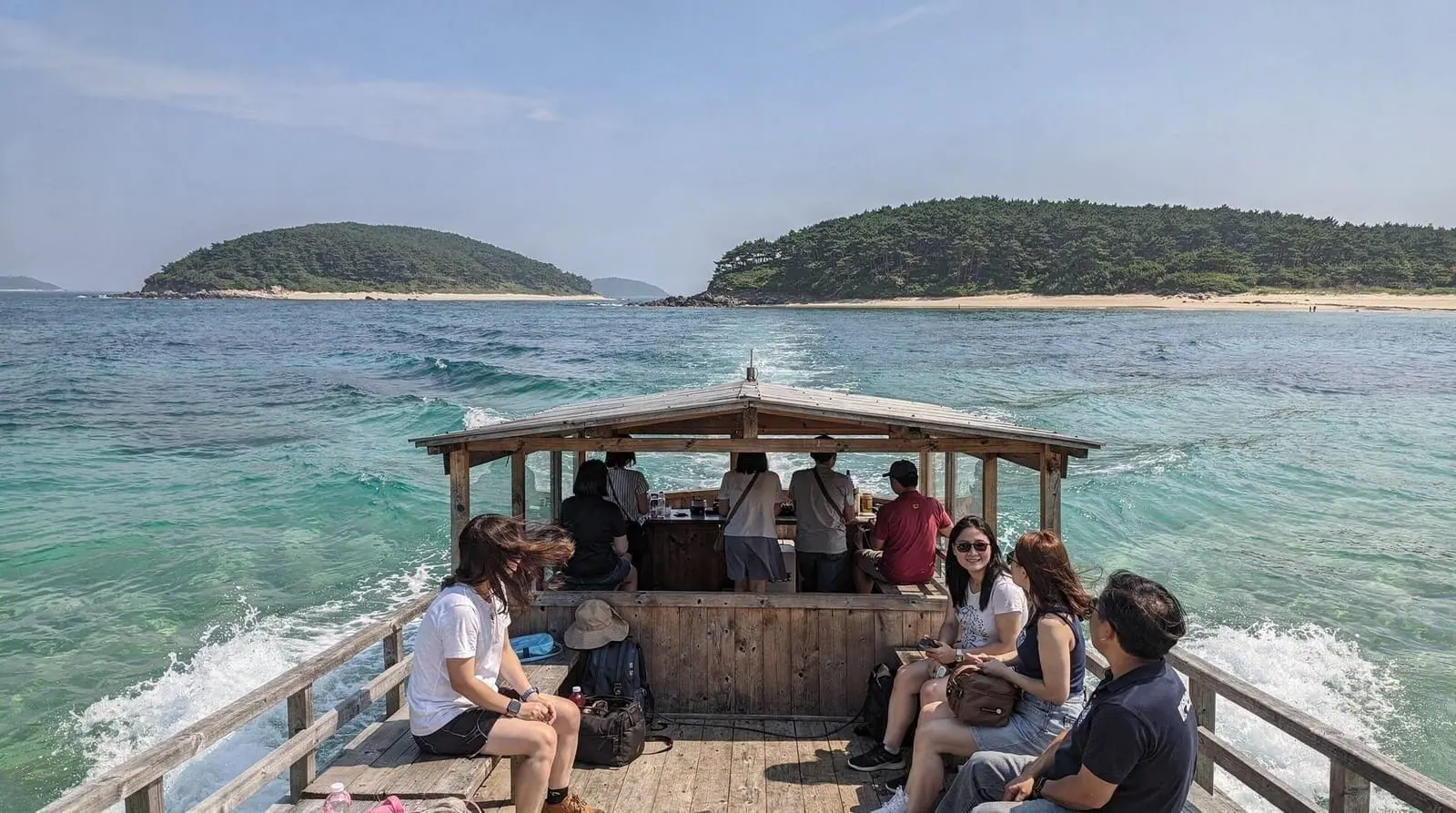
Incheon island hopping — Muuido and Yeongjongdo in 2 days
Two islands, two completely different moods
Most visitors to Incheon pass through on their way to or from the airport and never realise that the city is ringed by islands — some sandy and wild, others quietly suburban, all accessible without a car in under two hours. This two-day itinerary pairs Muuido Island, a near-deserted beach escape reachable by short ferry, with Yeongjongdo, the larger island that hosts Incheon International Airport but conceals surprisingly good coastal scenery, a famous seaside rail bike, and a long sandy beach that locals favour over busier Seoul-side options.
The contrast between the two is the point. Day one is slow: a mudflat walk, a quiet beach, a hiking trail that takes you above the waterline for a sweeping look at the Yellow Sea. Day two has more built infrastructure — the rail bike is genuinely fun, and Eulwangni Beach has the kind of casual seaside food scene that Koreans do well — but it keeps the same relaxed rhythm. You never need a car. You do need a T-money card, sensible walking shoes, and a willingness to check ferry timetables in advance.
| Where | Muuido Island and Yeongjongdo, both near Incheon Airport |
| Cost | around ₩130,000-200,000 per person, excl. accommodation |
| Time needed | 2 days, 1 overnight on Yeongjongdo |
| Getting there | AREX to Terminal 1, then bus/ferry to each island |
| Best time | May-June or September-October |
Day 1: Muuido Island — beaches, mudflats, and a short summit
Morning — getting to Jamjinpo Port
Muuido is not directly accessible from the Incheon metro network. The practical route starts at Incheon International Airport Terminal 1, which is on Yeongjongdo itself. If you are coming from Seoul or central Incheon, take the AREX (Airport Railroad Express) to Terminal 1 — the journey from Seoul Station takes about 43 minutes by express train (₩9,500); from Incheon Station, take the AREX all-stop to Gyeyang and change to Incheon Metro Line 1 (check duration and fare in Naver Map or Kakao Map).
From Terminal 1, catch local bus 222 toward Jamjinpo Port (잠진포 선착장). The bus takes roughly 35–40 minutes and costs around ₩1,500 with a T-money card. Alternatively, a taxi from the airport to the ferry terminal costs about ₩15,000–18,000 and takes 20 minutes — worth considering if you have luggage or are travelling as a small group.
At Jamjinpo Port, ferries to Muuido run approximately every 30–60 minutes during daylight hours. The crossing takes 10–15 minutes and costs about ₩1,500–2,000 each way. Check the current schedule posted at the terminal office when you arrive; the last return ferry is usually around 7–8pm depending on the season.
Budget tip: if you are starting from central Incheon rather than the airport, combine a morning visit to Songdo Central Park before heading north to catch the airport bus. If an airport layover is your starting point, the Incheon airport layover itinerary covers what you can realistically do with 4–8 hours between flights.
Late morning — Hanagae Beach
The ferry drops you at Muuido’s main pier. Hanagae Beach (한아게 해수욕장) is about a 10-minute walk from the pier — follow the signs or just walk toward the coast. This is one of the longer sandy beaches in the Incheon area, stretching roughly 700 metres with calm water and a gently shelving approach that makes it accessible even for children.
Hanagae is at its best outside peak summer (late July and August, when crowds arrive from Seoul). In spring, autumn, and on weekday visits in summer, you will often find the beach near-empty. The water quality is generally good by Yellow Sea standards; the sand is coarser than Jeju’s famous beaches but fine enough for barefoot walking.
The beach village behind the sand has several seafood restaurants serving haemul pajeon (seafood pancake), grilled clams, and raw fish platters at reasonable prices. A full meal for two with soju runs ₩30,000–50,000 ($23–38). Convenience stores cover snacks and drinks.
Afternoon — mudflat walk and Guksabong Peak
At low tide, the mudflats (갯벌) accessible from the northern end of Hanagae Beach become the island’s most distinctive experience. Tidal flats on the Yellow Sea coast are extraordinarily productive ecosystems — you will see small crabs, bivalves, and various wading birds, and the mud itself has a particular texture and smell that locals associate with childhood. The walk out across the flats at low tide is something between a nature hike and performance art.
Check the tide tables before you leave (a Korean tide app called 바다타임 Badatime is free and reliable). You want to arrive at the flats when the tide is two to three hours past its peak ebb — exposed but not yet returning. Wear old shoes or sandals you are happy to get muddy, or join the many visitors who simply go barefoot.
After the mudflats, Guksabong Peak (국사봉, 148m) offers a short hike with outsized views. The trailhead is accessible from the village behind Hanagae, and the ascent takes 40–50 minutes on a clear path through pine and oak forest. The summit views on clear days extend across the southern approach channels to Incheon Harbour and, in the distance, Seoul. Return by the same route.
Incheon: Coastal Rail Bike, Sorae Park and Fairytale VillageEvening — dinner and overnight on Yeongjongdo
Return to Jamjinpo by ferry before last departure. Rather than heading back to Seoul, cross to Yeongjongdo and stay overnight there — this sets you up for Day 2 without losing transit time in the morning.
The area around Eulwangni Beach on Yeongjongdo has a cluster of pensions (Korean-style guesthouses) and small hotels ranging from ₩60,000 to ₩150,000 per night ($46–115). Booking ahead is essential in peak season. Dinner options near Eulwangni are strong on grilled seafood; a samgyeopsal or jjukkumi (spicy octopus) meal at one of the beachside grills is a good end to the day.
Day 2: Yeongjongdo — rail bike, beach, and airport
Morning — Seaside Rail Bike
The Yeongjongdo Seaside Rail Bike is the reason most Koreans make a deliberate trip to this island rather than just passing through for the airport. The 5.6 km loop runs along a disused railway line that clings to the southern coast of Yeongjongdo, offering unobstructed views of the Yellow Sea and, on clear days, the distant outline of Muuido to the south.
Rail bikes (레일바이크) are four-wheeled pedal carts that run on actual rails. The pace is entirely under your control. There are no motors, no time pressure, and no hill to conquer — the entire loop is nearly flat. It takes most people 40–60 minutes to complete the circuit at a comfortable pace. Each cart seats two adults plus one child, and the price is typically ₩20,000–25,000 per cart.
Book online in advance, especially for weekends or public holidays. The bike station opens from around 9am.
After the rail bike, Wangsan Beach (왕산해수욕장) is close by and worth a brief detour. It is smaller and quieter than Eulwangni, with a more local feel and fewer facilities — good for a morning walk and a coffee from one of the beach stalls.
Incheon: Luge & Railbike & Purple Azalea FestivalAfternoon — Eulwangni Beach and the airport
Eulwangni Beach is Yeongjongdo’s main swimming beach: a 700-metre arc of sand facing southwest, which makes it excellent for sunset views on clear evenings. During summer the beach has lifeguards, showers, and equipment hire. Outside of July and August it is quieter, and the cafes and seafood restaurants behind the beach remain open.
Spend the afternoon at a relaxed pace. The stretch of restaurants along the road behind the beach serves some of the freshest hoe (Korean raw fish sliced to order) in the Incheon area at prices notably lower than comparable restaurants in Seoul or Chinatown. A full hoe spread for two with side dishes and soju typically runs ₩40,000–70,000 ($31–54).
From Eulwangni, bus 302 returns to Incheon Airport Terminal 1 in approximately 30–35 minutes. From Terminal 1, you can either fly home (if this has been a stopover itinerary) or take the AREX back to Seoul. For departures back to Seoul, allow at least 90 minutes if you want a proper afternoon at the beach before heading to your next destination.
If you want to extend your Korea trip, the Incheon to Seoul 2–3 day itinerary continues naturally from here. Incheon’s Wolmido Island is another easy add-on: the Wolmi Sea Train circles the waterfront on a suspended monorail track and takes about 40 minutes.
If you would rather see the full day in one place instead of splitting your final afternoon between the beach and the airport, consider swapping the order: do Yeongjongdo first as a half-day arrival activity, then Muuido as a fuller second day, returning to the mainland via Incheon Station rather than back through the airport. This works well if your flight is a day or two after this itinerary rather than immediately following it.
What to pack for two days on the islands
Beyond the usual travel basics, a few items matter more here than on a typical city itinerary. Old shoes or sandals you do not mind ruining are essential for the mudflat walk — trainers you care about will not survive the mud cleanly. A light rain shell earns its space even outside monsoon season, since coastal weather on the islands changes faster than in central Incheon.
Sunscreen and a hat matter more here too: the mudflats and both beaches offer almost no shade, and reflected light off water and wet sand increases exposure. A swimsuit is worth packing even outside peak summer, since the water around Hanagae and Eulwangni is swimmable from late spring through early autumn on a warm day. Cash in small denominations helps at the beachside food stalls and some of the smaller pensions on Yeongjongdo, which are not always set up for card payments.
Practical information and costs
Getting around
- AREX Express from Seoul Station to Incheon Airport T1: ₩9,500 (~$7.30), 43 minutes
- From Incheon Station to Incheon Airport T1: Incheon Metro Line 1 to Gyeyang, then AREX all-stop (check live routing in Naver Map or Kakao Map)
- Bus 222 from T1 to Jamjinpo Port: ₩1,500 (~$1.20), 35–40 minutes
- Muuido ferry (each way): ₩1,500–2,000 (~$1.20–1.55)
- Taxi from T1 to Jamjinpo: ₩15,000–18,000 (~$12–14)
- Rail bike (per cart): ₩20,000–25,000 (~$15–19)
- Bus 302 Eulwangni to T1: ₩1,500 (~$1.20)
All buses and the AREX accept T-money card. Buy and load yours at any Incheon Airport station kiosk or convenience store.
Accommodation
Yeongjongdo pensions near Eulwangni Beach: ₩60,000–150,000/night ($46–115). The airport area also has several chain business hotels (Incheon Airport Marriott, Hyatt, Ramada) at ₩130,000–280,000/night, but staying closer to Eulwangni keeps you in the island atmosphere rather than the transit zone.
Budget breakdown
Day 1:
- AREX Express from Seoul to T1: ₩9,500
- Bus 222 to Jamjinpo: ₩1,500
- Muuido ferry return: ₩4,000
- Lunch at Hanagae: ₩15,000–25,000 per person
- Accommodation on Yeongjongdo: ₩60,000–150,000 (shared if couple)
- Dinner: ₩15,000–25,000 per person
Day 2:
- Rail bike: ₩20,000–25,000 per cart
- Lunch/dinner at Eulwangni: ₩20,000–35,000 per person
- Bus back to T1: ₩1,500
- AREX Express to Seoul: ₩9,500
Estimated total (per person, couple sharing accommodation): ₩130,000–200,000 (~$100–154) excluding accommodation
Best time to visit
Both islands are year-round destinations, but the optimal windows are. For island hopping in spring, see the Incheon cherry blossom itinerary; for autumn colour, the autumn foliage hiking itinerary pairs Nami Island with Ganghwado’s temple trails. For broader trip planning, the getting around Incheon guide covers every transit option in detail.
- May–June: mild weather, lower crowds than summer peak, green hills, accessible beaches
- September–October: cooling temperatures, clearer skies, autumn colour on Guksabong
- July–August: hottest and most crowded; peak beach season, water warm for swimming
- November–February: quiet, occasionally cold (below 0°C in January), but dramatic skies and empty beaches
Avoid Chuseok (Korean Thanksgiving, usually September/October) and the peak summer holiday period (late July through mid-August) if crowd-free island time is the priority.
If you only have one day, not two
Compressing this into a single day means picking one island, and Muuido is the better single-day choice if you value the beach-and-mudflat experience over built infrastructure, while Yeongjongdo suits a single day better if you are also catching a flight, since Eulwangni Beach and the rail bike sit minutes from Terminal 1. A single-day Muuido trip from Seoul is workable — first ferry out around 7am gives roughly 5-6 hours on the island — but it is a long day of transit relative to time on the ground, and most visitors who try the compressed version wish they had built in the overnight instead.
Frequently asked questions about Incheon island hopping
Do I need a car to do this itinerary?
No. Every connection in this itinerary — AREX train, local buses, and ferry — runs without a private vehicle. A car does make some logistics marginally faster (particularly getting from Incheon Airport to Jamjinpo Port), but it is not necessary. A T-money card is the only essential piece of kit.
How early should I book the Yeongjongdo rail bike?
During weekends from April through October, rail bike slots fill up 1–2 weeks in advance for popular morning times. Book online as soon as your itinerary is confirmed. Weekday slots are usually available a few days ahead.
Can I do Muuido Island as a day trip from Seoul?
Yes, but it is a long day. The transit from Seoul Station to Muuido via AREX and bus 222 takes approximately 1.5 hours each way, leaving roughly 5–6 hours on the island if you catch the first ferry out (around 7am). A comfortable pace suits an overnight stay better.
Is the ferry to Muuido running year-round?
Yes, the Jamjinpo–Muuido ferry operates daily throughout the year, with reduced frequency on winter weekdays. Always check the last departure time posted at the terminal on arrival, especially if visiting in November through February.
What is the mudflat walk like for people not used to it?
The mudflat experience is accessible to almost everyone who can walk on uneven surfaces. You do not need to go deep into the flats — even a short walk from the beach edge reveals enough wildlife and texture to make it memorable. Wear old shoes or go barefoot; the mud is soft, not sharp. It is messier than a normal beach walk and the smell of the tidal zone can be strong. Children generally love it; adults with limited mobility should assess the terrain from the beach edge before committing to a longer walk.
Are there accommodation options on Muuido Island itself?
A small number of pensions and guesthouses operate on Muuido, primarily for summer visitors. Outside of July and August, advance booking is difficult as many properties only open seasonally or for group reservations. Yeongjongdo, with its better transport links, is the more reliable option for overnight accommodation in this itinerary.
How do I get back to Seoul from Yeongjongdo at the end of Day 2?
From Eulwangni Beach, take bus 302 to Incheon Airport Terminal 1 (30–35 minutes), then board the AREX toward Seoul. The all-stop train to Seoul Station takes about 59 minutes and costs ₩4,150. Alternatively, the express AREX (direct train, no stops) takes 43 minutes for ₩9,500. Both drop you at Seoul Station with easy metro connections across the city.
Incheon islands on GetYourGuide
Top-rated tours and activities


