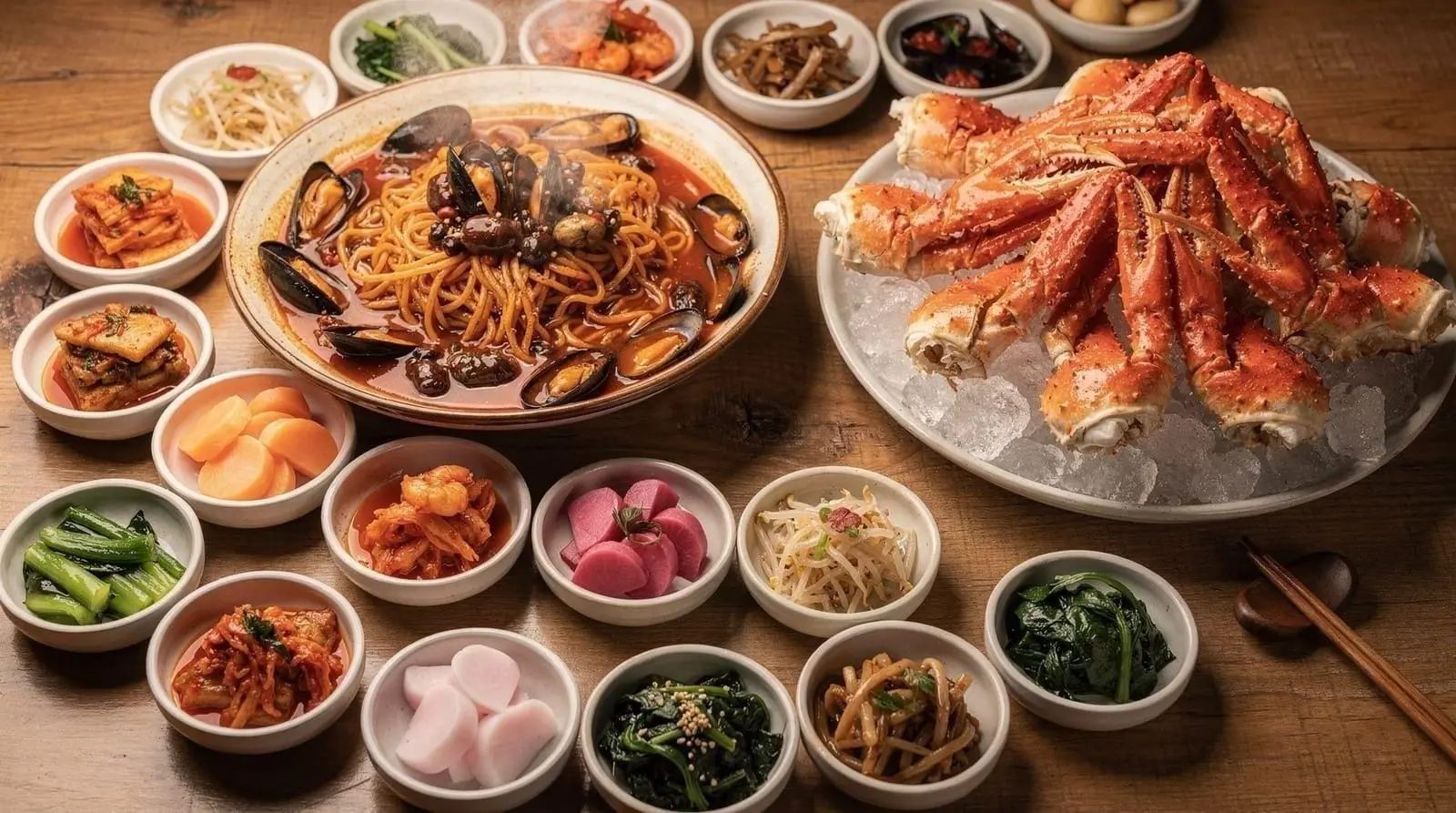
What to eat in Incheon — the essential food guide
Why Incheon has a food story all its own
Most visitors treat Incheon as Seoul’s airport city. They are wrong to — or at least wrong to leave before eating. Incheon’s food culture is older, stranger, and more layered than a transit itinerary gives you time to discover. The city sits at the convergence of Korean, Chinese, and Japanese culinary histories, shaped by the Open Port era of the 1880s when foreign merchants set up trading houses along the waterfront. That collision produced dishes you cannot easily find elsewhere, starting with Korea’s most beloved comfort food.
This guide covers Incheon neighborhood by neighborhood, with prices in KRW and USD, so you know what to expect whether you have six hours between flights or a full weekend. The exchange rate is approximately 1,300 KRW to the USD.
| Where | Chinatown, Sinpo Market, Wolmido, Gaehang Market, Songdo |
| Cost | Around ₩5,000–10,000 street food; ₩8,000–25,000 sit-down meals |
| Time needed | Half day to eat across 2–3 neighbourhoods |
| Getting there | Metro line 1 to Incheon Station or Dongincheon Station |
| Best time | Late morning to lunch; Gaehang Market before 9am |
Chinatown: where jjajangmyeon was born
Incheon Chinatown is not just a backdrop for food photos. It is the birthplace of jjajangmyeon as Koreans eat it today. When Chinese laborers arrived in Incheon in the 1880s and 1890s, they brought zhajiangmian — a Beijing wheat noodle dish with fermented soybean paste. Korean cooks adapted it over decades into something darker, sweeter, and distinctly local. The result, jjajangmyeon, became Korea’s national takeout dish, and Incheon’s Chinatown restaurants still serve versions that outperform most of what you find in Seoul.
Jjajangmyeon (짜장면): thick wheat noodles blanketed in black bean sauce (chunjang) cooked with pork, onion, and zucchini. The Chinatown versions tend to use fresh hand-pulled noodles rather than machine noodles, and the sauce carries more caramelized depth than the delivery-chain standard. Expect to pay ₩8,000–12,000 ($6–9) for a bowl. Sit-down restaurants along the main pedestrian strip include several decades-old establishments with framed newspaper clippings on the walls — these are not tourist traps, they are institutions.
Jjamppong (짬뽕): spicy seafood noodle soup with clams, squid, and vegetables in a bright red broth. Order jjajangmyeon and jjamppong at the same table and you have the canonical Chinatown lunch. The pairing is so common it has its own shorthand — jjamjja — and restaurants offer half-and-half combos (jjampjja) for around ₩14,000–16,000 ($11–12).
Tanghulu (탕후루): candied fruit on skewers, dipped in hard sugar syrup and left to set. Strawberries, grapes, mandarin segments, cherry tomatoes. Walk Chinatown on a weekend afternoon and you will see half the crowd carrying one. Stalls cluster near the Chinatown gate and along the main alleys. Prices run ₩3,000–5,000 ($2–4) per skewer.
Chinese egg tarts: flaky pastry shells with a silky egg custard centre. Several bakeries along the main strip produce them fresh, and the smell pulls you in. About ₩1,500–2,500 ($1–2) each, often sold in bags of four.
Gong-gal-bi (공갈빵): hollow Chinese-style bread, puffed and lightly sweet, a Chinatown specialty you rarely see outside Incheon. Kids love it. ₩1,000–2,000 per piece.
For a structured walk through the neighborhood’s history alongside its food, the Incheon Chinatown walking tour guide maps the full circuit. The Open Port heritage trail covers the wider historical context if you want to understand why all of this food culture exists here at all.
Incheon: Walk and Eat with Local Walking BuddySinpo International Market: Korean street food in concentrated form
A ten-minute walk from Chinatown, Sinpo International Market (신포국제시장) is a covered indoor market that has been feeding Incheon residents since the Japanese colonial period. It is not aimed at tourists, which is exactly why the food is good.
Tteokbokki (떡볶이): cylindrical rice cakes cooked in a spicy-sweet gochujang sauce. The Sinpo version often includes fish cakes, boiled egg, and ramen noodles. ₩4,000–6,000 ($3–5) for a portion shared standing at a stall.
Gimbap (김밥): rice rolls with fillings of egg, pickled radish, carrot, spinach, and fish cake, cut into bite-sized rounds. A single roll runs ₩3,000–4,000 ($2–3). Some stalls do tuna, beef, or kimchi variations.
Seafood pajeon (해물파전): thick savory pancake loaded with green onion, squid, and shrimp. Eaten hot from the griddle with a dipping sauce of soy, vinegar, and sesame oil. ₩8,000–12,000 ($6–9) for a full pancake.
Hotteok (호떡): fried dough filled with brown sugar, cinnamon, and crushed peanuts. A cold-day staple but available year-round. ₩1,000–2,000 ($1–2) each.
Sinpo also has permanent restaurant stalls selling sundae (Korean blood sausage), odeng (fish cake skewers in broth), and mandu (dumplings). Budget ₩15,000–20,000 ($12–15) for a thorough eat-around of the market. The Sinpo International Market guide has the layout and stall recommendations.
Seoul: Namdaemun Market Food Tour
Wolmido: seafood on the harbor
Wolmido island, connected to the mainland by a causeway, has a row of seafood restaurants facing the harbor. This is where Incheon residents go for crab, clams, and grilled fish rather than tourist-priced shellfish towers. The restaurants along the harbor strip compete on freshness and price rather than décor.
Gejang (게장): raw crab marinated in soy sauce or chili paste. One of Korea’s most acquired tastes. The soy version (ganjanggejang) is referred to as “rice thief” because it is so rich you eat twice as much rice to accompany it. ₩15,000–25,000 ($12–19) depending on crab size.
Jogae-gui (조개구이): grilled clams, often cooked tableside on a gas grill. Haemul pajeon is frequently part of the same spread. Expect ₩20,000–35,000 ($15–27) for a table portion of mixed shellfish.
Grilled fish: whole mackerel (godeungeo) or cutlassfish (galchi) with banchan sides. Most restaurants have picture menus. Set meals run ₩12,000–18,000 ($9–14).
The Wolmido seafood dining guide has specific restaurant names and the differences between the harbor row establishments. Pair a Wolmido lunch with the nearby Wolmi Sea Train for a half-day on the water.
Incheon: Sunset Beach & China/Japan Town & Inspire ResortGaehang Market: the early morning fish market
Gaehang Market (개항시장) operates earliest in the morning, when fishing boats unload and wholesale buyers arrive before dawn. By 8 or 9 AM, the market is at its liveliest. This is not a place to sit and eat a meal — it is a place to watch how Incheon’s food supply actually works and buy fresh fish at restaurant prices.
Vendors sell live crabs, dried squid, salted fish, fermented seafood (jeot), and seasonal shellfish. If you are staying in an apartment with a kitchen, this is the right place to shop. If you are just visiting, come early, walk through, buy a bag of dried snacks, and head to Chinatown for breakfast.
The Gaehang Market guide explains the layout, opening hours, and what to look for by season.
Seoul: Local Home Korean Cooking Class and Market Tour
Songdo: modern food court and international dining
Songdo International Business District has a different food register entirely. The ground floors of its towers house international chains, Korean BBQ restaurants, and the kind of food courts that serve working lunches to office staff. It is not a destination for adventurous eating, but if you are spending time near Songdo Central Park or G-Tower, the options are convenient.
Look for Korean BBQ restaurants in the shopping complex near the park — table grills, unlimited banchan, pork belly or beef brisket cuts. Budget ₩15,000–25,000 ($12–19) per person for a proper KBBQ lunch. The food hall at the Songdo shopping and dining complex has affordable Korean food court options in the ₩8,000–12,000 ($6–9) range.
Budget eating in Incheon
Eating well in Incheon does not require a large food budget. Street food and market meals average ₩5,000–10,000 ($4–8) and sit-down restaurant meals with multiple dishes run ₩10,000–18,000 ($8–14). The Incheon on a budget guide covers the full cost picture including transport and accommodation. For a day-trip eating itinerary that starts at the airport, the 6-hour layover guide routes you through Chinatown and back in time for your flight.
Incheon: One Day Guided City Tour with Hotel PickupPractical tips before you eat
Chopstick etiquette: Korean chopsticks are metal, not wood. Heavier than Japanese or Chinese styles — takes a moment to adjust.
Spice warning: jjamppong, tteokbokki, and most stew dishes can be genuinely hot. If you have a low spice tolerance, ask for ddeog alone (no broth) or stick to jjajangmyeon and gimbap.
Payment: most market stalls are cash only. Restaurants generally accept cards. Bring ₩30,000–50,000 ($23–38) in cash for a market day.
Hours: Gaehang Market peaks before 9 AM. Sinpo International Market is open 9 AM–9 PM. Chinatown restaurants open from around 10:30 AM. Wolmido seafood restaurants open for lunch from noon.
Vegetarian note: Korean street food often contains fish cake, fish broth, or pork. True vegetarian options are limited at traditional market stalls. Chinatown restaurants have some tofu-based dishes. Songdo’s international dining options are more accommodating.
Seoul: Craft Makgeolli Brewery Tour & Tasting Experience
Where to eat, by neighbourhood
| Neighbourhood | Signature dish | Typical price |
|---|---|---|
| Chinatown | Jjajangmyeon, jjamppong | ₩8,000–16,000 |
| Sinpo International Market | Tteokbokki, gimbap, seafood pajeon | ₩3,000–12,000 |
| Wolmido | Gejang, jogae-gui, grilled fish | ₩12,000–35,000 |
| Gaehang Market | Fresh/dried seafood (to buy, not sit-down) | Market rates |
| Songdo | Korean BBQ, food court | ₩8,000–25,000 |
Frequently asked questions about eating in Incheon
Where can I eat jjajangmyeon in Incheon Chinatown?
The main pedestrian strip of Incheon Chinatown has multiple restaurants serving jjajangmyeon, most open from around 10:30 AM. Look for establishments with hand-painted signs and laminated picture menus outside. Several decades-old restaurants on the main alley are the most reliable. Expect to pay ₩8,000–12,000 ($6–9) per bowl.
Is Sinpo International Market worth visiting for food?
Yes — it is one of the best concentrated street food experiences near central Incheon. The market has been operating since the colonial period and the food is priced for locals, not tourists. Budget ₩15,000–20,000 ($12–15) to eat properly through the stalls. It is a 10-minute walk from Chinatown.
What seafood should I order at Wolmido?
Grilled shellfish (jogae-gui), crab (gejang in soy or chili), and fresh fish (godeungeo, galchi) are the main draws. Most restaurants along the harbor row have picture menus. A seafood meal for two typically runs ₩40,000–70,000 ($31–54) depending on what you order. Lunch is cheaper than dinner.
Can I eat well in Incheon on a tight budget?
Comfortably. Street food meals cost ₩5,000–10,000 ($4–8). A bowl of jjajangmyeon or a round of Sinpo Market snacks is closer to ₩8,000–15,000 ($6–12). The Incheon on a budget guide has a full breakdown.
Is there food to eat at Incheon Airport during a layover?
The airport food court (both terminals) has Korean set meals, gimbap, ramen, and international fast food. Prices are inflated compared to the city — ₩12,000–20,000 ($9–15) for a sit-down meal. If you have 6 or more hours, it is worth going into the city to eat in Chinatown instead. The layover itinerary shows how to do this efficiently.
What is tanghulu and where do I find it in Incheon?
Tanghulu is candied fruit on skewers — strawberries, grapes, cherry tomatoes — coated in a hard sugar shell. It became a street food trend across Korea in recent years and Incheon Chinatown has multiple stalls selling it, especially on weekends. Prices are ₩3,000–5,000 ($2–4) per skewer. Best eaten fresh before the sugar shell softens.
Which neighbourhood has the best food for a single meal stop?
Chinatown, if you only have time for one. It has the widest range of dishes at a single walkable location and the historical context (jjajangmyeon’s birthplace) makes it more than just a meal. For a more local, less touristed experience, Sinpo International Market is the alternative.
Is it better to eat at Chinatown or Wolmido for seafood?
Wolmido, for genuine seafood — grilled shellfish and fresh fish straight off the harbour boats. Chinatown’s food identity is Korean-Chinese noodle and street food culture rather than seafood. If seafood is your priority, budget the extra 20–30 minutes to reach Wolmido.
Incheon city experiences on GetYourGuide
Top-rated tours and activities


