Incheon cherry blossom festival — when to go and what to see
Incheon in April: the short season that changes everything
For about ten days every April, Incheon Grand Park turns into something that stops pedestrians mid-stride. Over 2,000 cherry trees line the park’s main avenue and scatter through its forest sections, and when they peak together the canopy turns the walking paths into pink tunnels. Locals know. Weekends during peak bloom fill up by 10 AM.
This guide gives you what you actually need: when to go, where to stand, how to avoid the worst crowds, and what else to combine with a blossom visit in Incheon and beyond.
| Where | Incheon Grand Park, Namdong-gu (plus Jayu Park, Songwol-dong) |
| Cost | Free to enter; separate charges for zoo/greenhouse |
| Time needed | 2–3 hours for the main avenue and lake circuit |
| Getting there | Subway line 1 to Incheon Grand Park station, 5-minute walk |
| Best time | Early April, weekday mornings before 9am |
When do cherry blossoms peak in Incheon?
Cherry blossoms in Incheon typically peak during the first or second week of April, usually between April 5 and April 15, depending on winter temperatures. A cold February delays the bloom; a warm March accelerates it. The bloom window itself is narrow — full flower lasts five to seven days before petals begin to fall, and the falling-petal phase (known as hanamifubuki or kkot biseok in Korean) is genuinely beautiful in its own right, particularly on windy afternoons.
Bloom forecasts are published annually by the Korea Meteorological Administration, usually in mid-March. Japanese cherry forecasting services (Weathernews Japan, Sakura Navi) track Korean blooms with reasonable accuracy because the climate patterns overlap.
For planning purposes: if you are choosing between late March and mid-April, late March is almost always too early. The first week of April is the safe bet. The second week catches both peak bloom and falling petals, which can be equally photogenic. By the third week, the trees are in full leaf — still pretty, but the spectacle is gone.
The best time to visit Incheon guide covers seasonal conditions across the full year if you are planning a longer trip.
| Week | Typical stage | What to expect |
|---|---|---|
| Late March | Pre-bloom | Trees bare or budding; too early to travel for |
| First week of April | Opening to near-peak | Safest single week to target for planning |
| Second week of April | Full peak / petal fall | Best photography — full bloom and “petal snow” both possible |
| Third week of April | Full leaf | Spectacle over; park still pleasant |
Incheon Grand Park: the main blossom venue
Incheon Grand Park (인천대공원) in Namdong-gu is the primary cherry blossom destination in the city. The park covers 700 hectares — large enough that most visitors see only a fraction of it — but the blossom concentration runs along the main entrance avenue and the paths near the lake.
The main avenue: the boulevard from the park entrance toward the central lake is flanked by mature yoshino cherry trees (Prunus yedoensis), the dominant variety in Korean parks. At full bloom these form a continuous arch overhead. This is the most photographed section and the most crowded — arrive before 9 AM on weekdays to shoot without crowds.
The lake paths: the area around the central lake has a mix of cherry and plum trees, plus azaleas that bloom slightly later in the same spring window. Walking the lake circuit takes about 40 minutes at a casual pace.
The forest sections: less-visited trails deeper into the park have scattered cherry trees among pine and oak — more solitary blossom encounters, less Instagram pressure.
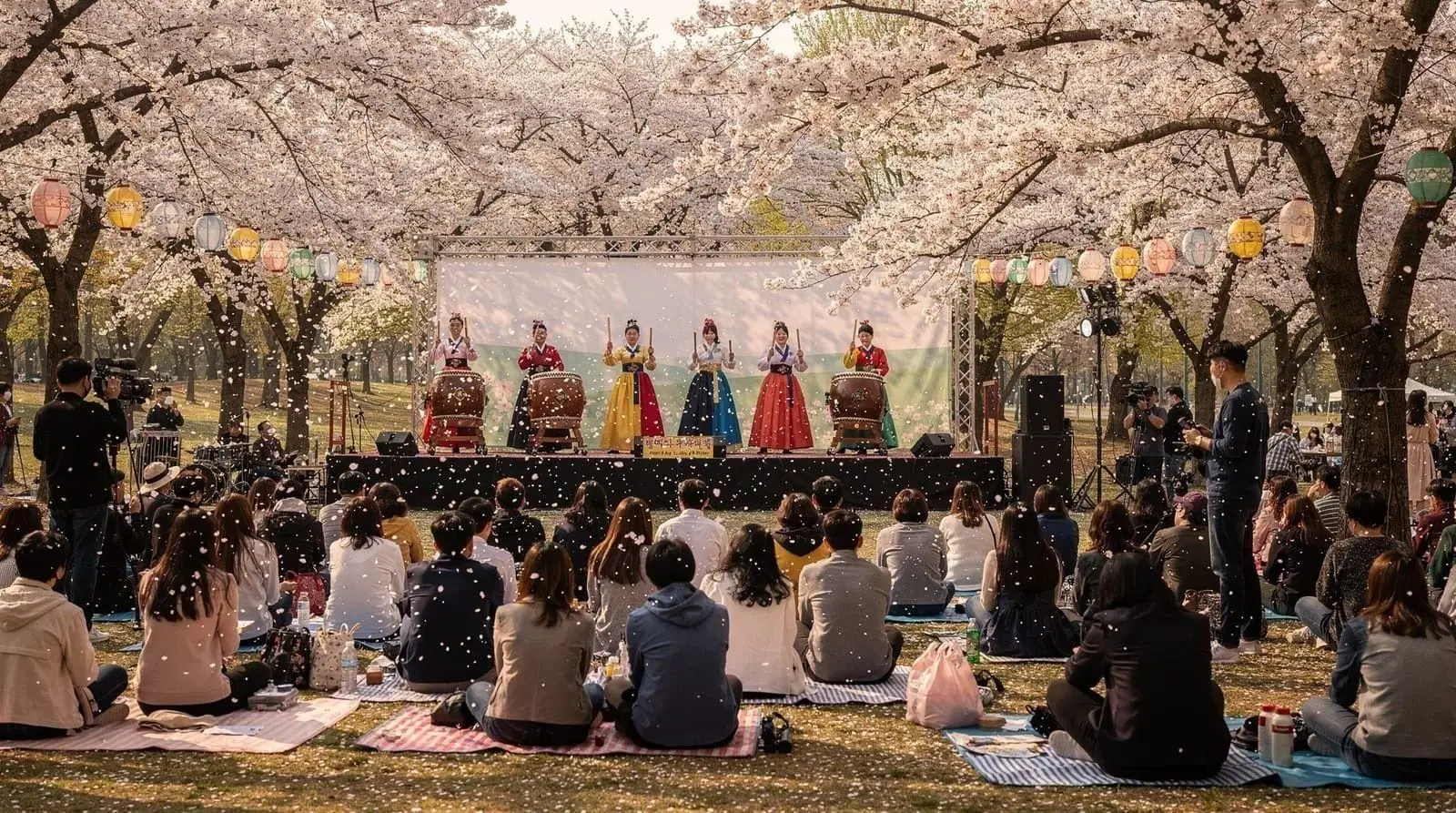
The park festival, formally called the Incheon Grand Park Cherry Blossom Festival, typically runs across two weekends during peak bloom. Food stalls, vendors selling flower-themed snacks, and occasional stage performances set up near the main entrance. The festival does not require tickets — the park itself is free to enter.
Getting there: take subway line 1 to Incheon Grand Park station (인천대공원역) and walk five minutes to the main entrance. From central Incheon, the journey takes about 25–35 minutes.
The full Incheon Grand Park cherry blossoms guide has opening hours, transport details, and what to do if the bloom timing does not align with your visit.
Incheon: One Day Guided City Tour with Hotel PickupOther cherry blossom spots in Incheon
Incheon Grand Park is the centerpiece, but it is not the only option.
Jayu Park (자유공원): the oldest Western-style park in Korea, set on a hill above the Chinatown district. Cherry trees line the paths and frame views over the harbor and the open port area below. Fewer crowds than the Grand Park, easier to combine with a Chinatown lunch, and the historical context — the park was established in 1888 — adds depth to a blossom walk. The Jayu Park Korean War history guide covers what else is worth seeing here.
Songwol-dong Fairytale Village (송월동 동화마을): adjacent to Chinatown, this mural village has street art-covered lanes and scattered ornamental cherry plantings. Not a major blossom spot, but the pastel walls and spring flowers photograph well together. The Songwol-dong Fairytale Village guide has the full picture.
Sorae Ecology Park (소래생태공원): reeds, wetland trails, and salt marsh, with cherry and plum trees along the park perimeter. Less known than the urban parks, genuinely quiet on weekday mornings. The Sorae Ecology Park guide describes the habitat and how to get there.
Ara Waterway walking paths: the canal-side paths between Incheon and Gimpo have scattered cherry planting along the banks. Not a concentrated blossom experience, but pleasant for a spring cycle. See the Ara waterway bike tour guide.
Combining Incheon blossoms with Nami Island
If you want to extend the cherry blossom experience, Nami Island (남이섬) in Gapyeong is the single most famous blossom spot in the Seoul area. The island’s tree-lined avenues — including the iconic birch and cherry corridors — draw crowds in the tens of thousands during peak April weekends.
From Incheon, Nami Island is accessible by train to Seoul Station, then transfer to the ITX-Cheongchun train toward Gapyeong (about 90 minutes total travel, ₩15,000–20,000 / $12–15 each way). The ferry from Gapyeong dock to Nami Island costs ₩16,000 round-trip ($12).
The advantage of combining both: Incheon Grand Park early morning (less crowded, great light), then Nami Island in the afternoon when you have energy for the island walk. The Nami Island day trip guide has the full logistics.
Seoul: Namiseom, Petite France, & Garden of Morning CalmPractical tips for the cherry blossom season
Weekday vs weekend: weekend crowds at Incheon Grand Park during peak bloom are severe. The main avenue becomes shoulder-to-shoulder by 11 AM. If your schedule has flexibility, Tuesday through Thursday mornings give you the park essentially to yourself.
Timing by hour: the best light for photography is 7–9 AM (soft morning light, near-empty paths) and late afternoon 4–6 PM (golden hour, crowds thinning). Midday is overexposed and packed.
Weather contingency: rain during cherry blossom season is common and not the disaster it sounds. Wet blossoms against dark bark photograph beautifully. Bring a waterproof layer and a plastic bag for your camera or phone.
What to eat at the festival: food stalls near the Grand Park entrance sell sakura-themed items — pink mochi, strawberry milk, blossom-shaped tteok. Standard festival snacks (tteokbokki, hotteok, corn on the cob) are also present. Prices are slightly inflated at festival stalls. Bring snacks from a convenience store nearby if you want to save money.
Getting there early: the nearest subway station is Incheon Grand Park (인천대공원), five minutes from the entrance. On peak weekend days, taxis queue at the station exit from 9 AM. Arriving by 8 AM gives you an hour of relatively crowd-free walking before the day visitors arrive in force.
The full Incheon cherry blossom spring itinerary covers how to build a multi-day spring trip with the bloom as the centerpiece.
What else is blooming in April
Cherry blossoms get the attention, but April in Incheon also brings:
- Azaleas: bloom two to three weeks after cherry blossoms, roughly late April to early May. Ganghwado has notable azalea slopes along Manisan mountain trails.
- Forsythia: bright yellow, blooms before cherries in late March. Most visible along roadsides and park borders.
- Magnolias: large white or pink flowers, peak in late March to early April before leaves appear. Several specimens in Jayu Park.
If you arrive in late April and the cherries have passed, the city is still visibly in spring — green-leafed trees, warmer temperatures, and the beginning of outdoor café season. Not the same spectacle, but far from a disappointment.
Incheon Stopover: City Highlights Tour for K-culture FansWhat to do if you arrive at the wrong time
Bloom timing is never guaranteed a year in advance, and travellers booking flights months ahead cannot lock in the exact peak. If you arrive before the bloom, Jayu Park’s magnolias and roadside forsythia are already flowering and worth a walk while you wait. If you arrive after petal fall, the Songwol-dong Fairytale Village and the Open Port heritage district do not depend on the season and remain worthwhile regardless.
The honest fact is that no single-day trip can guarantee peak bloom — build in flexibility of a day or two if the blossoms are the entire reason for your visit, and check the Korea Meteorological Administration’s forecast as close to departure as your booking allows.
Frequently asked questions about the Incheon cherry blossom festival
When exactly do cherry blossoms peak in Incheon?
Typically the first or second week of April, usually April 5–15. A warm winter can shift this earlier by several days. Check the Korea Meteorological Administration’s annual bloom forecast, published in mid-March, for the specific year’s prediction.
Is there an entry fee for Incheon Grand Park during the festival?
The park itself is free to enter. Some indoor facilities inside the park (the zoo, botanical greenhouse) charge separate admission. Festival stalls and vendors have their own prices. Budget transport costs only for the park visit itself.
How crowded does it get at the festival?
Very crowded on peak weekend days. The main cherry avenue at Incheon Grand Park can be shoulder-to-shoulder by 11 AM on a Saturday or Sunday during full bloom. Arrive before 9 AM for a manageable experience, or visit on a weekday.
Can I see cherry blossoms in Incheon outside of Incheon Grand Park?
Yes — Jayu Park above Chinatown has mature cherry trees with harbor views, Songwol-dong Fairytale Village has ornamental plantings, and the Ara Waterway paths have canal-side blossoms. All are less crowded than the Grand Park.
Is it worth combining Incheon with Nami Island for cherry blossoms?
Yes, if you have a full day. Nami Island is the most iconic blossom spot near Seoul and is about 90 minutes from Incheon by train. The combination of Grand Park in the morning and Nami Island in the afternoon makes a full spring day out. The Nami Island day trip guide has the logistics.
What should I wear and bring to the cherry blossom festival?
Comfortable walking shoes, layers (April mornings can be 8–12°C / 46–54°F, afternoons reach 15–20°C / 59–68°F), and a portable phone battery. Food stalls are present, but snacks from a convenience store save money. If shooting photos seriously, bring a wide-angle lens — the avenue shots work best wide.
What happens if I visit and the blossoms have already fallen?
The park itself is still worth the trip — the lake circuit, the botanical garden, and the general greenery hold up even without blossom. For a guaranteed alternative that does not depend on timing, combine the visit with Songwol-dong Fairytale Village or the Open Port heritage district, neither of which is seasonal.
Are there cherry blossoms elsewhere near Incheon worth a day trip?
Yes — Nami Island near Gapyeong is the most famous nearby option and pairs well with a Grand Park morning, while Suwon’s Hwaseong Fortress also has notable spring plantings if you want to extend the trip further.
Incheon city experiences on GetYourGuide
Top-rated tours and activities


