Ganghwado (강화도) is South Korea’s fifth-largest island and its most historically dense. Inhabited since the Neolithic, it served as the Goryeo dynasty’s capital-in-exile during the Mongol invasions (1232–1270), an anti-Japanese resistance stronghold in the 19th century, and the site of the first “unequal treaty” Korea was forced to sign (1876, with Japan). On top of that, it has UNESCO-listed prehistoric dolmens scattered across its hills, three working Buddhist temples, a Goryeo-era palace ruin, and a 78 km-long fortress wall. Most foreign travelers skip it entirely because it isn’t on the standard Seoul circuit. That is the best argument for going.
| Where | Incheon islands region, about 1 hr from Seoul or Incheon |
| Cost | Around 40,000–70,000 KRW per day incl. transport and meals |
| Time needed | Full day; two days to include a templestay |
| Getting there | Bus from Sinchon/Gimpo (Seoul) or Incheon Bus Terminal |
| Best time | Spring for blossoms, autumn for foliage and migratory birds |
Jeongdeung Temple (정등사)
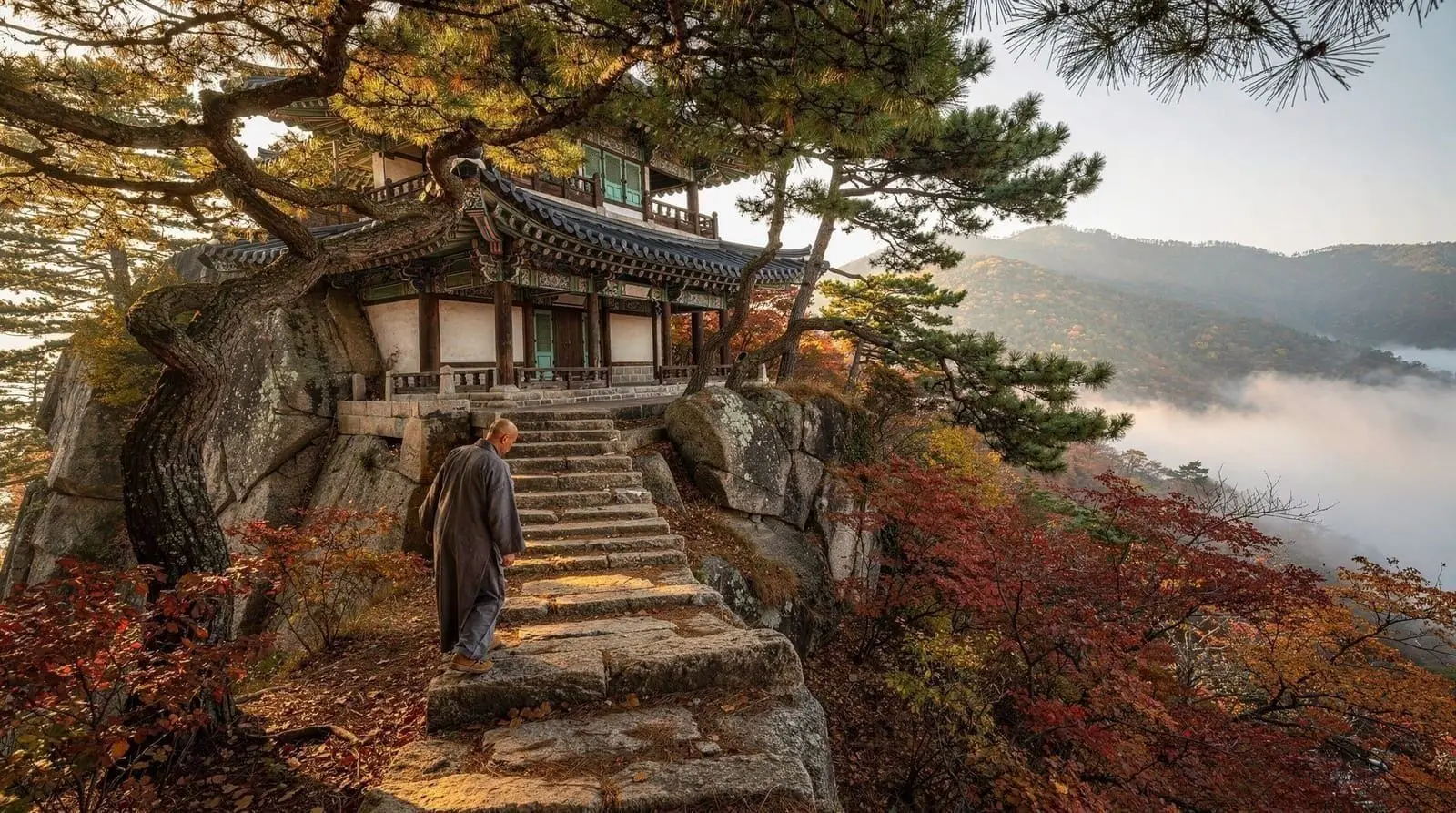
Built in 381 CE (during the reign of the Goryeo king), Jeongdeung Temple is the oldest Buddhist temple in the region and possibly the oldest temple site in Korea to have continuously hosted Buddhist practice. The current buildings date primarily from the 17th century (rebuilt after Japanese invasions). The temple compound is compact and serene — a few main halls, a seven-story stone pagoda, and densely forested hills behind. Entry: 2,000 KRW. Open 7 a.m. – 7 p.m. daily.
Templestay programs are available at Jeongdeung Temple — one of the few accessible from Seoul without needing to speak Korean. The Ganghwado temples and templestay guide covers booking, what the program includes (dawn ceremony, meditation, temple food), and what to expect as a first-timer.
Incheon: One Day Guided City Tour with Hotel PickupUNESCO dolmens
Ganghwado has 160+ prehistoric dolmens (고인돌) — large flat stones placed on stone supports, dated to the Bronze Age (1000–300 BCE). They are part of a UNESCO World Heritage site shared with dolmen clusters in Gochang and Hwasun. The main accessible cluster is at Bugeun-ri in the north of the island; the largest single dolmen (Gocheon-ri) is in the south, near the village of Naega. Most are accessible by taxi from Ganghwa Bus Terminal (round-trip taxi day rate: 80,000–100,000 KRW) or by renting a bicycle.
Korea’s dolmens are believed to be royal burial chambers for Bronze Age chieftains — the Ganghwado examples are notable for their north-table style (a single flat capstone on two upright stones), which predates the more common table-style dolmens found in the south.
Ganghwasan Mountain and the fortress wall
The Outer Fortification Wall (외성) runs 78 km around the island’s coast, with hilltop bastions every few kilometers. Most of it is collapsed or overgrown, but the north coast section between Chojijin Fort (초지진) and Gwangseonbo Fort (광성보) is well-restored and walkable. Chojijin has a cannon emplacement that fired on US Navy ships during the General Sherman incident of 1871; an information board explains the context in English. Both sites are free.
Manisan (마니산, 469 m), the island’s highest peak, has a summit altar said to have been built by Dangun, the legendary founder of the Korean people. The 2.7 km trail from the western parking area to the summit takes 1.5–2 hours (moderate difficulty). Views from the top take in the Han River estuary and the mountains of North Korea on clear days.
Ganghwa Mudflats and tidal wetlands
The island’s southern coast borders a large tidal flat (갯벌, gaebeol) designated as a Ramsar Wetland and UNESCO Biosphere Reserve. At low tide, several kilometers of gray mud extend to the horizon, crossed by tiny shellfish and crab channels. This is one of the most important stopover points for migratory shorebirds on the East Asian-Australasian Flyway. Best birdwatching is during spring (late April–May) and autumn (September–October) migration. The Ganghwado wetlands visitor center near Dongmak-ri has a free exhibition and a raised boardwalk over the tidal flat.
Ganghwado vs the other Incheon islands
Ganghwado is often compared with Muuido and Yeongjongdo, but the three serve different purposes:
| Island | Main draw | Time needed | Best for |
|---|---|---|---|
| Ganghwado | Temples, dolmens, fortress history, wetlands | Full day to 2 days | History and nature travelers |
| Muuido | Beaches, ridge hiking near ICN Airport | Half day to full day | Beach and hiking, short layovers |
| Yeongjongdo | Sea rail bike, Eurwangni Beach, airport proximity | Half day | Families, easy airport add-on |
If you only have one day for an Incheon-area island, choose Ganghwado for depth of history or Muuido/Yeongjongdo for a more relaxed coastal afternoon.
Getting to Ganghwado
Bus from Seoul: Take subway to Sinchon station (line 2), then Gimpo Bus 88 or 90 to Ganghwa Bus Terminal. Journey: about 1 hour, 2,800 KRW. Direct buses also depart from Gimpo Intercity Bus Terminal (reachable on metro line 5).
Bus from Incheon: From Incheon Bus Terminal (subway line 1, Bupyeong transfer), Ganghwa-bound buses run frequently. Journey: about 50 minutes, 2,600 KRW.
Car: Ganghwado is connected to the mainland via Ganghwa Bridge. From Seoul, about 1 hour via the Incheon Expressway. Parking at all major sites is free or nominal.
Getting around the island: Ganghwado is 30 km long — a rental bike (available at Ganghwa Bus Terminal for 10,000–15,000 KRW/day) covers the south coast flat road well. Taxis from the bus terminal to Jeongdeung Temple cost about 10,000–12,000 KRW one way. A day-hire taxi for the dolmens, Manisan, and the southern coast is practical for those with limited time.
Incheon Chinatown, Rail Bike, and Eco Park from SeoulPlanning your day on the island
Because the sights are spread out, the order you visit them matters more than how long you spend at each. A sensible rhythm is to start with the sites that need daylight and energy, such as the Manisan climb or the dolmen cluster, and keep the temple and the wetlands for later, when the pace slows down. The tidal flat in particular depends on the tide rather than on opening hours, so check the tide times the evening before and build the rest of the day around them.
If you are coming from the city side, the getting around Incheon guide explains how the subway and buses connect, which helps you choose the right starting point for the bus to the island. Travelers who want a lighter day can pair the temple with a slow lunch in Ganghwa-eup and skip the summit hike altogether; the island rewards unhurried visits as much as ambitious ones.
Who should choose Ganghwado
Ganghwado suits people who enjoy reading a landscape: a hill that turns out to be a fortress, a field with a Bronze Age stone in the middle of it, a tidal flat that looks empty until you notice the birds. It is less suited to travelers who want beaches, cafés and nightlife. For those, Yeongjongdo and its seaside attractions are an easier fit, and the Eurwangni Beach guide shows what a more relaxed coastal afternoon looks like.
Families with older children often enjoy the island because the sites are open-air and there is room to move. The dolmens make a good first lesson in prehistory, and the fortress cannons give younger visitors something concrete to look at. For more ideas on keeping a mixed-age group happy, see the Incheon with kids article.
Seasons and light
Each season gives the island a different character. Spring brings softer air and fresh green on the hills, which suits the temple and the mountain trail. Autumn adds foliage and the migratory birds on the flats; the Incheon autumn foliage hiking itinerary is a useful companion if you want to link Ganghwado with other seasonal walks. Summer weekends are busier, and winter days can be cold and exposed on the coast, so bring an extra layer for the fortress walls and the open flats.
For general guidance on when to travel to the region as a whole, the best time to visit Incheon guide puts the island in the context of the wider year.
Eating and resting between sights
Plan your meals around the main town rather than expecting restaurants beside every monument. Ganghwa-eup is the natural place to stop, and a local dish at lunchtime breaks the day up nicely. If you want a broader sense of what to order across the region, the what to eat in Incheon article and the where to eat guide for Chinatown give context on the flavors you may meet. Carry water and a snack for the longer stretches between villages, especially if you are on a bicycle.
If you decide to stay overnight, the where to stay in Incheon guide covers the region’s options, and a templestay is the most distinctive alternative to a conventional room.
Respectful behavior at temples and heritage sites
Jeongdeung Temple is a working place of practice, not only a sight. Dress modestly, keep your voice low in the halls, and follow any signs about photography. At the dolmens and fortress wall, stay on the paths and do not climb on the stones or walls; many of them are fragile and have survived for centuries precisely because visitors have left them alone. The Incheon safety and language tips page has a few helpful phrases and general etiquette notes that are just as useful on a rural island as in the city.
Combining Ganghwado with other trips
Ganghwado pairs naturally with the DMZ and Paju region — both are north of Seoul and reachable without expressway overlap. A 2-day itinerary could include Ganghwado on day 1 and the DMZ on day 2. The Incheon island-hopping itinerary focuses on the water-based islands, but Ganghwado can be added as a land extension.
Practical information
- Tourist information: Ganghwa Cultural Tourism Center at Ganghwa Bus Terminal. English leaflets available; staff speak limited English.
- Toilets: At all major temple and fortress sites.
- Local food: Goryeo sundae (sausage stuffed with offal and glass noodles) is the island’s most famous dish. Soonmoowol raw clam is the second. Both available at restaurants near the bus terminal for 10,000–15,000 KRW.
- Best days: Weekdays year-round; summer weekends bring day-trippers from Seoul.
- Tourism helpline: 1330 (24/7, English).
Frequently asked questions about Ganghwado Island
How do I get from Incheon to Ganghwado without a car?
Take the bus from Incheon Bus Terminal (directly, about 50 minutes) or from Seoul’s Sinchon via Gimpo (about 60 minutes). See the bus directions above. No train or metro reaches the island.
Is there templestay at Ganghwado for foreigners?
Yes — Jeongdeung Temple offers templestay to non-Korean speakers. The program typically runs for 1 or 2 nights and includes a dawn ceremony (108 bows), walking meditation, and Korean temple food (simple vegetarian). English orientation is available. See the Ganghwado temples and templestay guide for booking details.
What is the best dolmen site to visit on Ganghwado?
For accessibility and information quality, the Bugeun-ri dolmen park in the north is the best. It has a visitor center (free, with English panels), and about 70 dolmens within a 500 m walk. The Gocheon-ri south dolmen is the island’s largest individual specimen.
Can I hike Manisan in a half-day?
Yes — the Manisan summit hike is about 2.7 km each way, taking 1.5–2 hours up and 1 hour down. You can complete it in half a day and still have time for lunch in Ganghwa-eup (the main town). Moderate fitness is sufficient; good shoes are needed on the rocky summit section.
Are the fortifications relevant to the Incheon Landing of the Korean War?
No — the Ganghwado fortifications relate to earlier conflicts: Mongol invasions (13th century), French and American naval incursions (1866, 1871), and Japanese pressure in the 19th century. The 1950 Incheon Landing was at a different location in the harbor. That history is covered at Jayu Park in Incheon Chinatown.
Is Ganghwado safe to visit near the North Korean border?
Yes. Ganghwado is a regular tourist destination. The North Korean coast is visible across the Han River estuary on clear days, but there is no heightened tension or special security for tourists. Normal travel applies.
Can I combine Ganghwado with Incheon Chinatown in one day?
It’s possible but tight — Ganghwado alone deserves a full day, and the bus journey between Ganghwado and Incheon Chinatown takes about an hour each way. If you want both, plan two separate half-days rather than rushing a single combined day.
What’s the best way to see both the dolmens and the fortress wall without a car?
Hire a taxi for the day at Ganghwa Bus Terminal (around 80,000–100,000 KRW) — drivers know the standard dolmen-fortress-Manisan circuit and it’s the most time-efficient option for travelers without their own vehicle.


