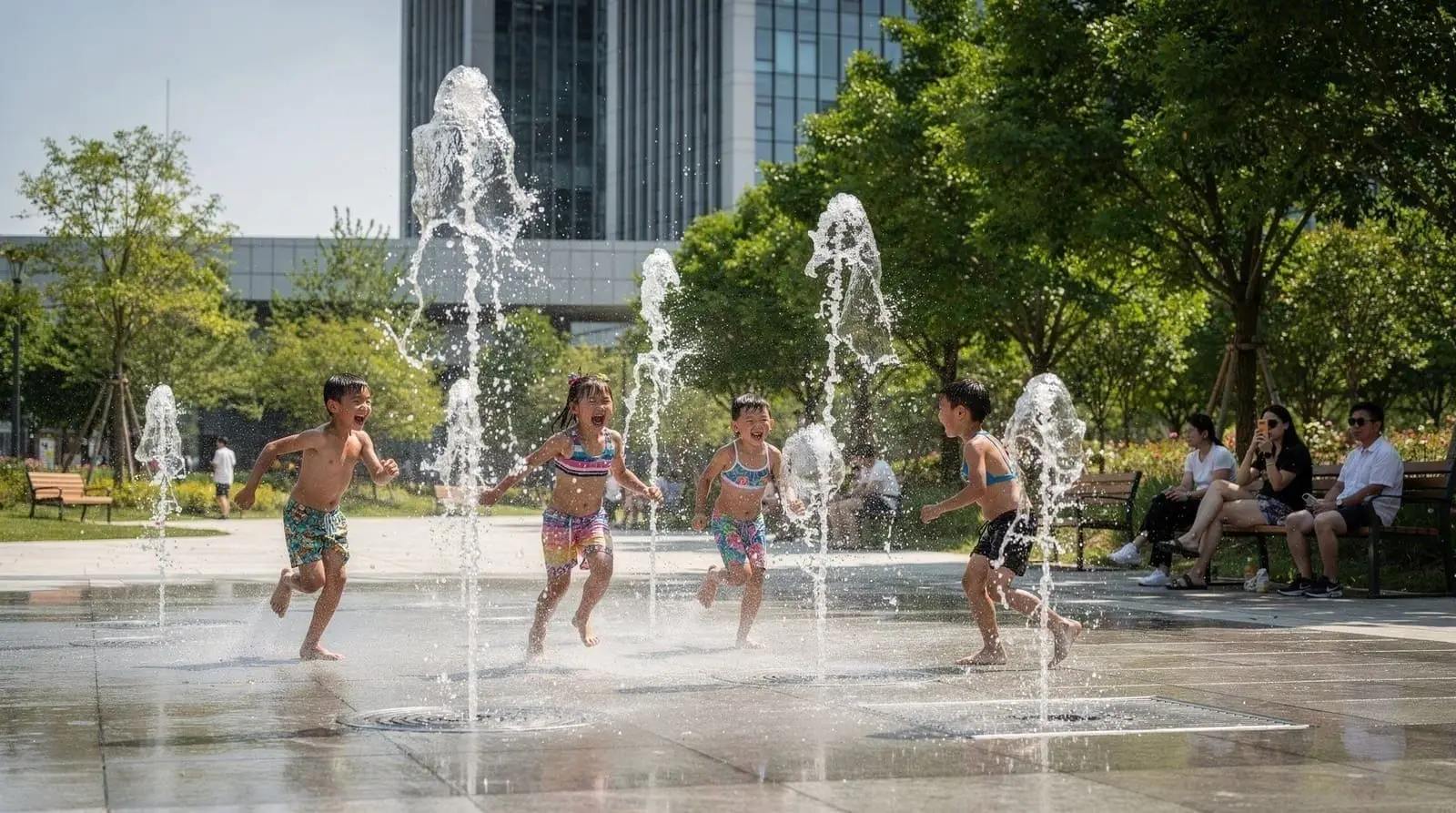
Incheon with kids — the best family-friendly activities
Why Incheon works so well for families
Families travelling to Korea tend to go straight to Seoul and its major theme parks — Lotte World, Everland — and miss the fact that Incheon, 30–40 minutes away by metro, offers a different kind of family travel experience that is often less crowded, less expensive, and in some ways more memorable for children.
Seoul: Lotte World Adventure Entry TicketIncheon’s family-friendly attractions fall into three broad categories: large outdoor spaces with genuine nature (Incheon Grand Park, Muuido Island), seaside amusement and transport experiences (Wolmido, the Wolmi Sea Train), and walkable heritage districts that engage children through visual variety rather than ticketed rides (Songwol-dong Fairytale Village, Chinatown). These are not the same category of experience as a theme park, but they are considerably easier to manage with young children — shorter queues, more open space, lower total cost, and natural rest points built into the geography.
Korea is also practically very good for family travel. Baby-changing facilities are common in metro stations and public toilets. Convenience stores are everywhere. Korean families eat out constantly, so restaurants are well-equipped to handle young children, and high chairs are common. Street food is safe, freshly made, and naturally portioned for small appetites.
| Where | Incheon Grand Park, Wolmido, Songwol-dong, Muuido, Songdo |
| Cost | Free parks; ₩3,000–8,000 per Wolmido ride; ₩1,000–2,000 Muuido ferry |
| Time needed | Half day per site, or a full day combining two |
| Getting there | Metro to each district, plus short bus/ferry for Muuido |
| Best time | Weekday mornings; avoid Golden Week and Chuseok |
Incheon Grand Park — the zoo, the lake, the cherry blossoms
Incheon Grand Park is 727 acres of municipal park in the Namdong district, about 25 minutes from central Incheon by metro (Incheon Grand Park Station on the SUIN line). For families, the park offers three main attractions: the zoo, the lake with pedal boats, and the cherry blossom forest.
The Incheon Zoo inside the park has a standard range of domestic and international species — lions, tigers, giraffes, bears, primates — housed in a mix of older enclosures and newer, more open-plan areas that have been upgraded in recent years. It is not a world-class zoo, but it is well-maintained, reasonably priced, and appropriately sized for a half-day visit with children. Entry is separate from the park itself; check the current pricing on arrival as it changes seasonally.
The lake at the centre of the park is suitable for pedal boats in spring and summer, and the surrounding path is wide enough for pushchairs. The botanical garden adjacent to the lake has a greenhouse section that works well in cold weather. During early April, the cherry blossom canopy along the main avenue of the park is one of the best in the Incheon area — over 2,000 trees creating arched corridors of white and pink blossom. The Incheon Grand Park cherry blossoms guide covers the exact timing and best sections of the park for blossom viewing.
For families visiting in spring, the Incheon cherry blossom spring itinerary puts Grand Park in the context of a full seasonal trip.
Wolmido — rides, seafood, and the Sea Train
Wolmido is a small island connected to the Incheon mainland by a causeway and accessible by bus or taxi from the city centre (approximately 20–30 minutes from Chinatown). For families, it offers a compact fairground, waterfront seafood restaurants, and the Wolmi Sea Train — all within easy walking distance of each other.
The amusement area on Wolmido runs standard fairground rides: a Ferris wheel, a Viking ship, drop towers, bump cars, and a rotation of spinning rides. Entry to the area is free; rides are priced individually, typically ₩3,000–8,000 per ride. This per-ride pricing is actually an advantage for families with children of different ages and tolerances — you can spend ₩15,000–25,000 per child on four or five rides and leave, rather than paying a full-day entrance fee for a theme park.
The Ferris wheel is the standout ride for younger children — slow, not frightening, and offering genuine views over the Yellow Sea and the causeway back to the mainland. In the evening, it lights up and is visible from a considerable distance.
The Wolmi Sea Train is a narrow-gauge monorail that loops 6.1 kilometres around the Wolmido coastline in approximately 42 minutes. Carriages are small and painted in seaside colours. For children who are excited by trains and boats, this combination — an actual train running along the actual coast — tends to land very well. Tickets run approximately ₩11,000 per adult on weekdays and ₩14,000 at weekends (Incheon residents pay less), with reduced pricing for children; check the Wolmi Sea Train guide for current fares and departure times.
After the rides, the waterfront seafood restaurants on Wolmido are genuinely excellent for families. Fresh fish and shellfish cooked simply, outdoor seating on the waterfront, reasonable prices, and a relaxed atmosphere that tolerates children well. The Wolmido seafood dining guide covers what to order.
Incheon: Luge & Railbike & Purple Azalea FestivalSongwol-dong Fairytale Village — the painted streets
Songwol-dong Fairytale Village is a hillside neighbourhood above Chinatown that residents have painted with fairy-tale murals, Hansel-and-Gretel house facades, and European-style cottage decorations. The aesthetic is unusual — unmistakably Korean in its enthusiasm and scale, but with a European fairy-tale visual vocabulary that confuses and delights children in equal measure.
The practical reality for families is that the village is a genuinely fun 30–45 minute walk through narrow lanes with walls and staircases painted floor to ceiling. Children respond to painted environments in ways they do not respond to museums. The landscape provides natural storytelling opportunities — look for the wolf mural, find the Rapunzel tower, spot the bread house — and the whole area is compact enough that you cannot easily lose a child.
Combine Songwol-dong with the Chinatown walk below it (jjajangmyeon for lunch, the ceremonial gates, the painted history murals) for a natural 2-hour family morning. The Incheon Chinatown walking tour guide covers both areas.
Muuido Island — mudflats and beach
Muuido is a small island off the coast of Yeongjongdo, accessible by ferry from Jamjinpo Port in about 10–15 minutes (ferry cost approximately ₩1,000–2,000 per person). For families, the main draw is Hanagae Beach and the tidal mudflats exposed at low tide.
Mudflat walking, called galmaegi, is a traditional Korean activity where you walk barefoot across the exposed tidal flats at low tide. The mud is grey-black, the surface is firm enough to walk on in most areas, and the ecology is genuinely interesting — small crabs, bivalves, shore birds, and the strange landscape of a seabed temporarily above water. Children universally love getting muddy in a context where it is sanctioned and expected. Bring old shoes or sandals you can rinse, and check the tide times before you go (a 2-hour window around low tide is optimal).
Hanagae Beach itself is sandy, wide, and backed by forest. Swimming is possible from late May through September, though the water temperature is cold until July. The beach has toilet facilities and a small cluster of seafood restaurants near the ferry pier.
Reaching Muuido requires a bus from Incheon to Jamjinpo Port (about 40–60 minutes depending on traffic) or a taxi. The full logistics are in the Muuido Island day trip guide. If you are also considering other islands, the Incheon island hopping itinerary is worth reading first.
Songdo Central Park — urban green space
Songdo Central Park is a 100-acre park built around a seawater canal and one of the most accessible outdoor spaces in the Incheon area for families with strollers. The paths are wide and flat, the canal has benches and water features, and pedal boats are available in warmer months.
For families staying in Songdo, the park is the natural base for morning activity. There is no entry fee, the surrounding area has good cafes and convenience stores, and the canal environment — ducks, water, open sky — holds young children’s attention without requiring organised activity.
Songdo is about 25 minutes from Chinatown by metro (Centraal Station on the Incheon metro line 2, then a short bus or walk to the park). The Songdo Central Park guide covers the full area, and the Songdo shopping and dining guide is useful for planning meals in the area.
Incheon: One Day Guided City Tour with Hotel PickupPractical family travel tips for Incheon
Strollers and pushchairs: Most Incheon metro stations have lifts, though some older stations on line 1 (particularly between Incheon Station and Dongincheon) have limited accessibility. Check the accessibility icons on the metro map. Incheon Grand Park and Songdo Central Park are both fully pushchair-accessible. Wolmido has some uneven pavements near the older fairground area. Muuido requires carrying a stroller down ferry steps.
Eating with children: Korea is very family-friendly for eating. Most restaurants expect children and will bring high chairs without being asked. Gimbap (seaweed rice rolls), tteokbokki (spicy rice cakes — adjust spice level on request), bibimbap, and jjajangmyeon are all widely accepted by children unfamiliar with Korean food. Convenience stores (GS25, CU) are everywhere and stock triangle kimbap, drinks, and snacks that work well for hungry children between meals.
Transport: The T-money card covers children’s fares at a reduced rate for ages 6–12; children under 6 travel free on metro and buses. Keep the card topped up — card machines do not always accept foreign credit cards without a chip and Korean PIN setup.
Timing: Korean public holidays bring crowds to all the major family destinations, particularly Incheon Grand Park and Wolmido. Avoid Golden Week (late April/early May) and Chuseok (late September/early October) if possible, or plan to arrive early. Weekday mornings are the most comfortable at all the sites listed above.
Medical and emergency: Incheon has two major hospitals with English-speaking staff — Gil Medical Center and Incheon St. Mary’s Hospital. International pharmacies are less common than in Seoul; bring any specific medications from home. Convenience stores stock basic pain relief and antihistamines.
For a full single-day plan combining the best of these options, the Incheon in one day itinerary can be adapted for families by slowing the pace and prioritising Grand Park and Wolmido over more adult-oriented stops like the Open Port cafes.
Which attraction suits which age
| Attraction | Best age range | Why |
|---|---|---|
| Incheon Grand Park (zoo/lake) | All ages, especially under 8 | Wide flat paths, animals, open space |
| Wolmido amusement rides | 4+ (height restrictions vary) | Per-ride pricing, Ferris wheel is gentle |
| Wolmi Sea Train | All ages, great for toddlers | Slow, enclosed, no sudden movement |
| Songwol-dong Fairytale Village | 3+ | Visual storytelling, short walk |
| Muuido mudflats | 6+ (steady walkers) | Uneven terrain, not stroller-friendly |
| Songdo Central Park | All ages, best for strollers | Flat paths, low stimulation, calm |
Frequently asked questions about Incheon with kids
What is the best family activity in Incheon for young children under 5?
Incheon Grand Park’s zoo and lake area works best for children under 5 — wide paths, animals to see, open space, and no crowds on weekday mornings. Wolmido amusement park is a close second for the Ferris wheel and bump cars, though some rides have height restrictions.
Is the Wolmi Sea Train suitable for toddlers?
Yes. The Sea Train is a slow, smooth ride with enclosed carriages. There is no height restriction issue and no sudden movements. Toddlers who enjoy trains and looking at the sea through the windows will find it genuinely engaging. The 42-minute duration is about the right length for most young children’s attention spans.
How do you get to Muuido Island with children?
Take a bus or taxi from central Incheon to Jamjinpo Port (40–60 minutes), then the ferry (10–15 minutes). The ferry is a small vessel — manageable with a young child but you will need to fold a pushchair and carry it aboard. The mudflat walk is best for children who can walk steadily; mudflats are uneven and unsuitable for pushchairs.
Are Korean restaurants child-friendly?
Very much so. Korean family culture revolves around eating together, and restaurants are accustomed to children at tables. High chairs are common. Many dishes are naturally mild (gimbap, bibimbap) and some spicy dishes can be requested mild. Portion sizes are typically shared, which allows children to try small amounts of multiple dishes.
Can you do Incheon with kids in a single day from Seoul?
Yes. The most manageable single-day option from Seoul is: AREX to Incheon Station, Chinatown and Songwol-dong Fairytale Village in the morning, Wolmido for lunch and the Sea Train in the early afternoon, then the metro back to Seoul by 5–6pm. This avoids the need for a taxi or complex transport and fits comfortably without rushing.
What is the best season to visit Incheon with children?
Spring (April–May) for cherry blossoms at Incheon Grand Park and mild weather; late summer (August) for beach activities at Muuido and Eurwangni Beach; autumn (October–November) for clear skies and comfortable temperatures at all outdoor sites. Summer (June–July) is hot and humid and school holiday crowds are significant at major sites.
Is Incheon cheaper than Seoul for a family trip?
Yes, generally. Attraction entry, food, and accommodation all run somewhat lower than equivalent options in central Seoul, and Wolmido’s per-ride pricing at the amusement park is considerably cheaper than a full day-pass theme park like Everland. The Incheon on a budget guide has a full family cost breakdown.
Seoul: Everland Theme Park Entry Ticket Seoul: Everland Theme Park Round Trip Shuttle BusCan you combine Incheon with kids and a Seoul day trip?
Yes, comfortably for families based in either city, since the AREX and metro line 1 connect them in under an hour. A common pattern is a Grand Park or Wolmido morning in Incheon followed by an easier Seoul activity in the afternoon, though with young children it is usually better to stay in one city per day to avoid overtiring them with transfers.
Incheon city experiences on GetYourGuide
Top-rated tours and activities


