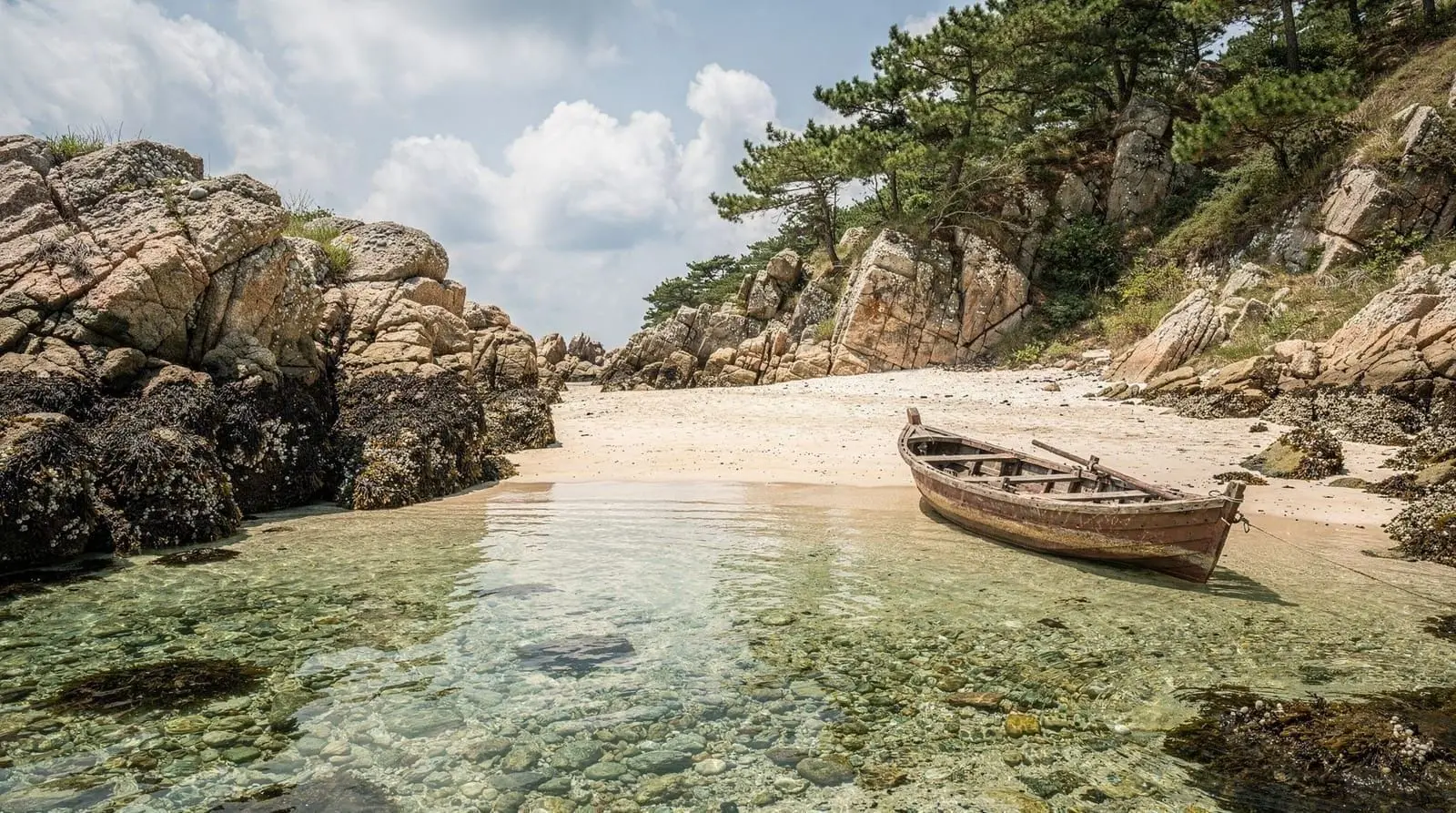
Hidden beaches near Incheon — beyond the tourist trail
The beaches most visitors miss
Incheon does not have a beach reputation. Ask any Seoul resident where to go for a beach day and they will say the east coast — Gangneung, Sokcho, Yangyang. The west coast, Incheon’s side, gets dismissed as muddy Yellow Sea shallows with no surf and uninspiring scenery. That reputation is partially deserved and mostly wrong.
The beaches near Incheon are not tropical. The water temperature peaks at around 22–24°C (72–75°F) in August and sits below 20°C (68°F) for most of the swimming season. The coast is tidal — dramatically so — and the Yellow Sea carries silt that makes the water murky rather than clear. None of this stops the beaches from being genuinely pleasant in summer, and in spring and autumn the coastal scenery — mudflats, reed beds, islands in layers on the horizon — is quietly beautiful.
More importantly: some of these beaches are legitimately hard to reach, which keeps crowds low even on summer weekends. Here is where they are and how to get to them.
| Where | Muuido, Yeongjongdo (Eulwangni/Wangsan), Sindo/Modo, Ganghwado coast |
| Cost | Around ₩2,200–3,300 ferry to Muuido; free beach access |
| Time needed | Half day (Eulwangni) to a full day (Sindo/Modo) |
| Getting there | Bus + ferry, or taxi from Incheon Airport for Yeongjongdo beaches |
| Best time | July–August for swimming; spring/autumn for quiet coastal walks |
Hanagae Beach, Muuido Island: the best sandy beach near Incheon
How to get there: bus from Incheon Bus Terminal to Jamjindo ferry terminal (approximately 30–40 minutes), then a short ferry crossing to Muuido (10 minutes, runs roughly every 30–60 minutes, ₩2,200–3,300 / $2–3 per person). The beach is a 15-minute walk or short taxi ride from the Muuido ferry dock.
Hanagae Beach (하나개해수욕장) is the best case for why Incheon’s beaches deserve more credit. The sand is fine and wide — at low tide the beach extends further than you can comfortably walk — and the surrounding hills are green year-round. The beach faces west toward Yeongjongdo and the setting sun, which makes late afternoon here genuinely beautiful.
Low tide mudflats: when the tide goes out — and on the Yellow Sea the tidal range can exceed 7 metres — Hanagae’s mudflats expose a vast intertidal zone that stretches hundreds of metres from the waterline. In July and August, organized mudflat walking (갯벌 체험, gaetbeol cheheom) activities operate where you can dig for clams, catch crabs with your hands, and walk across the exposed seabed in bare feet. Children find this consistently more interesting than sitting on the sand. Bring clothes you do not mind getting muddy.
Swimming: July and August. Water temperature is tolerable but not warm — expect around 22–24°C (72–75°F) at peak. The beach has lifeguards during the official swimming season (typically late June through August). Outside this window, swimming is possible but unsupervised.
Facilities: basic food stalls and seafood restaurants operate near the beach in summer. Outside peak season, options are limited — bring supplies. A small convenience store near the ferry dock covers basics.
Crowds: Hanagae gets crowded on summer weekends. The ferry capacity naturally limits the peak crowd size compared to a road-accessible beach, but July–August Saturdays still fill the beach by early afternoon. Weekday visits or shoulder season (May, June, September) give you the place more to yourself.
The Muuido Island day trip guide has full logistics, ferry timetables, and what else to do on the island beyond the beach.
Incheon: Luge & Railbike & Purple Azalea FestivalEulwangni Beach, Yeongjongdo: the easiest beach to reach
How to get there: AREX train from Seoul Station to the airport area (from Incheon Station: Incheon Metro Line 1 to Gyeyang, then transfer to AREX), then bus or taxi to Eulwangni (the beach is on the western shore of Yeongjongdo, about 10 km from the airport). Taxis from the airport run approximately ₩12,000–18,000 ($9–14).
Eulwangni Beach (을왕리해수욕장) sits on Yeongjongdo — the same island as the airport — which makes it the most accessible beach near Incheon for someone arriving at ICN. The beach is wide, the sand is decent, and the seafood restaurants on the promenade are good without being expensive.
The practical advantage: if you land at Incheon Airport and have an afternoon to kill before checking in somewhere, Eulwangni is reachable in under 30 minutes from the terminal. This makes it the one Incheon beach that realistically fits a layover visit — see the airport layover guide for the full logistics of using Yeongjongdo time during transit.
The swimming: honest assessment — Eulwangni is a pleasant family beach but not a spectacular one. The water is shallow and calm, good for children and casual swimmers. It lacks the sense of discovery that Hanagae or the island beaches offer.
Sunset: the beach faces west, across the Yellow Sea toward China. Sunsets here, particularly in late summer and autumn, are excellent — long flat horizon, the islands of the west coast as silhouettes, colors that build slowly.
Seafood row: the restaurants along the promenade serve raw fish (hoe), grilled shellfish, and seafood ramyeon. Lunch for two at the seafood restaurants runs ₩30,000–50,000 ($23–38) including beer. The Eurwangni Beach guide has specific restaurant notes.
Wangsan Beach: the sunset beach
How to get there: also on Yeongjongdo, slightly north of Eulwangni. Taxi from the airport (₩15,000–20,000 / $12–15), or a 15-minute drive from Eulwangni.
Wangsan Beach (왕산해수욕장) is smaller and quieter than Eulwangni. It faces the same westward direction but the beach arc gives particularly clear horizon views at sunset — it feels more exposed, less resort-like. In summer the beach has basic facilities. Off-season it is almost entirely empty.
This is the beach to visit if you want a quiet late afternoon on the coast without the food promenade atmosphere of Eulwangni. Combine it with the Yeongjongdo Seaside Rail Bike for a half-day coastal circuit.
Sindo and Modo Islands: the quietest option
How to get there: ferry from Incheon’s Yeonan Pier (연안부두) or Samsan Wharf. Journey times vary by boat and destination; the crossing to Sindo takes approximately 1–1.5 hours. Ferries run several times daily but schedules are reduced on weekdays and in winter. Confirm timetables before departure.
Sindo (신도) and Modo (모도) are small connected islands off the western coast of Incheon, accessible only by ferry. They are inhabited — fishing communities maintain small villages — but they see a fraction of the visitors that Muuido or Yeongjongdo attract.
The appeal here is subtraction: no resort, no large food promenade, no organized tourist activities. Small sandy beaches, tidal mudflats, dirt paths through agricultural land, and the slower pace of island time. If you want to understand what the Yellow Sea coast was like before tourism infrastructure arrived, Sindo and Modo give you a version of that.
What to do: walk the coastal path between Sindo and Modo (the two islands are connected by a tidal land bridge passable on foot at low tide). Sit on the beach. Eat at the one or two seafood restaurants in the village. Watch the tide go in and out.
Honest warning: Sindo and Modo reward visitors who are comfortable with genuine quietness and minimal facilities. They are not places for a packed itinerary. The ferry schedule means you will likely be there for most of the day whether you intend it or not. Bring food and water — shops are minimal.
The Sindo-Modo Islands guide has ferry schedule details and what to realistically expect.
Incheon: Sunset Beach & China/Japan Town & Inspire ResortGanghwado’s coastal walks
Ganghwado is best known for its temples and UNESCO dolmens rather than its beaches, but the island’s western and southern coasts have tidal flats and coastal walk paths that qualify as beach-adjacent experiences. The coastline is more rugged than sandy, with seawall paths, fishing villages, and wide views across the inter-island channels.
Hwamunseok Reed Marsh on Ganghwado’s southern shore is a wetland nature area with boardwalk trails through reed beds. Not a beach, but an alternative to the sand-and-swim format that works in spring, autumn, and winter when most beaches are off-season.
Getting to Ganghwado takes about 1 hour by bus from Incheon Bus Terminal. The Ganghwado temples and templestay guide covers the island in full.
When to visit each beach
| Season | Water | Crowds | Best for |
|---|---|---|---|
| July–August | 22–24°C, swimmable, lifeguards on duty | Heavy on weekends | Swimming, mudflat activities at Hanagae |
| April–June | Too cold to swim comfortably | Light, near-empty | Coastal walks, mudflat exploration, Sindo/Modo |
| September–October | Cooling, swimming season closing | Light, mudflats most biodiverse | Photography, clear-air sunsets |
| December–March | Cold, no lifeguards | Minimal | Eulwangni restaurants only; everything else quiet |
Swimming season: July and August. Water temperatures are tolerable (22–24°C / 72–75°F). Outside this window, swimming is cold and lifeguard coverage disappears.
Spring visits (April–June): the best weather for coastal walks and mudflat exploration without the summer crowds. Temperatures are mild, the light is soft, and the beaches are mostly empty. Perfect for Sindo and Modo.
Autumn visits (September–October): similar advantages to spring. The mudflats are at their most biodiverse in early autumn. Sunsets are dramatic as the air clears after summer humidity.
Winter: the beaches are effectively empty and coastal winds can be biting. Eulwangni has some open restaurants year-round given its proximity to the airport. Everything else goes quiet.
Mudflat safety and etiquette
Every beach in this guide except Wangsan involves some form of tidal mudflat, and a few honest ground rules make the experience better and safer. Never walk out onto exposed flats alone, and always keep track of the tide schedule — the Yellow Sea’s tidal range means the water can return faster than you expect over flat terrain. Wear old shoes rather than going barefoot on the coarser sections near Hanagae, since broken shell fragments are common.
If you are digging for clams or catching crabs during an organised mudflat activity, follow the operator’s boundary markers; wandering beyond them can mean walking into soft mud that is genuinely difficult to get out of. Rinse off at the provided washing stations before getting back on transport — mudflat mud does not brush off dry.
Practical tips for Incheon’s beaches
Tidal awareness: the Yellow Sea tidal range is extreme — up to 7–9 metres in some areas. Low tide exposes vast mudflats that can extend hundreds of metres from dry land. This is fascinating for mudflat walking but means you should check tide times before planning a swim. The beach can look completely different at high vs. low tide.
Water clarity: honest answer — the Yellow Sea near Incheon is not clear. Tidal movement and river silt keep the water murky. If you are comparing to Jeju or the east coast, you will be disappointed. Accept the Yellow Sea on its own terms and it is genuinely appealing.
Sun protection: the western Korean coast gets strong sun in summer, amplified by reflection off the water. Bring sunscreen (SPF 50 minimum) and cover-ups.
Transport planning: the island beaches (Muuido, Sindo, Modo) are ferry-dependent. Miss the last ferry back and you are staying overnight. Always check the last departure time before you leave the dock.
Budget: a day at Hanagae Beach on Muuido including ferry, mudflat activity, and lunch typically costs ₩25,000–45,000 ($19–35) per person. Eulwangni is cheaper on transport but similar on food. The Incheon on a budget guide has the full cost breakdown.
The island hopping itinerary builds a multi-day route across the islands if you want to visit more than one.
Frequently asked questions about beaches near Incheon
What is the best beach near Incheon?
Hanagae Beach on Muuido Island has the best sand and atmosphere, particularly for summer visits with mudflat activities. Eulwangni on Yeongjongdo is the easiest to reach, especially from the airport. Wangsan Beach has the best sunset views. The choice depends on your priorities — accessibility versus discovery.
Is the water clean enough to swim in near Incheon?
The water is safe to swim in during the official season (July–August when lifeguards are on duty), but it is not clear. Yellow Sea beaches near Incheon have murky water due to tidal silt from river runoff. If water clarity matters, the east coast beaches (Sokcho, Yangyang) are a better choice.
How do I get to Muuido Island from Incheon?
Take a bus from Incheon Bus Terminal to Jamjindo ferry terminal, then catch the ferry to Muuido — about 10 minutes crossing, running roughly every 30–60 minutes. Total journey from central Incheon is about 45–60 minutes. The Muuido Island day trip guide has current ferry timetables.
Are the beaches near Incheon worth visiting outside of summer?
Yes, for coastal walks, mudflat exploration, and photography. Spring (April–June) and autumn (September–October) offer mild temperatures, empty beaches, and better light than peak summer. Swimming is cold outside July–August but the scenery is excellent.
Can I visit Sindo and Modo islands as a day trip?
Yes, but it requires an early start. The ferry from Incheon takes about 1–1.5 hours and the schedule limits total time on the islands. Plan for at minimum 6–8 hours out. Confirm the last return ferry time before you leave — missing it means staying overnight.
Which Incheon beach is best for families with children?
Eulwangni Beach on Yeongjongdo for accessibility and facilities. Hanagae Beach on Muuido for the mudflat activities, which children find exceptionally engaging — digging for clams and catching crabs at low tide is a better family experience than most organized children’s attractions in the area.
Is it safe to walk on the mudflats near Incheon’s beaches?
Generally yes within marked areas and during an organised low-tide window, but never wander out alone or ignore the tide schedule — the Yellow Sea’s tidal range means water can return quickly across flat terrain. Wear old shoes, stay within the boundaries used for guided mudflat activities, and rinse off before boarding transport.
How does Wangsan Beach compare to Eulwangni for a sunset visit?
Wangsan is smaller, quieter, and gives a clearer, more exposed horizon view, while Eulwangni has the food promenade and more infrastructure. If you specifically want an unhurried sunset without a crowd, Wangsan is the better choice; if you want dinner options nearby, Eulwangni wins.
Incheon city experiences on GetYourGuide
Top-rated tours and activities


